Choosing between different CBD extract types may seem complex, but understanding how they differ is essential to finding the product that’s right for you. Each spectrum, Full-Spectrum, Broad-Spectrum, and Isolate, has unique characteristics that directly affect potential effects, taste, and versatility.
The specific composition of cannabinoids, terpenes, and other plant compounds varies widely depending on the extract type. These differences influence not only the overall experience but also the presence or absence of THC, the entourage effect potential, and how well each type may align with your individual needs.
Whether you’re seeking a THC-free product to avoid any risks during drug tests, looking for the full potential of hemp’s natural compounds, or preferring a pure and precise CBD-only formula, this guide will help you make an informed choice among the wide range of available products.
⚠️ Disclaimer: CBD-based products are not medicines and do not replace any medical treatment. They are not intended to diagnose, treat, or cure any disease. Always consult your doctor before using CBD, especially if you are taking other medications. The information in this article is provided for educational purposes only and does not constitute medical advice. In Switzerland, CBD oils sold by uWeed are classified as cosmetics or chemical products and are not intended for ingestion. Please read the packaging instructions carefully and follow all warnings provided.
Table of Contents on Types of CBD
- What are the different CBD spectrums and why do they matter for your wellbeing?
- How does the extract type influence the effects you’ll feel?
- How to select the CBD type perfectly suited to your needs
- How to identify a quality CBD product by its spectrum type
- Legal and safety aspects of CBD types in Switzerland and Europe
- uWeed’s recommended products for each CBD type
- Frequently asked questions about CBD types • Expert answers
- Conclusion • Find your ideal CBD type and transform your wellness experience
What are the different CBD spectrums and why do they matter for your wellbeing?
When discussing CBD extracts, the term spectrum refers to the range of natural compounds preserved in the final product. These compounds interact with your body’s endocannabinoid system—a complex network of receptors involved in various physiological functions—and may influence your sense of wellbeing.
The hemp plant contains over 100 different cannabinoids, along with terpenes, flavonoids, and other plant-based molecules. Depending on the extraction and purification methods used, some of these compounds are retained while others are removed, resulting in different “spectrums” or profiles:
- Full-Spectrum: Retains almost all naturally occurring compounds in the plant, including trace amounts of THC (less than 0.2% in Switzerland)
- Broad-Spectrum: Keeps most compounds but removes all detectable THC
- Isolate: Contains pure CBD only (99%+), without any other compounds
CBD oils and drops can offer very different experiences depending on their formulation. Thanks to the entourage effect—the idea that cannabinoids are more effective when combined—the type of spectrum you choose can play a key role in how you feel.
How to tell apart Full-Spectrum, Broad-Spectrum, and CBD Isolate
These three types of CBD extracts differ mainly in their composition and sensory characteristics:
| Full-Spectrum CBD | Broad-Spectrum CBD | CBD Isolate |
|---|---|---|
| Appearance: Dark oil with an amber to greenish hue | Appearance: Slightly lighter in color compared to Full-Spectrum | Appearance: White crystalline powder or very clear oil |
| Smell and taste: Strong herbal aroma with a distinct earthy taste | Smell and taste: Milder aroma, but still present | Smell and taste: Nearly odorless and tasteless |
| Composition: Contains CBD, trace amounts of THC (<0.2%), minor cannabinoids (CBG, CBN, etc.), terpenes, and flavonoids | Composition: Contains CBD, minor cannabinoids, terpenes, and flavonoids—without any THC | Composition: 99%+ pure CBD, free of all other compounds |
| Distinctive feature: Delivers the full entourage effect | Distinctive feature: Offers a partial entourage effect without the risks associated with THC | Distinctive feature: Precise dosage with no entourage effect |
How are cannabinoids extracted from hemp plants?
The extraction process is a crucial step that directly impacts the quality of the final product. To separate the active compounds from plant matter, producers use various high-quality CBD extraction methods:
- Supercritical CO₂ extraction: A premium method using pressurized carbon dioxide.
- Pros: Extremely pure, solvent-free, preserves most compounds
- Cons: Expensive technology
- Ethanol extraction: Uses alcohol to pull out cannabinoids
- Pros: Efficient and preserves terpenes well
- Cons: May leave trace solvents if not properly purified
- Ultrasonic extraction: Uses high-frequency sound waves to break plant cell walls
- Pros: Fast and preserves delicate compounds
- Cons: Less commonly used technology
- Oil infusion: Traditional method using carrier oils like olive, coconut, or MCT oil
- Pros: Natural, simple, solvent-free
- Cons: Lower extraction efficiency, lower CBD concentration
What is the process of making and purifying a CBD extract?
Once the cannabinoids have been extracted, they go through a tailored transformation process depending on the desired spectrum:
- Initial extraction: Produces a crude extract rich in cannabinoids, terpenes, and other compounds
- Winterization: Removes waxes, lipids, and chlorophyll using a cooling and filtration method
- Distillation: Uses fractional evaporation to concentrate and purify the extract
- Specific filtration steps:
- Full-Spectrum: Light filtration to retain all compounds
- Broad-Spectrum: Advanced filtration to specifically remove THC
- Isolate: Repeated crystallization to isolate CBD at over 99% purity
- Quality control: Lab testing to verify composition and ensure the absence of contaminants
These steps shape the final product’s profile and determine which spectrum it belongs to.
What active compounds are found in each type of CBD extract?
The main difference between spectrum types lies in the presence or absence of certain active compounds. These substances may work together to create what’s known as the entourage effect, a potentially beneficial synergy.
Cannabinoids (CBD, THC, CBG, CBN, etc.)
These are the primary active molecules found in hemp. While CBD (cannabidiol) is the most abundant in legal varieties, the main cannabinoids in the cannabis plant also include:
- CBD: Non-psychoactive; found in all extract types
- THC: Psychoactive; present only in trace amounts (<0.2%) in Full-Spectrum
- CBG: A precursor cannabinoid with unique characteristics
- CBN: Formed as THC degrades, offering distinct effects
- CBC: Lesser-known but included in full-spectrum profiles
Cannabinoids are found in varying amounts depending on the extract type: all are present in Full-Spectrum, most (except THC) in Broad-Spectrum, and only CBD in Isolate.
As described above, cannabinoids are at the core of every CBD extract. In full-spectrum products, you’ll find a wider cannabinoid profile, including minor cannabinoids like CBG and CBN, which may enhance the overall synergy. Broad-spectrum options retain many of these without the THC, while isolates are stripped down to pure cannabidiol only.
Terpenes and their role in the entourage effect
Terpenes are the aromatic molecules responsible for the distinct scent of hemp—and much more than just aroma. They may play an essential role in shaping how cannabinoids interact with your body. Let’s explore the most important terpenes in weed and their properties:
- Myrcene: Earthy, musky aroma; also found in hops
- Limonene: Citrus notes; present in lemons and oranges
- Pinene: Pine scent; one of the most common natural terpenes
- Linalool: Floral and calming; also found in lavender
These terpenes are abundant in Full-Spectrum extracts, partially preserved in Broad-Spectrum, and absent from Isolate formulas.
Flavonoids and other active plant substances
Flavonoids are antioxidant-rich compounds responsible for the color of plants. In hemp, specific flavonoids called cannaflavins are believed to contribute to the entourage effect alongside cannabinoids and terpenes.
- Full-Spectrum: Contains the complete range of flavonoids and active botanicals
- Broad-Spectrum: Retains most of these compounds
- Isolate: Contains none of them
While research is still emerging, these plant-based compounds are thought to contribute their own wellness-supportive properties and reinforce the extract’s natural properties as part of a botanical extract.
How does the extract type influence the effects you’ll feel?
The type of CBD extract you choose plays a decisive role in your experience. These different formulations aren’t just marketing labels—they represent distinct chemical profiles that interact differently with your body. According to recent research, the potential benefits of CBD oil don’t depend solely on cannabidiol concentration but also on the presence of other natural hemp compounds.
A 2019 study by Ethan Russo in the British Journal of Pharmacology titled The Case for the Entourage Effect and Conventional Breeding of Clinical Cannabis suggests that whole-plant extracts may deliver more pronounced effects than isolated CBD.
Each spectrum has its own strengths. If you’re looking for a complete experience with all natural hemp compounds working in synergy, Full-Spectrum could be the best fit. Broad-Spectrum offers a strong alternative without THC, while Isolate ensures the highest precision and purity.
Full comparison table: composition, effects, and uses of Full-Spectrum, Broad-Spectrum, and Isolate CBD
To help you choose the extract that fits your needs, here’s a detailed comparison table outlining the key differences between the three CBD spectrums:
Comparison of the 3 Types of CBD Extracts
| Characteristics | Full Spectrum | Broad Spectrum | Isolate |
|---|---|---|---|
| Composition | CBD + cannabinoids + terpenes + flavonoids + trace THC (< 1%) | CBD + cannabinoids + terpenes + flavonoids (THC-free) | 99%+ pure CBD only |
| Entourage Effect | Complete | Partial | None |
| Perceived Flavour | Strong herbal notes, close to the natural plant | Mild plant-based aroma | Neutral, no noticeable taste |
| Perceived Effectiveness | Potentially more effective at the same dose | Good overall effectiveness | May require higher doses |
| Best For | Full plant experience, natural synergy | Avoiding THC while keeping other compounds | Precise dosing, sensitive to other compounds |
| Drug Testing | Minimal risk of positive result (with prolonged use) | No risk, THC undetectable | No risk, zero THC |
| Relative Price | Medium to high | High | Variable (often more affordable) |
What are the pros and cons of each CBD type?
Every CBD spectrum has its own unique advantages and limitations depending on your goals and needs.
Full Spectrum CBD is a complete extract containing all the natural compounds of hemp, including a small amount of THC (< 1%), in compliance with Swiss legislation.
| Pros | Cons |
|---|---|
| Delivers the complete entourage effect | Strong taste, sometimes bitter |
| Offers a full-plant experience | Contains trace THC (minimal drug test risk) |
| May be effective at lower dosages | Composition can vary from batch to batch |
Broad Spectrum CBD is a THC-free version, but retains most of the active cannabinoids and terpenes present in the plant.
| Pros | Cons |
|---|---|
| Entourage effect without THC | More complex and expensive to produce |
| Ideal for drug-test-sensitive users | May be slightly less effective than Full-Spectrum |
| Preserves most beneficial compounds | Limited availability |
CBD isolate, on the other hand, is an ultra-purified form containing only cannabidiol, with no other plant compounds.
| Pros | Cons |
|---|---|
| Precise and consistent dosing | No entourage effect |
| Tasteless and odorless—great for mixing | May require higher doses |
| Zero THC, no risk of testing positive | Narrower range of effects |
How does the entourage effect vary by spectrum?
The CBD entourage effect describes the synergy between multiple hemp compounds that may amplify the overall effect compared to CBD alone. A 2019 study in Frontiers in Plant Science by Ethan Russo titled The Case for the Entourage Effect highlights how this interaction can boost therapeutic potential.
Another 2018 study by Pamplona et al. in Scientific Reports titled Potential Clinical Benefits of CBD-Rich Cannabis Extracts Over Purified CBD found that patients using full-spectrum extracts reported better results at lower doses compared to those using purified CBD.
- Full-Spectrum: Maximum synergy with all compounds present, including trace THC
- Broad-Spectrum: Partial entourage effect, minus THC
- Isolate: No entourage effect possible, as only pure CBD is present
How to select the CBD type perfectly suited to your needs
Choosing your ideal CBD extract depends on personal factors. There’s no one-size-fits-all solution—each type aligns with different goals, preferences, and constraints.
Which personal factors impact your CBD choice?
To find the formulation that best suits you, consider these key factors:
- Sensitivity to THC: If you’re subject to drug testing or are highly sensitive to THC, Broad-Spectrum or Isolate is more appropriate.
- Previous experience: Beginners often start with Isolate or Broad-Spectrum, which are more predictable in their effects.
- Taste preferences: Isolate is nearly tasteless, while Full-Spectrum has a strong hemp flavor.
- Usage goals: Depending on whether you’re looking for comprehensive effects or targeted support.
- Budget: Prices vary depending on extraction methods and complexity of the formulation.
Usage guide: which spectrum to choose based on desired effects
Here are a few recommendations depending on what you’re specifically looking for:
For relaxation and sleep
Full-Spectrum is generally preferred for deep relaxation. Its combination of multiple cannabinoids and terpenes—like myrcene and linalool—work together to enhance calming effects. Many users report that CBD for sleep seems more effective in Full-Spectrum form, especially when paired with other wellness practices.
A cross-sectional study by Corroon & Phillips (2018) in Cannabis and Cannabinoid Research, titled A Cross-Sectional Study of Cannabidiol Users, shows that CBD for stress relief is among the most commonly reported uses.
💡 Main recommendation: Full-Spectrum (or Broad-Spectrum if THC sensitivity is a concern)
For physical recovery and sports
Broad-Spectrum products are often favored by athletes for their THC-free guarantee combined with the benefits of the entourage effect. Among this community, CBD for sports and recovery is becoming increasingly popular as a plant-based option to support post-workout physical wellbeing.
According to the 2022 World Anti-Doping Agency (WADA), CBD has been removed from the list of banned substances—unlike THC—making THC-free formulations essential for professional athletes.
💡 Main recommendation: Broad-Spectrum
For daily wellness and overall balance
For everyday use aimed at general wellness, your choice may depend more on your lifestyle and preferences:
- Regular users: Full- or Broad-Spectrum offers balanced support
- Taste-sensitive individuals: Isolate blends easily with no taste alteration
- Discreet integration: Isolate can be mixed into drinks or food with ease
💡 Main recommendation: Based on personal preference, with a slight preference for Broad-Spectrum for its balance
How to identify a quality CBD product by its spectrum type
The quality of a CBD oil depends largely on its transparency and traceability. A premium product should clearly indicate its extract type and provide complete documentation on its composition and production methods.
How to read the label and check the spectrum claims
A high-quality CBD oil label should always mention the following:
- Spectrum type: Clearly stated as “Full-Spectrum,” “Broad-Spectrum,” or “Isolate”
- CBD concentration: Indicated in milligrams and as a percentage (e.g., 1000 mg / 10%)
- Full list of ingredients: Carrier oil (MCT, olive, hemp), hemp extract, added terpenes if any
- Quality labels: Organic, vegan, gluten-free, lab-tested extract
- THC content: For Full-Spectrum, should state “less than 0.2% THC” to comply with Swiss law
⚠️ Warning signs: Be cautious of products that don’t clearly specify their spectrum, make medical claims, or refer to “cannabis extract” without stating whether it’s legal hemp.
How to analyze a Certificate of Analysis (CoA) to verify CBD type
Any certified CBD product must come with a lab report. These CBD lab certificates are essential to verify the exact composition and confirm that the product aligns with the claimed spectrum.
Here’s what to look for in a CoA depending on the extract type:
- Full-Spectrum: Presence of CBD, trace amounts of THC (<0.2%), other cannabinoids (CBG, CBN), and terpenes
- Broad-Spectrum: Multiple cannabinoids and terpenes present, with THC listed as “ND” (non-detectable) or 0.00%
- Isolate: Over 99% CBD and no detectable levels of other cannabinoids
At uWeed, all our products come with verifiable lab reports confirming CBD levels and extract type. These analyses also guarantee the absence of contaminants like pesticides, heavy metals, or residual solvents.
A trustworthy CoA should include:
- The name of the independent laboratory
- A recent analysis date
- A full cannabinoid profile
- Contaminant testing results
- A batch number matching the product packaging
This level of transparency ensures you know exactly what’s in your CBD oil spectrum type, giving you a transparency guarantee and peace of mind.
Legal and safety aspects of CBD types in Switzerland and Europe
CBD laws vary significantly across European countries, sometimes creating confusion for consumers. Switzerland, however, offers more clarity, with a legal THC limit of 1%, which is considerably more permissive than the EU’s 0.2% or 0.3% thresholds depending on the country.
One essential point to understand: CBD oils are prohibited as dietary supplements but allowed as cosmetics or chemicals in Switzerland. This legal distinction explains why CBD oils sold on the Swiss market are labeled as cosmetic or chemical products—and must not be ingested.
What is the allowed THC content in each CBD extract type?
THC limits vary by country and directly affect how each extract type is classified:
| In Switzerland | In the European Union |
|---|---|
| Legal limit: Less than 1% THC | Legal limit: Usually set at 0.2% or 0.3%, depending on the country |
| All extract types (Full-Spectrum, Broad-Spectrum, Isolate) are legal as long as they stay below this threshold | Broad-Spectrum and Isolate products typically pose no issue as they contain no THC |
| Swiss Full-Spectrum oils may contain higher THC traces than those allowed in the EU |
This disparity explains why certain Full-Spectrum oils that are legal in Switzerland may not be compliant in some EU countries.
How do different CBD types interact with drug tests?
When it comes to CBD and drug testing, the key concern isn’t CBD itself—since it’s not a substance targeted by standard screenings—but rather the trace amounts of THC that may be present in certain extract types. Understanding how each spectrum is likely to behave in this context can help you avoid unexpected results.
| Full Spectrum | Broad Spectrum | Isolate |
|---|---|---|
| No detectable THC | No detectable THC | 99%+ pure CBD with zero THC |
| Low but theoretically possible risk of testing positive, especially with frequent and prolonged use | Extremely low risk of testing positive | Virtually no risk of detection |
| Risk increases with higher THC concentration | Recommended for people subject to regular screening | Safest option for zero-tolerance workplaces |
For those facing frequent screenings—whether athletes, transport professionals, or regulated industry workers—Broad-Spectrum or Isolate oils from trusted, lab-tested extract sources remain the most appropriate choices.
uWeed’s recommended products for each CBD type
At uWeed, we’ve carefully selected the best products available on the market to help you choose confidently. Our top picks of CBD oils in Switzerland are all lab-tested, legal, and designed to suit a wide range of needs and preferences.
Our Full-Spectrum products for a complete experience
For a true entourage effect with all-natural hemp compounds working together, our Full-Spectrum products deliver an authentic experience. Browse all our full-spectrum CBD oils to find the right concentration and format for your needs.
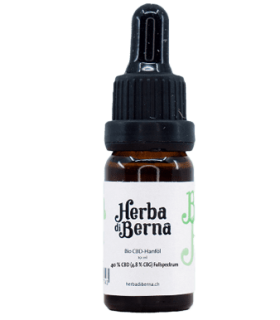
Herba di Berna CBD Oil 40% Full Spectrum Hemp Drops — 10 ml
CBD 4000 mgTHC 1.0%
The CBD Oil 40% by Herba di Berna is a full-spectrum CBD extract produced in Switzerland. At 40% CBD (4000 mg), it is an ultra-concentrated formula, with less than 1% THC. Extraction uses supercritical CO₂ without solvents, which preserves CBG, CBN and CBC alongside CBD. The extract is then blended into MCT coconut oil. The hemp extract is lab tested, free from fungicides, herbicides, pesticides and solvent residues, additive-free and GMO-free.
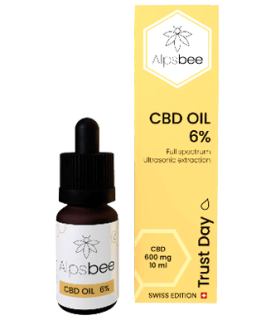
Alpsbee Trust CBD Oil 6% Full Spectrum Hemp Drops — 10 ml
CBD 600 mgTHC 0.1%
Trust CBD Oil 6% by Alpsbee is a full-spectrum CBD extract produced in Switzerland. At 6% CBD (600 mg), it is an entry-level formula, with less than 1% THC. Extraction uses ultrasound, which preserves CBN alongside CBD. The extract is then blended into MCT coconut oil. The hemp extract is lab tested, free from fungicides, herbicides, pesticides and solvent residues, additive-free, GMO-free and compliant on heavy metals.
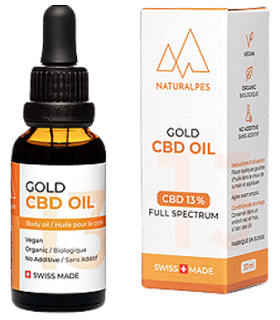
Naturalpes Gold CBD Oil 13% Full Spectrum Hemp Drops — 10 ml
CBD 1300 mgTHC 1.0%
Gold CBD Oil 13% by Naturalpes is a full-spectrum CBD extract made in Switzerland. As a balanced formula, it delivers 13% CBD (1300 mg), with less than 1% THC. The extract is drawn with supercritical CO₂ without solvents, keeping CBG, CBN and CBC alongside CBD. The carrier oil is hemp seed oil. The CBD drops are lab tested, free from fungicides, herbicides, pesticides and solvent residues, additive-free and GMO-free.
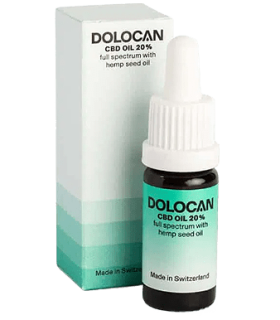
Dolocan CBD Oil 20% Full Spectrum Hemp Drops — 10 ml
CBD 2000 mgTHC 0.9%
The CBD Oil 20% by Dolocan is a full-spectrum CBD extract produced in Switzerland. At 20% CBD (2000 mg), it is a concentrated formula, with less than 1% THC. Extraction uses supercritical CO₂ without solvents, which preserves CBG and CBC alongside CBD. The extract is then blended into hemp seed oil. The hemp extract is lab tested, free from fungicides, herbicides, pesticides and solvent residues, additive-free and GMO-free.
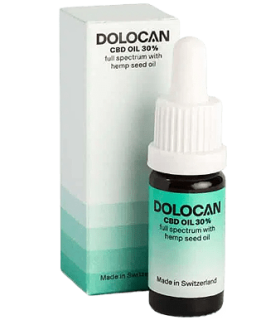
Dolocan CBD Oil 30% Full Spectrum Hemp Drops — 10 ml
CBD 3000 mgTHC 0.8%
The CBD Oil 30% by Dolocan is a full-spectrum CBD extract made in Switzerland. As a high-concentration formula, it delivers 30% CBD (3000 mg), with less than 1% THC. The extract is drawn with supercritical CO₂ without solvents, keeping CBG and CBC alongside CBD. The carrier oil is hemp seed oil. The CBD drops are lab tested, free from fungicides, herbicides, pesticides and solvent residues, additive-free, GMO-free and compliant on heavy metals.
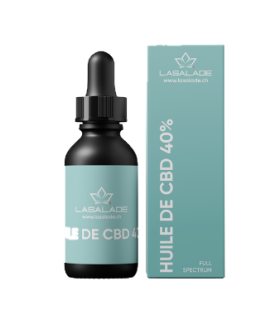
La Salade Natural CBD Oil 40% Full Spectrum Hemp Drops — 10 ml
CBD 4000 mgTHC 1.0%
Natural CBD Oil 40% by La Salade is a full-spectrum CBD extract made in Switzerland. As an ultra-concentrated formula, it delivers 40% CBD (4000 mg), with less than 1% THC. The extract is drawn with supercritical CO₂ without solvents, keeping CBG, CBN and CBC alongside CBD. The carrier oil is MCT coconut oil. The CBD drops are lab tested, free from fungicides, herbicides, pesticides and solvent residues, additive-free and GMO-free.
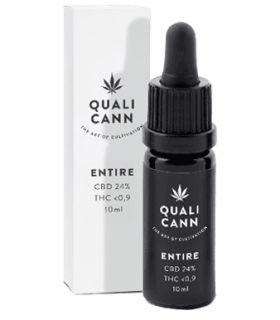
Qualicann Entire CBD Oil 24% Full Spectrum Hemp Drops — 10 ml
CBD 2400 mgTHC 0.6%
Entire CBD Oil 24% by Qualicann is a full-spectrum CBD extract made in Switzerland. As a concentrated formula, it delivers 24% CBD (2400 mg), with less than 1% THC. The extract is drawn with ethanol, keeping CBG, CBN and CBC alongside CBD. The carrier oil is hemp seed oil. The CBD drops are lab tested, free from fungicides, herbicides, pesticides and solvent residues and compliant on heavy metals.
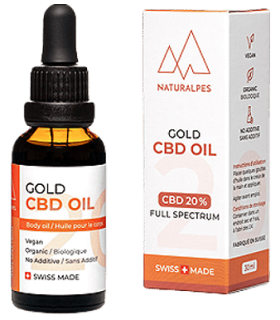
Naturalpes Gold CBD Oil 20% Full Spectrum Hemp Drops — 10 ml
CBD 2000 mgTHC 0.8%
With Gold CBD Oil 20%, Naturalpes offers a full-spectrum CBD extract produced in Switzerland. Content sits at 20% CBD (2000 mg), with less than 1% THC. Supercritical CO₂ extraction without solvents retains CBG, CBN and CBC alongside CBD. The CBD drops are based on hemp seed oil. This Swiss oil is made to ISO 9001, lab tested, free from fungicides, herbicides, pesticides and solvent residues, additive-free, GMO-free and compliant on heavy metals.
The best Broad-Spectrum products for optimal balance
Our Broad-Spectrum oils offer the perfect balance—providing the entourage effect without any trace of THC. Browse all our broad-spectrum CBD oils to find lab-tested options that retain essential cannabinoids while staying THC-free.
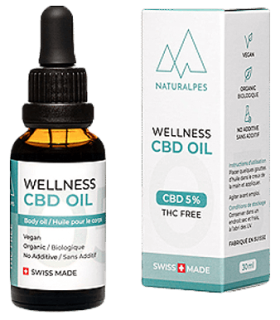
Naturalpes Wellness CBD Oil 5% THC-Free Broad Spectrum Hemp Drops — 10 ml
CBD 500 mg
With Wellness CBD Oil 5%, Naturalpes offers a broad-spectrum CBD extract produced in Switzerland. Content sits at 5% CBD (500 mg), in a THC-free formulation. Supercritical CO₂ extraction without solvents retains CBC alongside CBD. The CBD drops are based on hemp seed oil. This Swiss oil is made to ISO 9001, lab tested, free from fungicides, herbicides, pesticides and solvent residues, additive-free, GMO-free and compliant on heavy metals.
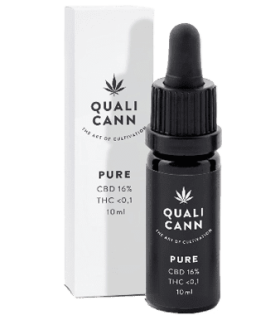
Qualicann Pure CBD Oil 16% THC-Free Broad Spectrum Hemp Drops — 10 ml
CBD 1600 mg
With the Pure CBD Oil 16%, Qualicann offers a broad-spectrum CBD extract produced in Switzerland. Content sits at 16% CBD (1600 mg), in a THC-free formulation. Supercritical CO₂ extraction without solvents starts the process. The CBD drops are based on hemp seed oil. This Swiss oil is lab tested, free from fungicides, herbicides, pesticides and solvent residues and compliant on heavy metals.
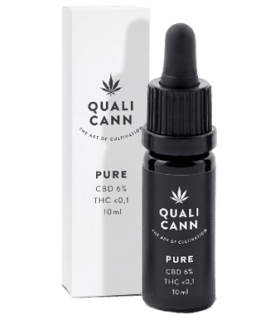
Qualicann Pure CBD Oil 6% THC-Free Broad Spectrum Hemp Drops — 10 ml
CBD 600 mg
The Pure CBD Oil 6% by Qualicann is a broad-spectrum CBD extract produced in Switzerland. At 6% CBD (600 mg), it is an entry-level formula, in a THC-free formulation. Extraction uses supercritical CO₂ without solvents. The extract is then blended into hemp seed oil. The hemp extract is lab tested, free from fungicides, herbicides, pesticides and solvent residues and compliant on heavy metals.
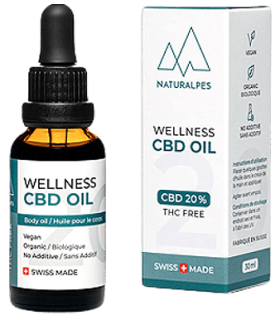
Naturalpes Wellness CBD Oil 20% Broad Spectrum Hemp Drops — 10 ml
CBD 2000 mg
Wellness CBD Oil 20% by Naturalpes is a broad-spectrum CBD extract made in Switzerland. As a concentrated formula, it delivers 20% CBD (2000 mg), with less than 1% THC. The extract is drawn with supercritical CO₂ without solvents, keeping CBN and CBC alongside CBD. The carrier oil is hemp seed oil. The CBD drops are lab tested, free from fungicides, herbicides, pesticides and solvent residues, additive-free and GMO-free.
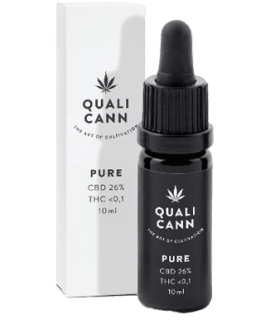
Qualicann Pure CBD Oil 26% THC-Free Broad Spectrum Hemp Drops — 10 ml
CBD 2600 mg
The Pure CBD Oil 26% by Qualicann is a broad-spectrum CBD extract made in Switzerland. As a high-concentration formula, it delivers 26% CBD (2600 mg), in a THC-free formulation. The extract is drawn with supercritical CO₂ without solvents. The carrier oil is hemp seed oil. The CBD drops are lab tested, free from fungicides, herbicides, pesticides and solvent residues and compliant on heavy metals.
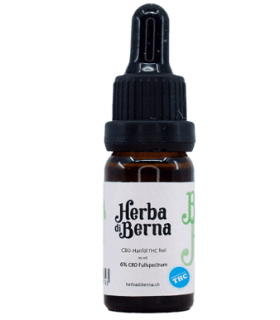
Herba di Berna CBD Oil 6% THC-Free Broad Spectrum Hemp Drops — 10 ml
CBD 600 mg
The CBD Oil 6% by Herba di Berna is a broad-spectrum CBD extract made in Switzerland. As an entry-level formula, it delivers 6% CBD (600 mg), in a THC-free formulation. The extract is drawn with supercritical CO₂ without solvents, keeping CBG and CBC alongside CBD. The carrier oil is sunflower oil. The CBD drops are lab tested, free from fungicides, herbicides, pesticides and solvent residues, additive-free and GMO-free.
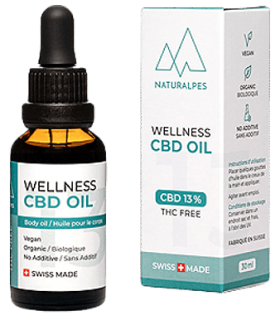
Naturalpes Wellness CBD Oil 13% Broad Spectrum Hemp Drops — 10 ml
CBD 1300 mg
With Wellness CBD Oil 13%, Naturalpes offers a broad-spectrum CBD extract produced in Switzerland. Content sits at 13% CBD (1300 mg), with less than 1% THC. Supercritical CO₂ extraction without solvents retains CBN and CBC alongside CBD. The CBD drops are based on hemp seed oil. This Swiss oil is made to ISO 9001, lab tested, free from fungicides, herbicides, pesticides and solvent residues, additive-free, GMO-free and compliant on heavy metals.
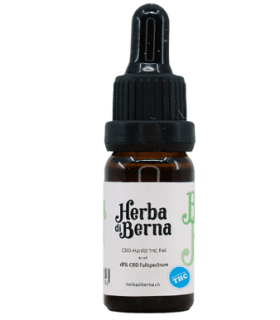
Herba di Berna CBD Oil 18% THC-Free Broad Spectrum Hemp Drops — 10 ml
CBD 1800 mg
With the CBD Oil 18%, Herba di Berna offers a broad-spectrum CBD extract produced in Switzerland. Content sits at 18% CBD (1800 mg), in a THC-free formulation. Supercritical CO₂ extraction without solvents retains CBG and CBC alongside CBD. The CBD drops are based on sunflower oil. This Swiss oil is lab tested, free from fungicides, herbicides, pesticides and solvent residues, additive-free, GMO-free and compliant on heavy metals.
Our pure CBD isolates and oils for maximum precision
For total purity, our isolate-based products offer precision and neutrality. Our range includes pure CBD crystals with 99.9% CBD content—perfect for anyone sensitive to other compounds or needing THC-free solutions for regular drug testing.
Herba di Berna CBD Hemp Capsules Suitia 10 — 50 pc
With Suitia 10, Herba di Berna offers hemp capsules produced in Switzerland. The formulation is built on an isolate base. The capsules come as tablets. The taste stays neutral, with no added aromas. They are packed in a jar. The product is vegan, GMO-free, additive-free, gluten-free, lactose-free and sugar-free.
Frequently asked questions about CBD types • Expert answers
Which CBD type contains THC?
Only Full-Spectrum CBD contains trace levels of THC—less than 1% as legally allowed in Switzerland.
Broad-Spectrum and Isolate formulations go through specific processes to eliminate THC entirely, making them safer choices for those concerned about even the smallest amounts of this compound.
Can Full-Spectrum CBD get you high?
No, Full-Spectrum CBD cannot get you high, as the THC content remains below 1%—not enough to trigger psychoactive effects.
Although it contains THC, this trace level is far too low to induce intoxication. In fact, CBD has no psychoactive effect, even in Full-Spectrum form, which is why it’s legal in many countries that still prohibit recreational cannabis.
Is Broad-Spectrum CBD really THC-free?
Yes, Broad-Spectrum oils are considered THC-free, with THC levels typically below 0.01%, confirmed by lab testing.
Advanced extraction techniques—such as chromatography—are used to remove THC while preserving other cannabinoids and terpenes. Independent lab reports confirm this, making Broad-Spectrum oils a preferred option for those needing zero THC.
Which CBD type is absorbed fastest and why?
The speed of absorption depends more on the method of use than the spectrum type itself.
For instance, inhaled or vaporized CBD reaches the bloodstream within 5 to 15 minutes. The CBD effect duration varies: fast absorption tends to result in shorter-lasting effects, while slower methods like oral use last longer. Sublingual oils offer a middle ground between onset speed and effect duration.
Can you drive after using CBD oil?
Yes, driving is generally safe after using Broad-Spectrum or Isolate oils, as they do not impair cognitive or motor functions.
However, keep in mind that driving after using CBD containing THC—such as Full-Spectrum—could pose legal risks. Many countries, including Switzerland, have a zero-tolerance policy for THC in saliva tests, even if the amount is minimal and from legal CBD products.
Is Broad-Spectrum or Isolate detectable in a drug test?
No, Broad-Spectrum and Isolate oils should not trigger a positive result in standard drug screenings.
These tests are designed to detect THC metabolites—not CBD. Since both formulations contain no THC, they’re widely used by professionals under strict testing protocols. The risk of detection in a THC drug test remains virtually zero with verified, lab-tested products.
Which CBD oil should you start with as a beginner?
For beginners, it’s best to start with a 5–10% CBD Isolate oil for precision and predictability.
A mild-concentration product designed specifically for CBD for beginners makes it easier to monitor how your body reacts. Once you feel more confident, you can gradually explore Broad-Spectrum or Full-Spectrum options to experience the broader effects of hemp compounds.
Why do CBD prices vary by spectrum?
Price differences stem mainly from extraction complexity and compound preservation across spectrums.
Broad-Spectrum tends to be the most expensive due to the additional step of THC removal. Full-Spectrum reflects the value of whole-plant extraction, while Isolate pricing depends on CBD purity and lab refinement. These CBD pricing factors explain the 20–50% variation across product types.
Conclusion • Find your ideal CBD type and transform your wellness experience
Now that you understand the key differences between Full-Spectrum, Broad-Spectrum, and CBD Isolate, you can make an informed choice tailored to your personal needs and preferences. Whether you’re drawn to the full plant synergy of Full-Spectrum, the THC-free balance of Broad-Spectrum, or the purity and precision of Isolate, each extract offers a unique path to natural wellness.
Always remember: quality matters most. Choose lab-tested products with verified cannabinoid profiles and full transparency on composition. At uWeed, we’re committed to offering only the most trustworthy products that meet the highest Swiss standards—no matter which spectrum you choose.
Feel free to explore and try different extracts to see what works best for you—your wellness journey is as personal and unique as you are.