
CBD oil and CBD flowers are two of the most popular forms of cannabidiol — both made from legal Swiss hemp containing less than 1% THC. The real question is rarely which one is “better”, but which form best fits your daily life.*
In this comparison you’ll find clear definitions, a side-by-side look at every criterion, and a decision guide at the end — so you know where to start. Both forms have their strengths, and they often complement each other nicely.
All products are grown in Switzerland, lab-tested and available to customers aged 18 and over.
What are CBD flowers?
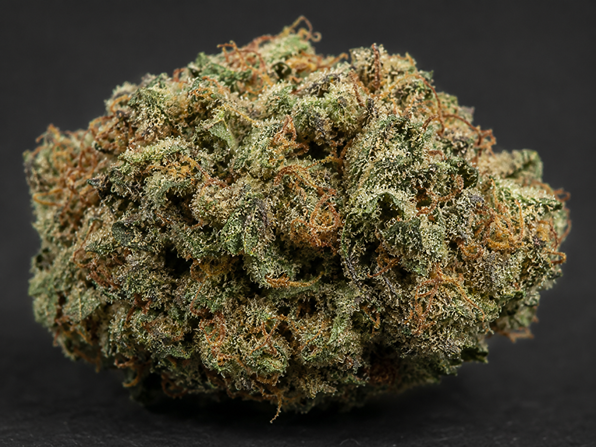
CBD flowers are the dried flowers of the hemp plant. They naturally contain cannabidiol (CBD) and aromatic terpenes, but less than 1% THC — the Swiss limit — so they aren’t intoxicating. They’re available from indoor, outdoor and greenhouse cultivation.
Depending on how they’re grown, the aroma, density and appearance of the buds differ noticeably. The range of CBD flowers runs from resin-rich indoor strains to sun-ripened outdoor flowers, each with its own character. In legal terms, they’re classed in Switzerland as a tobacco substitute. To enjoy the full terpene aroma, the flowers are best used in a vaporiser — without burning them.
What is CBD oil?
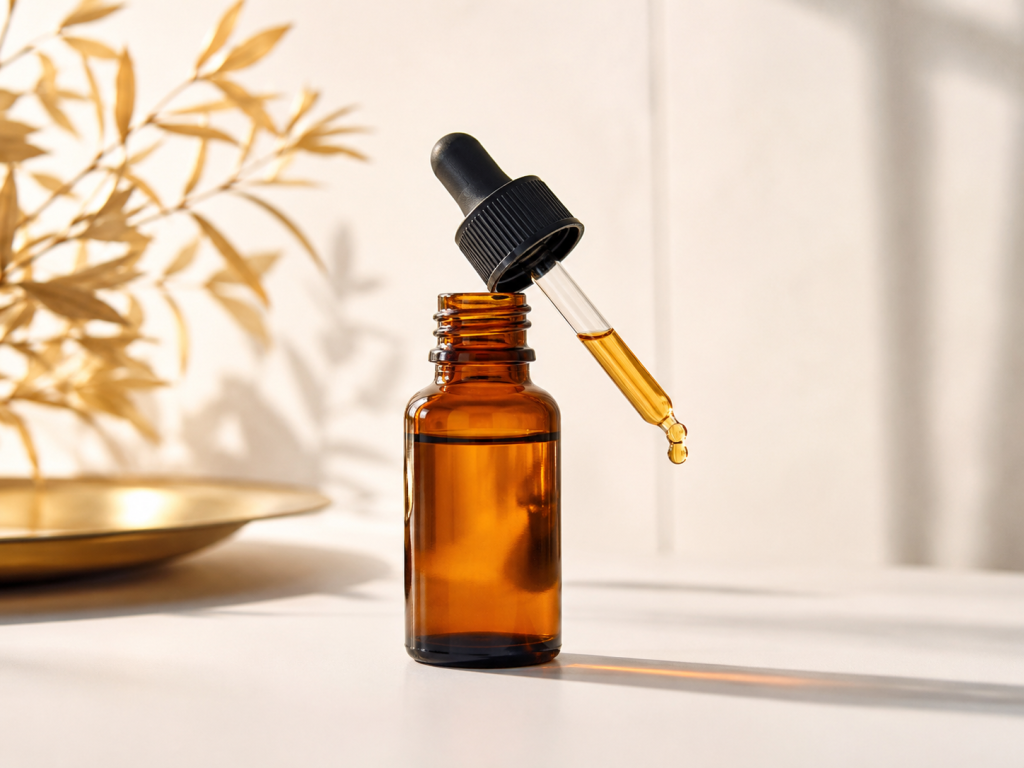
CBD oil is a hemp extract dissolved in a carrier oil such as MCT or hemp seed oil. In Switzerland it’s classed as a cosmetic and aroma product. It comes in different concentrations and as full or broad spectrum, and can be portioned precisely with the pipette.
The hemp extract is usually obtained gently through CO₂ extraction, then brought to the desired concentration — shown as a percentage — using a carrier oil. The CBD oil range offers different strengths and spectra. Its big advantage: the application is discreet and low-odour, the pipette makes every portion easy to repeat, and an opened bottle stays stable for months.
CBD oil vs CBD flowers: the direct comparison
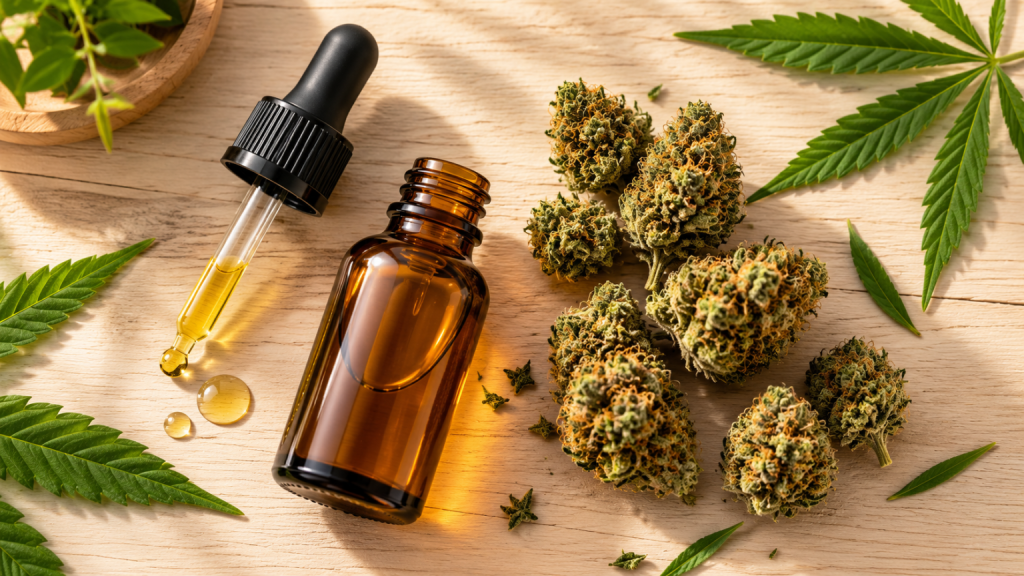
The main difference comes down to use and experience: CBD oil stands out for precise, repeatable dosing and a discreet, low-odour application, while CBD flowers offer a natural full spectrum with an intense terpene aroma and plenty of variety. The table below sets the two forms against each other, criterion by criterion.
| Criterion | CBD oil | CBD flowers |
|---|---|---|
| Form & texture | liquid extract in a carrier oil | dried, natural flowers |
| Use | portioned with the pipette | in a vaporiser or for aromatic use |
| Onset of effect | more gradual | usually faster |
| Duration | tends to last longer | tends to be shorter |
| Dosing | standardised, repeatable | naturally variable |
| Aroma & smell | neutral to slightly herbal | intense, strain-typical |
| Discretion | very high, low-odour | lower, noticeable smell |
| Shelf life | stable for months | best enjoyed fresh |
| Price per use | predictable, goes a long way | depends on strain and quality |
| Spectrum | full, broad or isolate | full spectrum by nature |
| Best for | beginners, everyday use, discretion | variety, aroma, a mindful ritual |
Three things to take away:
- CBD oil is about precision, discretion and predictable everyday use.
- CBD flowers are about a natural full spectrum, aroma and variety.
- Both come from legal Swiss hemp at under 1% THC — so there’s no wrong choice.
Onset and duration of effect
How quickly something is noticeable depends a lot on the form. Vaporised CBD flowers are perceived by many people more quickly, but usually over a shorter period. CBD oil, by contrast, tends to be felt more gradually and over a longer stretch.
Note :
How CBD feels varies from person to person and can’t be predicted in a blanket way. The points here describe general tendencies, not guaranteed results.
Use and discretion
When it comes to use, the two clearly part ways. CBD oil is easy to portion with the pipette, stays low-odour and is therefore especially discreet — ideal when you’re out and about. CBD flowers express their character best in a vaporiser, but come with a clearly noticeable smell. If you’d like to know more about quality differences, the article on indoor and outdoor flowers offers useful pointers.
- ✅ Discreet & flexible: CBD oil for everyday life and on the go.
- ⚠️ Avoid combustion: flowers are better vaporised, as burning creates unwanted by-products.
Dosing and predictability
When you want predictable, easy-to-repeat portions, CBD oil has the edge. The concentration is given as a percentage, and the pipette lets you match the same amount evenly each time. With CBD flowers, the natural CBD content varies from strain to strain, which makes an identical portion harder to hit. To find and keep an amount that suits you, the guide to CBD dosage walks you through it.
Flavour, aroma and experience
The experience is where the contrasts are greatest. CBD flowers bring an intense, strain-typical terpene aroma and stand for variety — many people value exactly this mindful ritual. CBD oil, depending on the carrier oil and spectrum, tastes fairly neutral to slightly herbal and stays unobtrusive. Which aromas come through depends on which terpenes shape the aroma.
Price and everyday practicality
What works out cheaper depends on how often and how much you use. A bottle of CBD oil goes a long way and stays usable for months, which makes the cost per use easy to plan. CBD flowers are best enjoyed fresh, and the price varies by strain, quality and cultivation.
- Shelf life: oil stays stable for a long time; flowers are best used fresh.
- Storage: keep both cool, dark and airtight.
Full or broad spectrum and the entourage effect
CBD flowers are full spectrum by nature: alongside CBD, they contain other cannabinoids such as CBG or CBN, plus terpenes. CBD oil additionally comes as broad spectrum (without THC) or as an isolate (CBD only). With oil, you can therefore choose more precisely what it contains.
Some people suspect an interplay between the plant’s various compounds, known as the entourage effect. This hasn’t yet been settled scientifically — but as a selection criterion, it helps you place the different spectra. If you’d like to go deeper, you can understand the types of CBD here.
Are CBD oil and CBD flowers legal in Switzerland?
Yes: in Switzerland, both CBD oil and CBD flowers are legal as long as the THC content stays below 1%. This Swiss limit is noticeably higher than the EU threshold of 0.2 to 0.3% — a real advantage for legal hemp products.
| Aspect | Rule in Switzerland |
|---|---|
| THC limit | under 1% (higher than the EU: 0.2–0.3%) |
| CBD oil | classified as a cosmetic/aroma product |
| CBD flowers | classified as a tobacco substitute |
| Minimum age | sold to customers aged 18 and over |
The key is to choose lab-tested products with a traceable origin. For the rest of the rules that apply, the dedicated article sums up whether CBD is legal in Switzerland.
CBD oil or CBD flowers: which form suits you?
Which form suits you best depends on your situation. If you value simple, repeatable portions and discretion, you’ll usually start with CBD oil. If you enjoy variety, terpene aroma and the ritual, you’ll lean towards CBD flowers — and the two combine without any trouble.
For beginners
For getting started, CBD oil is usually the more practical choice. The concentration is clearly stated, and the pipette lets you repeat the amount simply and evenly. On top of that, the application is discreet and low-odour — ideal for finding the amount that suits you at your own pace.
For experienced users
If you already have experience with CBD, you’ll often appreciate the wide variety and the intense, natural terpene aroma of CBD flowers. Used in a vaporiser, the differences between strains become especially noticeable.
Can you combine both?
Yes — you don’t have to commit to one. Many people combine both forms depending on the moment: CBD oil for discreet, predictable use during the day, and CBD flowers for the aromatic experience at home. That way the strengths of both forms complement each other, with no either-or.
Frequently asked questions about CBD oil and CBD flowers
Which works faster — CBD oil or CBD flowers?
Vaporised CBD flowers are perceived by many people more quickly than CBD oil, but usually over a shorter period. CBD oil tends to be felt more gradually and for longer. Exactly how it feels, however, is individual and depends on several factors — so it isn’t possible to make a blanket statement that applies to everyone.
Which is better for beginners — CBD oil or CBD flowers?
For beginners, CBD oil is usually more practical. The concentration is given as a percentage and is easy to repeat with the pipette, and the application is discreet and low-odour. CBD flowers offer more variety and a more intense aroma, but are harder to portion precisely. For a first step, oil is therefore often the more straightforward choice.
Which form is cheaper?
It depends on how often and how much you use. A bottle of CBD oil goes a long way and stays usable for months, which keeps the cost per use predictable. With CBD flowers, the price varies by strain, quality and cultivation. If you want a steady, consistent amount, oil tends to be more predictable; if you’re after variety, flowers offer more choice.
Can I use CBD flowers without combustion?
Yes. CBD flowers can be used in a vaporiser or for aromatic use, without burning them. This protects the delicate terpene aroma and avoids the unwanted by-products created by burning. A vaporiser is therefore the common alternative for experiencing the flowers and their strain-typical character.
How do I store CBD oil and CBD flowers properly?
Both forms are best kept cool, dark and airtight. CBD oil stays stable for months that way, while for CBD flowers, airtight, light-protected storage preserves the aroma and quality. It’s best to avoid direct sun, heat and moisture, as these can affect flavour and texture over time.
Do CBD oil and CBD flowers contain the same amount of CBD?
Not necessarily. With CBD oil, the CBD content is given as a percentage and is therefore standardised. With CBD flowers, the natural CBD content varies by strain and cultivation. This makes the figures between the two forms hard to compare directly — a look at the product details and the certificate of analysis brings clarity.


