Hemp Tea
Discover Swiss hemp tea at uWeed: herbal, fruit, green tea and black tea blends, grown and blended in Switzerland. Whether you want a 50 g loose-leaf pouch you measure yourself or a carton of ready-portioned 1.6 g tea bags, your herbal infusion is here. Every blend is sold as a food and contains under 1% THC. Buy CBD hemp tea online at uWeed today.
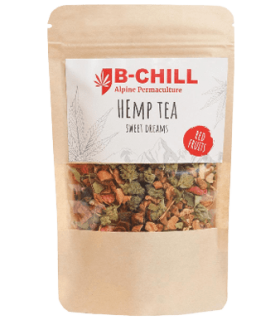
B-Chill Sweet Dreams Hemp Tea with Red Fruits — 40 g
Sweet Dreams by B-Chill is a hemp tea as a fruit blend, blended in Switzerland. The aroma runs towards apple, orange and strawberry. It comes as loose leaf, in a pouch. Let it steep for around 3 to 6 minutes. The blend is vegan, additive-free, free from artificial additives, gluten-free, sugar-free and caffeine-free, and no pesticides or herbicides are used.
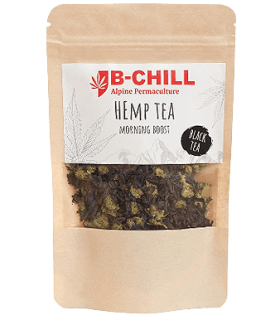
B-Chill Morning Boost Black Tea with CBD Hemp — 20 g
Morning Boost by B-Chill is a hemp tea on a black tea base from Switzerland. The flavour leans towards hemp. It comes as loose leaf, in a pouch. Steeping time is around 3 to 6 minutes. The mix is vegan, additive-free, free from artificial additives, gluten-free, sugar-free and caffeine-free, and no pesticides or herbicides are used.
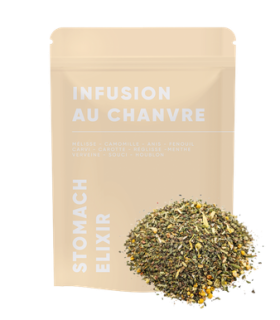
La Salade Stomach Elixir Herbal hemp tea — 50 g
With Stomach Elixir, La Salade offers a hemp tea as a herbal blend made in Switzerland. On the palate it moves towards hemp, mint and spice. It comes as loose leaf, in a pouch. Allow around 7 minutes of steeping. The infusion is vegan, additive-free, free from artificial additives, gluten-free, sugar-free and caffeine-free, and no pesticides or herbicides are used.
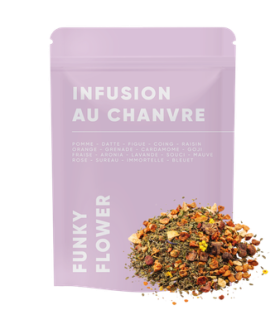
La Salade Funky Flower Fruity and floral hemp tea — 50 g
Funky Flower by La Salade is a hemp tea as a herbal blend, blended in Switzerland. The aroma runs towards hemp, fruit and strawberry. It comes as loose leaf, in a pouch. Let it steep for around 10 minutes. The blend is vegan, additive-free, free from artificial additives, gluten-free, sugar-free and caffeine-free, and no pesticides or herbicides are used.
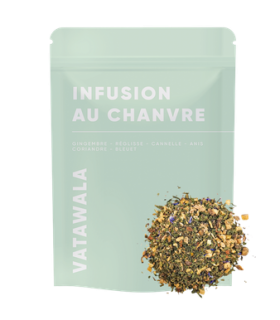
La Salade Vatawala Spiced hemp tea — 50 g
Vatawala by La Salade is a hemp tea as a herbal blend from Switzerland. The flavour leans towards hemp, spice and sweetness. It comes as loose leaf, in a pouch. Steeping time is around 5 minutes. The mix is vegan, additive-free, free from artificial additives, gluten-free, sugar-free and caffeine-free, and no pesticides or herbicides are used.
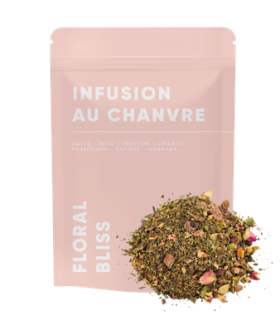
La Salade Floral Bliss Floral hemp tea — 50 g
Floral Bliss by La Salade is a hemp tea as a herbal blend from Switzerland. The flavour leans towards hemp, floral notes and orange. It comes as loose leaf, in a pouch. Steeping time is around 10 minutes. The mix is vegan, additive-free, free from artificial additives, gluten-free, sugar-free and caffeine-free, and no pesticides or herbicides are used.
Alpsbee Green Tea Cannabis Hemp Tea 2.8g Tea Bags — 10 pc
Green Tea by Alpsbee is a hemp infusion on a green tea base, blended in Switzerland. The aroma runs towards peach and hemp. It comes as tea bags of 1.6 g, in a carton box. Let it steep for around 5 minutes. The mix is lab tested, vegan, additive-free, free from artificial additives, gluten-free, sugar-free and caffeine-free, and no pesticides or herbicides are used.
Alpsbee Black Tea Cannabis Hemp Tea 2.8g Tea Bags — 10 pc
Black Tea by Alpsbee is a hemp infusion on a black tea base from Switzerland. The flavour leans towards coconut and hemp. It comes as tea bags of 1.6 g, in a carton box. Steeping time is around 5 minutes. The blend is lab tested, vegan, additive-free, free from artificial additives, gluten-free, sugar-free and caffeine-free, and no pesticides or herbicides are used.
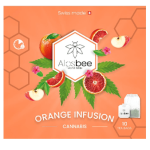
Alpsbee Orange Infusion Cannabis Hemp Tea 2.8g Tea Bags — 10 pc
With Orange Infusion, Alpsbee offers a hemp tea as a fruit blend made in Switzerland. On the palate it moves towards apple, orange and hemp. It comes as tea bags of 1.6 g, in a carton box. Allow around 5 minutes of steeping. The infusion is lab tested, vegan, additive-free, free from artificial additives and sugar-free, and no pesticides or herbicides are used.
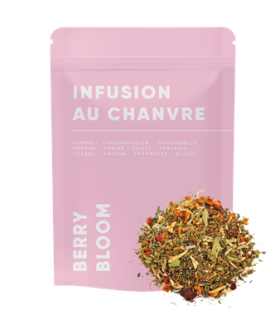
La Salade Berry Bloom Hemp tea with berries — 50 g
Berry Bloom by La Salade is a hemp tea as a herbal blend, blended in Switzerland. The aroma runs towards hemp, berry and strawberry. It comes as loose leaf, in a pouch. Let it steep for around 7 minutes. The blend is vegan, additive-free, free from artificial additives, gluten-free, sugar-free and caffeine-free, and no pesticides or herbicides are used.
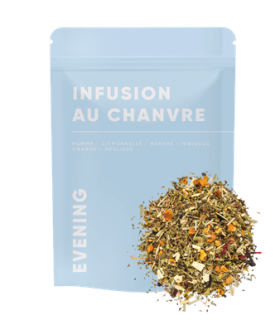
La Salade Evening Hemp tea with mint and citrus — 50 g
With Evening, La Salade offers a hemp tea as a herbal blend made in Switzerland. On the palate it moves towards hemp, citrus and orange. It comes as loose leaf, in a pouch. Allow around 7 minutes of steeping. The infusion is vegan, additive-free, free from artificial additives, gluten-free, sugar-free and caffeine-free, and no pesticides or herbicides are used.
Products 1-11 of 11
What is hemp tea?
Hemp tea is an infusion brewed from the hemp plant, and in every blend here the hemp sits alongside herbs, fruit or a tea base. It is a herbal tea whose distinguishing ingredient is hemp — poured with hot water and drunk, never smoked, and never an extract or an oil. What you buy is dried plant material for the pot, not a concentrate.
You will see it searched under a lot of names. People type CBD tea, CBD infused tea, CBD herbal tea, cannabis tea and weed tea, and all of those point at this product. On the pack it is hemp tea, because Swiss food labelling does not allow a cannabinoid indication on a food, and the plant behind every one of those names is the same one, Cannabis sativa L.
That food classification is the frame for this whole page. Hemp tea is placed on the market under the Foodstuffs Act as a herbal infusion, which is why we describe what is in the bag and never what drinking it does. It is also not an oil: an infusion gives up only what hot water can take from leaf and flower over a few minutes, while CBD oil and hemp oil from Switzerland is an extract carried in a base oil. The hemp itself comes through grassy and hay-like, and you smell it the moment the pouch opens.
Hemp flower, hemp leaf and what goes into the blend
Hemp tea is made from the leaves and flowers of Cannabis sativa L., and both go into the blends on this page. The two parts do the same job to different degrees: they carry the aroma. A hemp flower tea leans resinous and floral; a hemp leaf tea is the milder end, and hemp tea leaves, stalk and the herbs around them give the hay-like base most blends here are built on. Hemp tea flowers are one ingredient among several on this page, never the whole bag.
Cut and sift decide how quickly a blend opens in water, which is why a fine herbal mix and a coarse leaf tea do not steep to the same clock. No product in this range declares a cut size, so read the steeping time on the pack instead — it tells you the same thing in the unit you actually need. And if you want the flower on its own rather than blended in, Swiss CBD flowers are sold whole by the gram.
How to choose a hemp tea?
You choose a hemp tea on three things, and all three are printed on the pack: the serving type, the blend base, and where it was grown and what the producer declares about it. The three run independently of each other — a herbal blend comes as loose leaf or in bags, and a Swiss-grown tea can sit on any base — so treat them as three separate decisions rather than one. Pack size and steeping time sit on each product page, next to the blend. Compare those three lines before you compare pictures; they tell you more about the cup than the packaging does.
Tea bags or loose leaf?
Tea bags hand you a measured portion, loose leaf hands you control over it, and loose leaf is the more common serving type in this range. The bags come from Alpsbee as 1.6 g sachets in a carton box and steep in around five minutes; the loose leaf comes from B-Chill and La Salade in resealable pouches and steeps between three and ten minutes depending on the blend.
Four things separate them in practice:
- A hemp tea bag is one portion already weighed, and needs no strainer or spoon.
- Loose leaf you weigh yourself, so how strong the brew comes out — its aroma and its colour — is yours to set.
- A pouch reseals after every use; a carton keeps each sachet closed until you take it out.
- Compare price per portion, not price per pack: a 10-piece carton and a 50 g pouch are different quantities.
Take the bags for the same cup every time with nothing to measure; take the loose leaf to run your own spoon.
Herbal, fruit, green tea and black tea blends
The base a blend is built on decides how the cup tastes and whether it brings caffeine with it. Four bases run through these hemp teas, and the order below is the amount of tea leaf in the blend, from none to most — which is also the order caffeine arrives in.
| Base | Aroma the packs declare | Caffeine |
|---|---|---|
| Herbal | hemp with mint, spice, berry, floral notes and citrus | none |
| Fruit | apple, orange and strawberry over hemp | none |
| Green tea | peach and hemp | from the green tea leaf |
| Black tea | coconut and hemp | from the black tea leaf |
Herbal is the most common base here, and it is the one that lets the hemp through most plainly. Hemp reads grassy and hay-like under all four bases, so the base changes the frame around it rather than the character of it — and if caffeine is the thing you are checking, the FAQ below says where it comes from.
Swiss cultivation and what the pack declares
What you can verify about a Swiss hemp tea is printed on the pack: where it was grown, what is not in it, and whether that batch was tested. Buyers often look for this as Swiss cannabis tea; on the pack it is hemp tea, and every blend here was grown and blended in Switzerland.
These declarations hold across the range:
- Grown and blended in Switzerland, by Alpsbee, B-Chill and La Salade.
- Vegan, and free from artificial additives.
- No pesticides and no herbicides used in cultivation.
- Gluten-free and sugar-free on most blends, not on every one — the pack says which.
- Organic certification where a producer holds one; for organic hemp tea, check the certificate rather than the word.
Lab reports belong to a producer and a batch, not to a category. Where a report exists you have transparent access to the lab report on the product page, and where a brand supplies no report, we say so on the product page. Swiss cultivation rules decide how the hemp plant may be grown here.
Where to buy hemp tea in Switzerland?
You can buy hemp tea in Switzerland in three kinds of place: the supermarket, the drugstore and pharmacy shelf, and a specialist retailer. They differ in how many blends they carry and in how much the pack tells you, and the two go together — the wider the range, the more is usually declared on it.
In a supermarket, hemp tea sits on the herbal tea shelf, normally as one or two blends in bags. It is the fastest way to get a box today. Origin, producer and batch information are rarely printed on that box, the selection changes with the season, and there is usually nothing to compare a blend against.
Drugstores and pharmacies are the second channel. The selection is narrower again and the tea is generally shelved as a herbal infusion rather than as hemp, but you can ask someone about it, and individual branches carry brands the supermarket does not.
A specialist retailer is the third, and it is the only one where the blend base, the serving type, the Swiss origin and the batch information are all declared next to each other. That is what the channel is for: not more tea, but enough written down about each one to choose between them. If you are searching for hemp tea near you, a shop and an online order both work — the difference is how much you know about the pack before you open it.
Order hemp tea online at uWeed
Order hemp tea online at uWeed and you get several independent Swiss blending houses on one shelf — Alpsbee, B-Chill and La Salade — with the blend base, the serving type, the pack size and the steeping time written on every listing. That is what makes them comparable: you are choosing between blends on stated attributes rather than between photographs of boxes.
Sort by price, by newest or by rating, and filter by brand and serving type to get to the shortlist you want. Star ratings and written reviews sit under each blend and cover what customers found in the cup — aroma, cut, packaging and how it brewed.
We ship discreetly from Switzerland with the usual payment methods, and delivery is free from CHF 49. Order before 4 PM, delivered tomorrow (within Switzerland). The rest of the range is in the Swiss CBD shop.
Frequently asked questions about hemp tea
Does hemp tea contain THC?
Hemp tea contains THC, at under 1% THC. Hemp and hemp preparations below that level are not narcotics under Swiss law, which is why hemp tea is sold here as a food. THC and cannabidiol are two different cannabinoids of the hemp plant, and we set out the key differences between CBD and THC in our blog.
Is hemp tea legal in Switzerland?
Yes, hemp tea is legal in Switzerland and is sold as a food, as long as the THC content stays under 1% THC. It is placed on the market as a herbal infusion under food law and is not a medicine. You can read more on the current legal position on CBD products in Switzerland in our blog.
Does hemp tea contain caffeine?
Hemp contains no caffeine of its own, so a herbal or a fruit blend is caffeine-free. A blend built on green tea or on black tea carries that leaf’s caffeine with it, and this range includes both. Caffeine follows the base, not the hemp. The base is printed on every pack, so that is where to check before you buy.
How should you store hemp tea?
Stored airtight, cool, dry and out of direct light, hemp tea keeps for up to twelve months. Reseal the pouch after every use — loose leaf is the more common serving type here, and an open pouch loses its aroma faster than a closed carton of sachets. A tin or a jar keeps it just as well.