Rolling a perfect joint is a true art that blends precision, patience, and the right materials. In Switzerland, where only cannabis products with less than 1% THC are legal, including CBD flowers and legal hemp resins, knowing how to roll responsibly is essential. This comprehensive guide walks you through every technical and creative step of the process — from choosing the right papers and filters to mastering traditional and advanced techniques such as cone, tulip, or cross joints.
You’ll learn how to prepare your CBD properly, how to roll cleanly by hand or with accessories, and how to avoid common mistakes like uneven burns or a joint that falls apart. Whether you’re rolling for relaxation, ritual, or routine, this tutorial helps you develop a smooth, repeatable method — with complete legal compliance and a focus on harm reduction. Rolling a joint isn’t just about technique — it’s about creating a consistent and enjoyable experience with safe, high-quality materials.
Table of Contents on Roll a Perfect Joint
- What is a joint and is CBD legal?
- What do you need to roll a joint?
- How to roll a joint for beginners in 5 easy steps?
- What are advanced joint rolling techniques?
- How to roll a joint without proper materials?
- Not in the mood to roll? Pre-rolled joint options
- Joint problems? Quick solutions
- How to smoke joints responsibly
- How to use filters and accessories properly?
What is a joint and is CBD legal?
A joint is a hand-rolled cigarette that contains cannabis — whether flowers or resin — without any tobacco. It differs from a traditional cigarette in both content and effects. In Switzerland, its legality depends entirely on the cannabis used. Only products containing less than 1% THC are legal for purchase and consumption. These include CBD flowers, legal hemp resins, and all other cannabis extracts that comply with the national THC threshold.
Any product exceeding this limit is classified as a narcotic, even in small quantities, and its possession or use is prohibited. This legal framework is specific to Swiss legislation, and differs significantly from neighboring countries:
- In France, CBD products are tolerated if they contain less than 0.3% THC, but raw flowers remain banned — even if non-psychoactive.
- In Germany, the maximum legal limit is 0.2% THC, and only certified low-THC products can be sold through licensed shops or pharmacies.
This distinction is crucial for consumers who want to enjoy CBD responsibly and legally. Always ensure the product you use complies with Swiss legal requirements, especially if you intend to travel or shop across borders.
What’s the difference between a joint, a spliff and a blunt?
Before you start rolling, it’s essential to understand the key differences between the main types of cannabis rolls. Each one has its own composition, combustion rate, and taste profile — and choosing the right format will shape your entire smoking experience.
- Joint: Rolled using only legal CBD cannabis flowers or hash (under 1% THC in Switzerland). No tobacco involved. This format offers a smoother, slower burn and allows full appreciation of terpenes like myrcene, limonene, or pinene. It’s the cleanest way to enjoy your flower, with no nicotine or additives.
- Spliff: A mix of cannabis and tobacco, commonly used across Europe. The tobacco content alters the flavor and intensifies the effects by combining cannabinoids with nicotine. While it burns faster, it also increases exposure to carbon monoxide and tars — making it less suitable for those seeking a pure CBD experience.
- Blunt: Cannabis rolled in a tobacco leaf or flavored cigar wrap. It delivers a dense, aromatic smoke with a strong tobacco flavor. However, it adds a significant amount of nicotine and tar, and may fall under tobacco product regulations in Switzerland. Best reserved for experienced users aware of the added risks.

Knowing which one you’re rolling isn’t just a matter of taste — it also affects legality, health, and how your joint performs. If you’re in Switzerland and want to stay compliant, a pure CBD joint is the safest and cleanest option.
What do you need to roll a joint?
A well-rolled joint depends on three essentials: quality CBD flower, the right rolling papers, and a filter suited to your preferences. To that, you can add helpful accessories like a grinder, a rolling tray, or a manual roller to improve consistency and cleanliness.
The quality of your flower, the paper’s thickness, and even the humidity level all influence how the joint burns and tastes. From the grammage of the paper to the texture of your grind, every detail plays a role in ensuring a smooth experience — and a perfect burn.
What is the best CBD for rolling joints?
The quality of your CBD flower directly affects how your joint burns, how it tastes, and how smooth the draw feels. In Switzerland, only strains with less than 1% THC are legal. For a pleasant, well-balanced experience, go for premium CBD flowers that are rich in terpenes — varieties like Harlequin or Charlotte’s Web are good examples.
The ideal humidity level is between 55% and 65% RH: it helps preserve aroma and ensures even combustion. If the flower is too dry, it burns too fast; too moist, and it won’t stay lit. Make sure the texture is just right — not too compact, not too powdery — to get a clean roll and a steady burn.
What are the best rolling papers for joints?
Your choice of rolling paper has a direct impact on how your joint burns, how it tastes, and how smooth it feels to inhale. For a slow and even burn that preserves terpenes, unbleached brown papers like OCB (18 g/m²) are ideal. On the other hand, white papers such as Rizla (20 g/m²) burn faster and are often easier to roll — making them more beginner-friendly.Paper size matters too. 1 ¼ papers (≈78 mm) are perfect for short solo sessions, while King-Size Slims (≈110 mm) suit longer or shared joints. Whether you prefer thin, brown, bleached, or organic papers, you’ll find plenty of rolling papers for every preference on the market.
Which filter is best for joints: cardboard, activated carbon or glass?
The filter you choose doesn’t just shape the draw — it also affects the temperature, purity, and flavor of your smoke. Each type offers a different balance between filtration, airflow, and taste.
- Cardboard tips (often called “toncar”) are simple, cheap, and easy to roll. A standard size like 5 × 30 mm gives you solid airflow with a neutral taste. It’s the best option for beginners and costs around €0.05 per piece.
- Activated carbon filters trap up to 70% of tar thanks to their high porosity (~100 m²/g), while still letting aromatic terpenes through. They deliver a cooler, cleaner smoke and typically last for about 5 joints, at €0.10 to €0.20 each.
- Glass tips made of borosilicate are reusable, completely neutral in taste, and preserve up to 95% of terpenes. While more expensive (around €10), they’re washable and durable for over 100 uses — making them ideal for frequent consumers who want consistent quality.
Each type has its pros and cons, so the “best” filter depends on what matters most to you: price, purity, or reusability.
Useful smoking accessories for rolling joints
Some accessories aren’t essential, but they can greatly improve your joint-rolling experience — making it cleaner, faster, and more consistent.
- 4-piece grinder: Ensures an even grind and collects kief thanks to its fine mesh screen (≈150 µm). A must if you want smooth combustion and a fine, consistent texture.
- Non-slip rolling tray: Keeps your space tidy, prevents spills, and makes it easier to organize your tools. Ideal for keeping everything in one place without the mess.
- Manual or electric rolling machine: Great for quick, consistent rolling. Especially helpful for beginners or when rolling several joints in a row.
- 62% RH humidipack: Helps maintain your flowers at the optimal humidity level (~60%), preserving aroma and preventing uneven or overly fast burns.
What grinder is best for consistent grinding?
To get a fine and even texture, a four-piece grinder with a mesh screen of around 150 µm is the best choice. Among the different types of herb grinders, aluminum models stand out for their durability and precision, especially when it comes to preserving airflow and collecting kief. Electric grinders are faster but may slightly warm the material, while two-piece grinders are more basic and don’t allow for separation of trichomes.
Why use a rolling tray?
A clean, stable surface makes rolling easier and avoids wasting material. That’s exactly what rolling trays are made for: their raised edges keep your flower and accessories in place, reduce mess, and streamline your preparation. Whether you’re rolling at home or on the go, using a tray makes the process smoother and more organized.
When to use a rolling machine vs hand rolling?
A manual rolling machine lets you roll a tight, consistent joint in about 10 seconds, compared to around 45 seconds when rolling by hand. It ensures even tension, reduces mistakes, and saves time — especially if you’re rolling several joints in a row. Electric rollers are even faster, but offer less of that handcrafted feel. Whether you’re a beginner or just want perfect results with less effort, rolling machines are a great backup to have on hand.
How to roll a joint for beginners in 5 easy steps?
Rolling a clean, smooth-burning joint doesn’t require years of practice — just the right method, a bit of patience, and quality materials. Whether you’re using CBD flowers or hash, this beginner-friendly guide will walk you through the process from prep to lighting.
From grinding and filtering to rolling and sealing, these 5 steps will help you build a consistent routine that works every time.
Step 1 : How to prepare CBD and cannabis for rolling?
Start by checking the humidity of your flower — ideally between 55% and 65% RH. The buds should feel dry to the touch but slightly springy. This range preserves aroma and ensures an even burn.
Grind your CBD flower to a medium-fine texture using a four-piece grinder. The particles should be around 0.5 to 1 mm in size. If it’s ground too fine, airflow will suffer; too coarse, and the burn will be uneven. Remove any stems or thick bits to avoid tearing the paper.
💡 You can also use CBD hash or resin as an alternative. Break it down finely or mix it with ground flower to improve combustion and airflow. Check out our full range of CBD hash and resin alternatives for rolling.
The ideal quantity per joint is between 0.3 and 0.6 grams, depending on paper size, desired effect, and your personal tolerance.
Step 2: How to make a perfect joint filter?
A good filter tip is essential for stability, airflow, and comfort. It keeps particles out of your mouth, protects from heat, and gives your joint a clean structure — especially near the base. Depending on your style, you can go for a simple cardboard tip, a more rigid Moroccan-style filter, or a charcoal filter for smoother smoke.
How to make cardboard joint tips?
Cut a thin strip of unbleached cardboard (approx. 5 × 30 mm). Fold two or three small accordion-style pleats, then roll the rest tightly around them. This creates a spiral filter with good airflow and a stable shape — perfect for beginners.
How to roll Moroccan-style filters?
This variation of the classic tip adds extra structure. After three precise folds to form an inner “M”, roll the outer layer tightly to reinforce the shape. It provides a firmer grip and helps prevent clogging or collapse while smoking.
How to use activated carbon filters?
For a smoother, more filtered experience, activated carbon joint filters are a solid choice. Thanks to their high surface area (~100 m²/g), they can trap up to 70% of tar, while still preserving the flavor of your CBD. On average, one filter lasts for about five joints, and prices range from €0.10 to €0.20 per piece.
Step 3: How to distribute cannabis evenly in a joint?
Even distribution is key to avoiding uneven burns — commonly known as “canoeing”. To roll a joint that burns smoothly from start to finish, spread your ground CBD in a slightly conical shape: thinner near the filter and thicker toward the tip.
Break the material into small clusters of about 0.5 cm each and position them along the length of the paper. Then gently press them down with a slim tool (like a pen or metal stick) to compact the content without overpacking. This helps create a balanced airflow and an even combustion line, ensuring the same flavor all the way through.
Step 4: How to roll a joint without mistakes?
Rolling a joint properly means finding the right balance: not too tight, not too loose. If the roll is too firm, airflow is blocked and combustion struggles; too soft, and the joint may canoe or fall apart. A good roll also requires even pressure and proper alignment.
Use papers with the adhesive strip facing you, and gently tuck the bottom edge over the material as you roll upward. Once your shape is formed, moisten the glue strip and seal the joint by pressing lightly. Twist the tip to close it off — and you’re almost done.
How to roll a joint normally?
This is the classic method, ideal for beginners. Place your CBD evenly, shape it lightly, and roll with consistent pressure at a ≈ 45° angle. Once sealed, twist the tip for a clean finish. This method delivers a smooth draw and reliable combustion.
How to roll a joint backwards? (Dutch method)
This advanced technique uses the paper in reverse, with the glue strip facing downward. After rolling, you tear off the excess paper — reducing the amount of material burned and minimizing paper taste. It produces a slower, more aromatic burn, making it a favorite for flavor-focused smokers.
Step 5: How to pack, close and light your joint properly?
Once rolled, gently pack the open end using a small stick, pen tip, or similar tool. The goal is to compress the flower just enough to hold its shape, without restricting airflow. Then twist or fold the end to seal it.
When lighting, avoid pulling too hard right away. Instead, rotate the tip over a flame for even ignition. Once glowing, take slow, steady draws to maintain combustion. A properly lit joint won’t go out and won’t burn too fast — giving you time to enjoy the full flavor and aroma of your CBD.
💡 Take your time and enjoy the process. Rolling is not just about technique — it’s about creating a relaxing, consistent ritual that fits your pace and preference.
What are advanced joint rolling techniques?
Once you’ve mastered the basics, there’s room to explore more creative and technical ways to roll. These advanced joint types can enhance airflow, increase capacity, or simply make your session more fun and unique. Whether you’re looking to impress or just experiment, here are four iconic techniques to try.
How to roll a cone joint?
A cone joint follows the same basic steps as a regular roll but uses a tapered shape to hold more flower and produce a slower burn. When filling your paper, add more CBD toward the tip than near the filter. Lay it out so the distribution forms a gradient, then roll starting from the filter end upward. To create the signature cone shape, hold the paper at a slight diagonal as you roll and press gently to maintain structure.

How to roll a tulip joint?
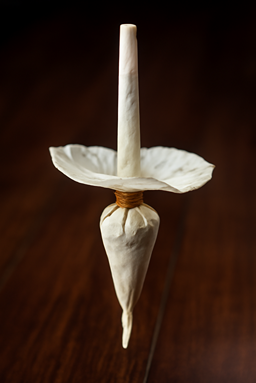
The tulip joint is visually striking and delivers a powerful session. Start by rolling a tight classic joint — it will act as the base. Then create a paper “string” by twisting a rolling paper lengthwise. To make the tulip head, stick three papers together into a square, then fold into a cone and seal with the glue strip.
Fill the cone generously with ground CBD or hash, then insert the base joint into the open end. Wrap the paper string tightly around the junction to seal it. If needed, reinforce with a second tie. Once secure, your tulip joint is ready to light.
How to roll a cross joint?
Despite its appearance, a cross joint is relatively easy once you know the steps. Roll two joints: one large cone and one thinner stick. Poke a hole through the cone about one-third from the tip using a toothpick. Enlarge it slightly without tearing the paper.
Pierce a small hole through the thinner joint as well — this ensures airflow. Carefully slide the smaller joint through the hole in the cone to form a cross. Seal the intersection with small pieces of sticky rolling paper to secure it before lighting.

How to roll a joint with 3 papers?
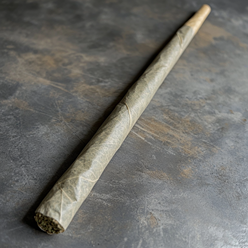
If you need more space or want to roll a long joint to share, using three papers is a great method. Slightly overlap them (by less than 0.5 mm) to create a wider base. Spread your flower evenly across the length, making sure not to overpack.
Roll slowly while keeping even pressure, and make sure the papers align properly. Moisten the glue strip of the top layer and seal firmly. Finally, press gently to ensure there are no loose spots and that the roll burns evenly from end to end.
How to roll a joint without proper materials?
No papers? No filter? No problem — at least not immediately. While nothing beats proper rolling gear, a few clever substitutions can save the session when you’re out of essentials. Just be cautious about what you use and avoid anything chemically treated or unsafe to burn.
How to roll a joint without papers?
If you’re out of rolling papers, you can improvise with an untreated paper source — like blank book pages (without ink) or unprinted banknotes. Avoid glossy or chemically coated materials at all costs. A small piece of raw tissue or uncoated cardboard can also work in a pinch.
Alternatively, you can empty a regular cigarette and refill it with ground CBD. While not ideal in taste or airflow, this method gives you a usable structure — just make sure to pack the CBD tightly to avoid empty pockets and uneven burns.
⚠️ Keep in mind: rolling without papers is a temporary solution. It may compromise flavor, combustion, or safety, so use this approach only as a last resort.
How to roll a joint without a filter?
If you’re missing a filter tip, there are quick fixes to maintain structure. Lightly pack the base of the joint using a pen tip or toothpick — this helps hold everything in place and prevents loose material from falling out.
Leave about 1 cm of empty paper at the mouth end to act as a buffer zone. If you want extra stability, improvise a filter using clean, non-thermal cardboard from a receipt, business card, or food package. The smoke will be hotter and denser, but still manageable.
Not in the mood to roll? Pre-rolled joint options
If you don’t feel like grinding, rolling, or prepping, pre-rolled joints offer a practical and high-quality alternative. Each one is perfectly dosed, evenly packed, and ready to light — no tools required.
In Switzerland, only CBD joints containing no more than 1% THC are legal. All our pre-rolls meet this strict requirement and are made from premium CBD flowers. Whether you’re short on time or simply want a break, it’s the easiest way to enjoy cannabis legally and safely.
Take a look at our full selection and explore our pre-rolled legal cannabis joints — perfectly rolled, perfectly legal.
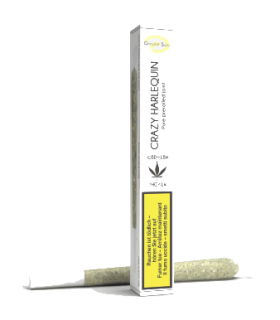
Genuine Swiss Crazy Harlequin Pre-Rolls CBD Joints Indoor — 1 pc
CBD 20%THC 0.8%
With Crazy Harlequin Pre-Rolls, Genuine Swiss offers a hybrid indoor ready-to-smoke CBD joint produced in Switzerland. At 20% CBD and less than 1% THC, the declaration is clear. It is machine-rolled from 100% flowers in the canton of Aargau. It carries a carton filter. The aroma leans towards sweet and floral notes. That makes this hemp joint tobacco-free, nicotine-free, additive-free, free from fungicides, herbicides and pesticides, GMO-free and compliant on heavy metals.
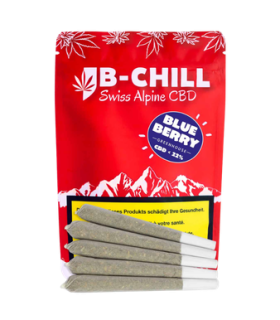
B-Chill Blueberry Pre-Rolls CBD Joints Greenhouse — 5 to 10 pc
CBD 22%THC 0.7%
With Blueberry Pre-Rolls, B-Chill offers an Indica-dominant greenhouse ready-to-smoke CBD joint produced in Switzerland. At 22% CBD and less than 1% THC, the declaration is clear. It is machine-rolled from 100% flowers in the canton of Valais. It carries a carton filter and hemp paper. The aroma leans towards sweet and floral notes. That makes this hemp joint tobacco-free, nicotine-free, additive-free, free from fungicides, herbicides and pesticides, unbleached and GMO-free.
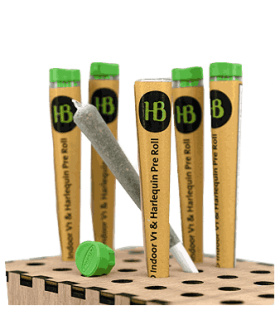
Herba di Berna V1 + Harlequin Trim Pre-Rolls CBD Joints Indoor — 1 pc
CBD 18%THC 0.8%
With V1 + Harlequin Trim, Herba di Berna offers a hybrid indoor pre-rolled CBD joint produced in Switzerland. At 18% CBD and less than 1% THC, the declaration is clear. It is hand-rolled from 100% trim in the canton of Bern. It carries a carton filter and wood pulp paper. The aroma leans towards citrus and floral notes. That makes this hemp joint tobacco-free, nicotine-free, additive-free, free from fungicides, herbicides and pesticides, unbleached, GMO-free and compliant on heavy metals.
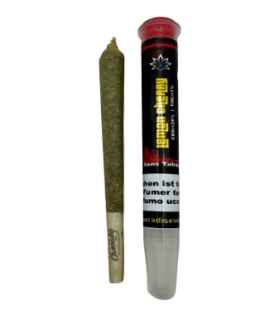
Paradise Weeds Lemon Cherry Pre-Rolls CBD Joints Indoor — 1 pc
CBD 26%THC 0.5%
Lemon Cherry Pre-Rolls by Paradise Weeds is an Indica-dominant indoor ready-to-smoke CBD joint, made in Switzerland. It reaches 26% CBD, with less than 1% THC. It is machine-rolled from 100% flowers in the canton of Vaud. It carries a carton filter and hemp paper. The joint unfolds into citrus, diesel and fruity notes. That makes this CBD joint tobacco-free, nicotine-free, additive-free, free from fungicides, herbicides and pesticides, unbleached, GMO-free and compliant on heavy metals.
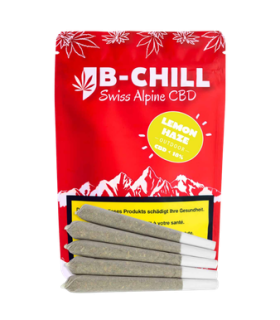
B-Chill Lemon Haze Pre-Rolls CBD Joints Outdoor — 5 to 10 pc
CBD 18%THC 0.4%
Lemon Haze Pre-Rolls by B-Chill is a Sativa-dominant outdoor ready-to-smoke CBD joint produced in Switzerland. Content sits at 18% CBD, with less than 1% THC. It is machine-rolled from 100% flowers in the canton of Valais. It carries a carton filter and hemp paper. The flowers carry floral and citrus notes. That makes this CBD pre-roll tobacco-free, nicotine-free, additive-free, free from fungicides, herbicides and pesticides, unbleached, GMO-free and compliant on heavy metals.
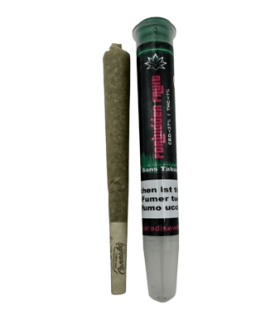
Paradise Weeds Forbidden Fruit Pre-Rolls CBD Joints Indoor — 1 pc
CBD 27%THC 0.5%
Forbidden Fruit Pre-Rolls by Paradise Weeds is an Indica-dominant indoor ready-to-smoke CBD joint produced in Switzerland. Content sits at 27% CBD, with less than 1% THC. It is machine-rolled from 100% flowers in the canton of Vaud. It carries a carton filter and hemp paper. The flowers carry skunky, spicy and diesel notes. That makes this CBD pre-roll tobacco-free, nicotine-free, additive-free, free from fungicides, herbicides and pesticides, unbleached, GMO-free and compliant on heavy metals.
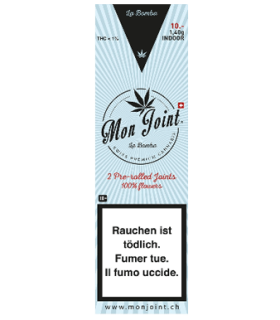
Monjoint La Bomba Pre-Rolls CBD Joints Indoor — 2 pc
CBD 22%THC 0.6%
La Bomba Pre-Rolls by Mon Joint is a hybrid indoor ready-to-smoke CBD joint produced in Switzerland. Content sits at 22% CBD, with less than 1% THC. It is machine-rolled from 100% flowers in the canton of Bern. It carries a carton filter and wood pulp paper. The flowers carry earthy, citrus and fruity notes. That makes this CBD pre-roll tobacco-free, nicotine-free, additive-free, free from fungicides, herbicides and pesticides, GMO-free and compliant on heavy metals.
Joint problems? Quick solutions
A poorly rolled joint can ruin the moment — whether it won’t stay lit, burns unevenly, or starts to fall apart. Fortunately, these issues are common and easy to fix if you know what to look out for.
How to make a joint that doesn’t go out?
If your joint keeps going out, the problem usually lies in the packing or humidity. Use a slim object like a pen or metal tip to gently tamp the tip with around 1 kg of pressure.
When lighting, rotate the joint slowly over the flame — about one full turn per second — to evenly ignite the tip. Inhale gently at a rate of ~2 L/min to maintain consistent airflow. Also, check that your rolling paper has a relative humidity around 50% to avoid microcracks that stifle combustion.
How to fix a joint that’s falling apart?
No need to start over if your joint begins to unravel. First, re-twist the base inwards — a 180° twist helps compact the contents.
Then lightly moisten the damaged area with 2 or 3 fine sprays of water. Use a small piece of gummed paper like a patch and press it over the tear for a few seconds to seal. Let it dry for 10 seconds before relighting.
How to prevent a joint from canoeing?
Canoeing — when a joint burns down one side faster than the other — is typically caused by poor distribution or loose rolling. Break your ground flower into segments of about 0.5 cm, and apply even pressure during packing — around 1.2 kg is ideal.
Make sure the rolling paper is slightly moist (≈ 50% RH) so it adheres snugly to the content. If canoeing starts while burning, you can “correct” it by gently dragging a tool (like a tamping stick) along the fast-burning side to regulate heat.
How to smoke joints responsibly
Enjoying a joint should never mean putting your health at risk. Responsible cannabis use starts with mastering your dosage, understanding potential side effects, and knowing when alternative methods like vaporization might be the better choice — especially for regular users.
What are the risks of smoking joints and how to avoid them?
Mixing CBD with tobacco can increase cardiovascular risk, notably by raising carbon monoxide levels by over 30%. Even pure joints can carry risks if smoked in excess or with high-THC cannabis. For potent strains or concentrates, stick to a maximum of 10 mg THC per session and allow time between uses.
Some medications (e.g., sedatives, antidepressants, opioids) may interact with cannabinoids and cause respiratory depression. To minimize harm, it’s generally safer to choose vaporizers over smoking — especially when consumed frequently or for wellness reasons.
How to dose correctly as a beginner?
Start low, go slow. The key to dosing is understanding how THCa turns into THC through decarboxylation during combustion. The standard conversion factor is 0.877, meaning:
mg THC = grams × %THCa × 0.877 × 1000
Example: 0.3 g of flower with 15% THCa ≈ 45 mg THCa → ~39.5 mg THC after combustion.
As a beginner, aim for just 5 mg THC per session (≈ 0.03 g of flower), then wait 45 minutes to assess the effects. Increase gradually in 2 mg steps, depending on your tolerance. Keeping a log of your consumption can help fine-tune your ideal dosage over time and prevent overuse.
If you’re wondering how much herb per joint to start with, most standard joints contain 0.25 to 0.5 g — a useful reference for portioning.
Why use a vaporizer instead of smoking joints?
Unlike smoking, vaporizing CBD flowers at around 180–190 °C avoids combustion and drastically reduces exposure to harmful by-products. Devices like the PAX 3 or Boundless CFX heat the plant material without burning it, preserving up to 90% of terpenes while cutting toxin production by 80%.
Not only does this mean smoother inhalation and better taste, but it also gives you more precise control over dosage — especially helpful for frequent use or those with sensitive lungs. In Switzerland, vaporization is one of the most recommended harm-reduction approaches for legal CBD consumption.
How to use filters and accessories properly?
Taking care of your smoking gear helps you get better results, smoother draws, and longer-lasting accessories. Whether you prefer simple cardboard tips or reusable glass filters, knowing how to choose and maintain them makes all the difference.
Which filter is better: cardboard, activated carbon or glass?
Cardboard tips are affordable and disposable — ideal for casual or occasional use. They help keep your joint firm but don’t filter fine particles. If you’re looking for more filtration while preserving flavor, activated carbon filters are a great choice. They trap tars while maintaining smooth airflow.
For those who smoke more regularly, a glass filter might be the most durable option. It’s washable, neutral in taste, and thermally stable — meaning no harshness or distortion. Choosing between cardboard, activated carbon or glass depends on your budget, usage frequency, and how important taste and filtration are to you.
How to clean and reuse joint accessories?
Here’s how to keep your gear in top shape:
- Grinder: Soak in 95% isopropyl alcohol for 5 minutes, rinse with hot water, and let it dry for 24 hours. Use a cotton swab for the mesh screen.
- Rolling tray: Wash with warm soapy water. For wood, sprinkle some baking soda before drying thoroughly.
- Rolling machine: Wipe with a soft cloth and avoid water on any electronic parts. Lubricate hinges if needed.
- Storage: Keep everything in an airtight box with a 62% RH pack, at around 18°C, away from light and moisture.
Good maintenance extends the lifespan of your accessories and keeps every session as fresh and efficient as the first.