Are you wondering whether CBD is compatible with pregnancy and breastfeeding? This is a common concern for many women who used cannabidiol products before getting pregnant or who are looking for natural alternatives to manage anxiety, nausea, or pain.
The answer is clear: no, CBD is not considered safe during pregnancy or breastfeeding. Both Swissmedic and the WHO strongly recommend avoiding any exposure to cannabidiol during these critical periods. CBD crosses the placental barrier and transfers into breast milk, potentially exposing the fetus and infant to neurological development risks.
Healthcare professionals unanimously advise against its use due to the lack of sufficient safety data for unborn babies and infants. If you have already consumed CBD, stopping immediately and consulting your doctor is essential. Fortunately, many natural, science-backed alternatives exist to support you during this important time.
But why exactly are doctors so categorical? How does this transfer occur in the body? And what should you do if you’re in this situation? Faced with the many contradictory pieces of information circulating online, this article answers your specific questions with precise scientific data and practical solutions.
⚠️ Disclaimer: CBD products are not medicines and can in no way replace medical treatment. The information detailed in this article does not constitute medical advice and cannot be used to diagnose, treat, or cure any disease. Always consult your doctor or a healthcare professional before using CBD, especially if you take other medications. Moreover, CBD products (including oils) sold by uWeed in Switzerland are not intended for ingestion: please read the packaging instructions carefully and strictly follow all provided warnings.
Is CBD safe during pregnancy and breastfeeding?
The direct answer is NO. No Swiss or international health authority considers CBD safe during pregnancy or breastfeeding, even in small doses.
This unanimous position is based on several scientific factors. Cannabidiol crosses the placental barrier and transfers into breast milk, thus exposing the fetus or infant to this active compound. Available studies remain insufficient to establish safety thresholds.
Swissmedic, the Swiss therapeutic products authority, aligns its recommendations with those of the WHO: completely avoid CBD during pregnancy and breastfeeding. This precaution is grounded in the fundamental principle of protecting maternal and infant health.
Current research does not differentiate between different forms of CBD (flowers, resins, creams). All potential exposure methods are discouraged by Swiss healthcare professionals.

Does CBD cross the placental barrier?
CBD, due to its lipophilic structure, can cross the placental barrier, which normally protects the fetus. This semi-permeable membrane allows essential nutrients to pass through but can also let potentially harmful substances through, including the different molecular forms of CBD found in consumed products.
Once in maternal blood circulation, cannabidiol molecules bind to plasma proteins and can reach fetal circulation. This direct exposure raises concerns about their impact on ongoing neurological development.
Animal studies suggest that this placental crossing may influence the formation of cannabinoid receptors in the fetus, structures that are crucial for the development of the nervous system.
What does the WHO and the FDA say about CBD during pregnancy?
The World Health Organization (WHO) explicitly recommends avoiding any use of cannabis and its derivatives, including CBD, during pregnancy and breastfeeding. This official position is based on an analysis of available scientific data and the precautionary principle, as established in the report Cannabis and cannabis resin (2018) published by the WHO Expert Committee on Drug Dependence.
Swissmedic adopts a similar approach, highlighting in its Communication on CBD-based products (2022) that “the use of products containing CBD is not recommended for pregnant or breastfeeding women due to potential risks to fetal and infant development.” This recommendation also appears in the Guidelines on foodstuffs containing cannabidiol (CBD) published in March 2021.
The Swiss Federal Office of Public Health (FOPH) reinforces this position in its document Cannabis: information for healthcare professionals (2021), reminding that even high-quality CBD products do not guarantee the absence of risks during these sensitive periods. This stance is reiterated in the National Addiction Strategy 2017-2024, focusing on the protection of maternal and infant health.
Is CBD safer than THC during pregnancy?
Although CBD is not psychoactive, unlike THC, both cannabinoids interact with the developing fetal endocannabinoid system. This interaction can potentially disrupt the normal formation of neurological circuits.
THC presents more documented risks, particularly regarding birth weight and cognitive development. However, the absence of psychoactive effects in CBD does not guarantee its safety for fetal development.
The CB1 and CB2 cannabinoid receptors play crucial roles in neurogenesis and synaptic formation. Exposure to any cannabinoid, even non-psychoactive ones like CBD, could theoretically influence these delicate processes, highlighting the importance of understanding CBD vs THC properties when evaluating potential risks during pregnancy.
Is smoking CBD worse than taking CBD oil during pregnancy?
All forms of CBD are strongly discouraged during pregnancy. However, smoking CBD adds additional risks related to combustion and the toxic compounds inhaled, beyond the intrinsic dangers of cannabidiol itself.
Smoke contains polycyclic aromatic hydrocarbons and other compounds potentially harmful to fetal lung development. Inhalation also leads to faster absorption and higher blood concentrations.
Methods of administration do not eliminate the fundamental risks associated with CBD exposure during pregnancy. Medical consultation remains essential regardless of the form of exposure considered.
What do studies say about CBD and pregnancy?
Specific clinical data on CBD and pregnancy remain extremely limited. Most available research focuses on cannabis use as a whole or relies on animal models.
A study by Conner et al. (2020) published in Clinical Obstetrics and Gynecology titled Cannabis Use in Pregnancy and Breastfeeding highlights the lack of specific data on isolated CBD. Researchers recommend complete abstinence as a precaution.
Current epidemiological studies do not differentiate the specific effects of CBD from those of other cannabinoids. This limitation reinforces the precautionary principle adopted by health authorities.
Why do doctors recommend avoiding CBD while pregnant?
Healthcare professionals apply the medical precaution principle: in the absence of proven safety, they recommend avoiding any potentially risky exposure. This approach protects against identified neurological risks and the effects of CBD metabolites on fetal development.
Swiss gynecologists and midwives follow international guidelines recommending abstinence, aware that each pregnancy trimester presents specific vulnerabilities. Medical responsibility implies not recommending substances whose long-term effects remain largely unknown, thus protecting both patients and practitioners.
What are the neurological risks of CBD for unborn babies?
The developing fetal nervous system is particularly vulnerable to external influences. Cannabinoid receptors, present from the early weeks of gestation, play crucial roles in neuronal migration and synaptic formation.
Exposure to CBD could theoretically disrupt these delicate processes, although the effects of CBD on the brain during development and their precise mechanisms remain to be elucidated. Critical periods of brain development extend throughout pregnancy, making it impossible to identify “safe” windows of exposure.
Concerns include potential impacts on neurogenesis, myelination, and the establishment of neural circuits essential for future cognitive and behavioral functions.
How do CBD metabolites affect fetal development?
CBD metabolizes into several active compounds, notably 7-OH-CBD, which retains biological activity. These metabolites, potentially bioactive, can also cross the placental barrier and accumulate in fetal tissues.
Pregnancy pharmacokinetics, characterized by changes in hepatic metabolism and tissue distribution, can modify fetal exposure to metabolites. This complexity makes it difficult to predict developmental effects.
Slower elimination of these metabolites in the fetus, whose enzymatic systems are immature, could prolong exposure and amplify potential risks.
Is CBD more dangerous in first trimester?
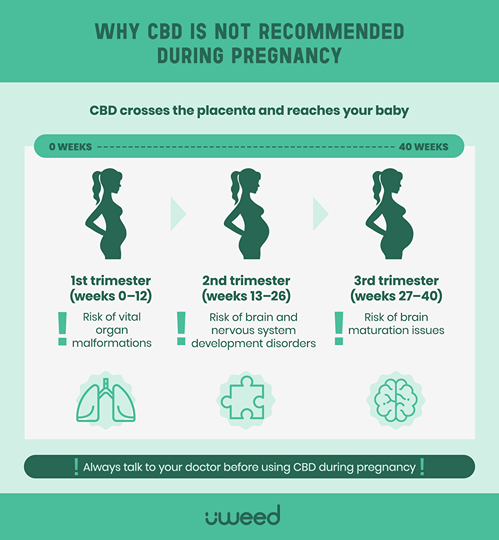
Each trimester presents specific vulnerabilities. The first trimester is crucial for organogenesis, the second for rapid growth, and the third for system maturation.
Early exposure can affect organ formation, while late exposure could influence brain maturation and preparation for extrauterine life. No period is considered risk-free.
These vulnerability windows overlap, making it impossible to identify safer moments for exposure. Professionals recommend complete avoidance throughout pregnancy.
What are the long term effects of prenatal CBD exposure?
Longitudinal data specific to CBD remain almost non-existent. Available cohort studies generally focus on cannabis use as a whole, making it difficult to isolate CBD effects.
This lack of long-term data further justifies applying the precautionary principle. The use of cannabidiol in children is generally discouraged, as highlighted in resources discussing CBD use in children discouraged, and developmental effects may only manifest years after initial exposure.
Future research will need to fill these critical gaps to better understand the long-term implications of prenatal CBD exposure.
How can CBD affect your baby while breastfeeding?
Cannabidiol transfers into breast milk due to its lipophilic nature. This transmission exposes the infant to variable concentrations depending on maternal usage frequency and individual metabolism characteristics.
Exposure via breastfeeding raises concerns similar to those of pregnancy regarding postnatal neurological development. The infant’s brain continues its rapid development after birth.
Potential effects include changes in sleep patterns, feeding, and motor development. These impacts, though theoretical, justify official recommendations to avoid CBD during breastfeeding.

How does CBD transfer into breastmilk?
CBD transfers into breast milk mainly through passive diffusion across mammary cell membranes. Concentration depends on several factors: maternal dose, usage frequency, and milk lipid composition.
Studies such as Baker et al. (2018) in Obstetrics & Gynecology, titled Transfer of Inhaled Cannabis Into Human Breast Milk, document detectable cannabinoid presence in breast milk up to 6 days after use.
How much CBD passes into breastmilk?
Detected concentrations vary considerably depending on analytical methods and usage patterns. Studies report levels ranging from trace amounts to several nanograms per milliliter.
This significant variability prevents establishing “safe” thresholds. Even low concentrations represent substantial exposure for an infant whose body weight is much lower than that of an adult.
How long does CBD stay in breastmilk?
The persistence of CBD in breast milk can last several days after the last exposure. This duration depends on individual factors related to each woman’s metabolism and CBD elimination processes. The way CBD metabolism and elimination function in the body, along with previous usage frequency, significantly influences how long it remains detectable in breastmilk.
Accumulation in maternal adipose tissues can prolong its release into circulation and thus into milk, creating continuous exposure even after stopping use.
Are CBD effects on babies reversible?
The potential reversibility of effects remains largely unknown. Postnatal brain development involves critical processes such as myelination and synaptic formation, which could be vulnerable to cannabinoid exposure.
Some developmental disruptions may be compensated for by infant brain plasticity, while others could have lasting consequences. The absence of longitudinal data prevents definitive conclusions.
The precautionary principle therefore recommends avoiding any potentially irreversible exposure, especially during these critical periods of development.
Can I pump and dump after taking CBD?
Pumping breast milk and discarding it (the “pump and dump” strategy) does not effectively eliminate CBD from the maternal system. Unlike alcohol, CBD accumulates in adipose tissues and is released gradually over several days.
This persistence makes this “emptying” strategy ineffective. Using formula temporarily remains the only option to avoid exposing the baby to CBD during this period.
Consulting a lactation professional can help maintain milk production while avoiding breastfeeding exposure.
Should I worry if I used CBD in early pregnancy?
Don’t panic, but act quickly. Many women discover their pregnancy after having used CBD. What matters is to stop immediately and consult your healthcare professional.
Carefully document your use: quantities, frequency, duration, and types of products consumed. This information will help your doctor assess exposure and plan appropriate follow-up.
Stopping CBD use immediately is the first priority. Most early, short-term exposures do not automatically cause developmental problems.
How to tell your doctor about CBD use?
Approach the topic with honesty and transparency. Swiss healthcare professionals are trained to receive this information without judgment and to support you in making the best decisions for your health and your baby’s.
Prepare the details of your use: when, how much, what type of CBD, and for what reasons. This information allows for an accurate assessment of risks and planning of appropriate medical follow-up.
Medical confidentiality protects these discussions. Your healthcare professional’s priority is your health and your baby’s well-being, not moral judgment.
What tests after CBD exposure during pregnancy?
Standard pregnancy exams usually include the necessary monitoring. Your doctor may recommend additional ultrasounds or specialized consultations depending on the individual risk assessment.
No specific test can predict the developmental effects of CBD. Regular medical follow-up remains the best approach to ensure normal fetal development.
Detailed documentation of exposure helps professionals adapt monitoring according to the latest available scientific recommendations.
How to stop CBD safely during pregnancy?
Stopping CBD generally does not present risks of dangerous physical withdrawal, unlike some other substances. However, the underlying reasons for using CBD (anxiety, pain) may reappear.
Develop alternative strategies with your medical team before complete cessation. This preventive approach avoids last-minute solutions that may be less appropriate.
Psychological support may be necessary if CBD was used to manage anxiety or depressive disorders. Don’t hesitate to ask for professional referrals suited to your specific needs.
What are the natural alternatives to CBD during pregnancy or breastfeeding?
Fortunately, there are many natural approaches that can help you manage pregnancy anxiety, relieve morning sickness, and ease pain without putting your baby at risk. Prenatal yoga, for example, has proven to be particularly effective in replacing CBD in your relaxation routine.
These alternatives, commonly recommended by healthcare professionals, have been specifically researched for use during these sensitive periods. From breathing techniques to nutritional solutions for nausea, and specialized perinatal physiotherapy for pain, each approach addresses your specific needs.
A holistic approach combining several techniques is often more effective than relying on a single solution, while respecting the changing needs of your body during pregnancy and breastfeeding.
Safe Guide: Alternatives to risky treatments during pregnancy
| Symptom | Safe solutions 🟢 | Medical supervision 🟡 | To avoid 🔴 |
|---|---|---|---|
| Anxiety | Prenatal yoga, Meditation, Deep breathing | Psychologist, Cognitive behavioral therapy | CBD, Non-prescribed anxiolytics |
| Nausea | Ginger, Small frequent meals, Gentle herbal teas | Vitamin B6, Prescribed medications | CBD, Non-prescribed anti-emetics |
| Pain | Physiotherapy, Mild heat, Prenatal massage | Paracetamol (under medical advice) | CBD, Ibuprofen, Anti-inflammatories |
| Sleep | Relaxing routine, Meditation, Optimal comfort | Specialist consultation, Prescribed magnesium | CBD, Non-prescribed sleeping pills |
How to manage pregnancy anxiety without CBD?
Prenatal yoga is particularly effective for reducing pregnancy-related anxiety. While CBD’s anti-anxiety properties are documented in scientific research, prenatal yoga offers a safe alternative during pregnancy. The study by Battle et al. (2015), published in Complementary Therapies in Clinical Practice, showed a significant decrease in anxiety scores among pregnant women who practiced adapted yoga sessions. Additional research by Newham et al. (2014) in the Journal of Anxiety Disorders confirmed these results, showing a 20% reduction in anxiety symptoms.
Deep breathing techniques and mindfulness meditation provide immediate stress management tools without any contraindications and can be practiced daily. The randomized study by Woolhouse et al. (2020), published in BMC Pregnancy and Childbirth, found that mindfulness meditation reduced prenatal anxiety by 30% after eight weeks of regular practice.
Cognitive-behavioral therapy adapted to pregnancy helps develop long-term coping strategies. Research by Green et al. (2015), published in Archives of Women’s Mental Health, demonstrated its specific effectiveness during the perinatal period. Many Swiss therapists specialize in perinatal support, offering professional guidance tailored to each pregnancy trimester.
What safe morning sickness remedies would you recommend?
Ginger is the most documented natural alternative for pregnancy nausea. The study by Viljoen et al. (2014), A systematic review and meta-analysis of the effect and safety of ginger in the treatment of pregnancy-associated nausea and vomiting, published in the Cochrane Database of Systematic Reviews, analyzed 12 clinical trials and confirmed the effectiveness of ginger at recommended doses (maximum 1g/day). Additional research by Thomson et al. (2014) in Women and Birth confirmed its safety across all pregnancy trimesters.
Vitamin B6, often recommended by Swiss healthcare professionals, has proven effectiveness in reducing morning sickness, with an excellent safety profile.
Acupuncture and acupressure on point P6 (wrist) have also shown encouraging results in several meta-analyses. These techniques are available from trained practitioners in Switzerland.
How to relieve pain with natural relief options during pregnancy?
Prenatal massage, performed by certified therapists, effectively relieves muscle tension and ligament pain common during pregnancy. Although CBD pain relief benefits are recognized under normal circumstances, pregnancy requires approaches proven safe for fetal development.
Specialized perinatal physiotherapy offers targeted exercises to strengthen supporting muscles and improve posture. These services are covered by Swiss health insurance and provide professional care adapted to each trimester of pregnancy.
Applying mild heat (warm baths, compresses) is also safe and effective for muscle pain, as long as temperatures remain within the recommended range during pregnancy. This natural method promotes muscle relaxation without exposure to potentially harmful substances.
Can prenatal yoga replace CBD for relaxation?
Prenatal yoga offers a holistic approach that combines adapted physical exercise, breathing techniques, and meditation. This practice has documented benefits for reducing anxiety, improving sleep quality, and preparing for childbirth.
Specialized classes, available in most Swiss cantons, also create a supportive community network with other pregnant women, enhancing psychological well-being.
Regular practice develops stress management tools that remain useful during labor and beyond, providing long-lasting benefits with no risk to your baby.
Where to find help about CBD and pregnancy?
Navigating questions related to CBD during pregnancy and breastfeeding can seem complex, especially when you want to make well-informed decisions for your health and your baby’s. The absence of specific data on pregnancy makes dialogue with qualified professionals absolutely essential.
Fortunately, many official resources and specialized professionals in Switzerland can support you in this process to meet your specific needs.
What questions to ask your healthcare provider about CBD?
Prepare your questions in advance: “What are the specific risks of my CBD use?”, “What medical monitoring do you recommend?”, “What alternatives do you suggest for [specific symptom]?”
Ask for referrals to specialists if necessary: addiction specialists, perinatal psychiatrists, or lactation consultants trained in substance use issues.
Approach the topic with honesty and transparency. Swiss healthcare professionals are trained to receive this information without judgment and to support you in making the best decisions for your health and your baby’s. Medical confidentiality protects these discussions. Your healthcare professional’s priority is your and your baby’s health, not moral judgment.
Never hesitate to ask for a second medical opinion if you feel the need for another perspective on your specific situation.
Where to find official resources on CBD during pregnancy?
Websites of Swissmedic and the Federal Office of Public Health (FOPH) provide the most recent official Swiss positions. These sources are authoritative for regulations and health recommendations.
The WHO regularly publishes updates on cannabinoids and maternal health. These international documents complement national positions.
Finding CBD-informed doctors
Contact the Swiss Society of Gynecology and Obstetrics for referrals to professionals trained in cannabis and CBD issues during pregnancy.
University hospital centers (CHUV, HUG) often have specialists in perinatal addiction medicine or liaison psychiatry who can provide targeted support.
Support groups for pregnant women
Addiction Suisse offers support groups and specialized consultations for pregnant or breastfeeding women concerned about substance use.
Cantonal family planning centers often provide discussion groups and personalized support in a confidential setting.
Pregnancy relaxation apps
Apps like “Petit Bambou” and “Calm” offer meditation programs specifically designed for pregnancy, with sessions adapted to different trimesters.
“Expectful” offers guided meditations and breathing techniques specifically developed for expectant and new mothers.
Pregnancy helplines and counseling services
If you need to talk, seek reassurance, or find specialized guidance during pregnancy, several free and confidential helplines are available in Switzerland:
- La Main Tendue (143): Available 24/7 for immediate emotional support, free throughout Switzerland.
- Addiction Suisse (021 321 29 76): Specialized consultation for questions related to substance use during pregnancy and breastfeeding.
CBD pregnancy frequently asked questions
When can I use CBD again after breastfeeding?
Resuming CBD after breastfeeding requires individual medical consultation. There is no automatic timeline; the decision depends on your personal situation, previous usage history, and current needs.
Postpartum hormonal changes can affect your sensitivity to CBD. A gradual reintroduction under medical supervision remains the safest approach.
Can CBD be detected in baby drug tests?
Standard drug tests generally look for THC, not specifically CBD. However, some CBD products may contain trace amounts of THC that are detectable.
In cases of documented exposure, child protection services may request specialized analyses. Maintaining transparency with your medical team remains your best protection.
Is topical CBD safe during pregnancy?
No. Topical CBD products and cosmetics can result in systemic absorption, especially when used on large areas or damaged skin. Pregnancy-related skin changes can also modify absorption, creating unexpected exposure to cannabidiol, unlike other CBD topical products and cosmetics.
No form of CBD use is considered safe during pregnancy, including topical applications.
Why quality CBD is still unsafe during pregnancy?
The quality of CBD products, even those meeting high Swiss standards, does not change the intrinsic risks associated with cannabidiol exposure during fetal development.
Quality testing verifies purity and concentration but cannot guarantee absence of effects on neurological development. The risk lies in the CBD molecule itself, not in potential contaminants.
Swiss health authorities maintain a firm position: no quality level of CBD is considered safe during these critical developmental periods.