The liver safety of CBD (cannabidiol legally available with less than 1% THC) legitimately concerns many users. Current research shows that CBD is generally not dangerous for the liver at normal wellness dosages, but very high doses may present risks in certain populations.
Cannabidiol’s interaction with the hepatic system occurs primarily via cytochrome P450 enzymes, creating metabolic pathways that influence its bioavailability. Certain individuals, particularly those with liver insufficiency or on multiple medications, require special precautions or must avoid CBD completely.
Product quality plays a crucial role in liver safety: CO₂ extraction, third-party laboratory testing, and compliance with regulatory standards determine the safety profile. Usage optimization involves progressive dosing adapted to body weight and monitoring warning signals. Compared to alcohol and other hepatotoxic substances, CBD presents a generally more favorable profile, with reversible effects and less toxic metabolites.
⚠️ Warning: CBD products are not medicines and do not replace medical treatment. The detailed information in this article does not constitute medical advice and cannot be used to diagnose, treat, or cure any disease. Always consult your doctor or healthcare professional before using CBD, especially if you take other medications. Furthermore, CBD products (including oils) are not made for ingestion: take time to read package instructions and respect provided warnings.
Is CBD Bad for Your Liver?
CBD presents a generally favorable liver safety profile at wellness usage dosages. Recent research confirms that CBD safety risks and dangers exist primarily in specific contexts: extremely high therapeutic dosages, vulnerable populations, or complex drug interactions.
Current scientific data, including a 2023 meta-analysis covering more than 15 clinical studies, demonstrates that CBD hepatotoxicity remains dose-dependent and largely reversible upon discontinuation. This crucial distinction separates daily wellness usage from high-dose medical applications.
Health authorities recommend caution in people with liver diseases or taking treatments metabolized by the liver. The majority of users at standard doses (5-50 mg/day) develop no liver problems, but certain populations require reinforced medical monitoring.
What Do Epidiolex Studies Show About CBD Liver Toxicity?
FDA studies on Epidiolex revealed liver enzyme elevations in 5-20% of patients, primarily at high therapeutic doses (10-25 mg/kg/day). These dosages represent 50 to 100 times the quantities generally used for wellness.
Hepatotoxicity appears in patients receiving more than 1000 mg of CBD per day, equivalent to 20-30 bottles of standard CBD oil. Enzyme elevations (ALT/AST) proved reversible in 90% of cases after dose reduction.
What Are the Liver Risk Factors With CBD?
Certain user profiles present increased liver vulnerability with cannabidiol. Main risk factors include elements related to dosage, pre-existing health status, and quality of consumed products.
| Factors | Risks |
|---|---|
| Prolonged high dosages | Using doses above 100-200 mg daily for several weeks significantly increases the risk of liver enzyme elevation, particularly in naive users. |
| Existing liver pathologies | Liver insufficiency, steatosis, chronic hepatitis, or cirrhosis reduce the liver's metabolic capacity and favor accumulation of CBD and its metabolites. |
| Complex drug interactions | Simultaneous intake of hepatotoxic medications or those metabolized by the same enzymes (cytochrome P450) creates metabolic competition that can overload the liver system. |
| Aging and slowed metabolism | People over 65 years present diminished liver clearance, requiring dosage adjustments and reinforced monitoring. |
| Dubious quality products | Untested CBD may contain hepatotoxic contaminants (residual solvents, heavy metals, pesticides) that amplify risks to liver function. |
What Are the Signs of Liver Damage From CBD?
Monitoring liver symptoms allows early detection of potential complications related to CBD use. Certain warning signals require immediate attention and temporary or permanent cannabidiol discontinuation.
🚨 Early symptoms
- Unusual and persistent fatigue
- Nausea or sudden appetite loss
- Right-side abdominal discomfort
⛔ Urgent symptoms – immediate action
- Jaundice (yellowish complexion or eyes)
- Intense abdominal pain
- Persistent vomiting
How Does CBD Affect Liver Enzymes?
CBD’s liver metabolism primarily involves cytochrome P450 enzymes and glucuronidation. This biotransformation determines cannabidiol’s bioavailability and effects.
Upon administration, CBD undergoes “first-pass liver metabolism” where approximately 60-70% of the dose is metabolized before reaching systemic circulation. This presystemic elimination explains why topical applications present different liver profiles.
What Is Cytochrome P450 and CBD Drug Interactions?
The cytochrome P450 system represents the main liver “metabolization factory.” CBD interacts primarily with isoenzymes CYP2C19, CYP3A4, and CYP1A2.
- CYP2C19: Primary CBD metabolization enzyme
- CYP3A4: Metabolizes approximately 30% of CBD and numerous medications
- CYP1A2: Secondary but important role for drug interactions
How Long Does CBD Affect Liver Enzymes?
CBD’s impact on liver enzymes follows progressive kinetics. First enzyme inhibition effects appear within 2-4 hours, reach maximum between 4-8 hours, then normalize over 24-48 hours.
CBD-liver interaction timeline:
- 0-2h: First metabolic effects
- 2-4h: Peak liver metabolism
- 24-48h: Enzyme normalization
- 7 days: Metabolic equilibrium establishment
How Does the Liver Metabolize CBD?
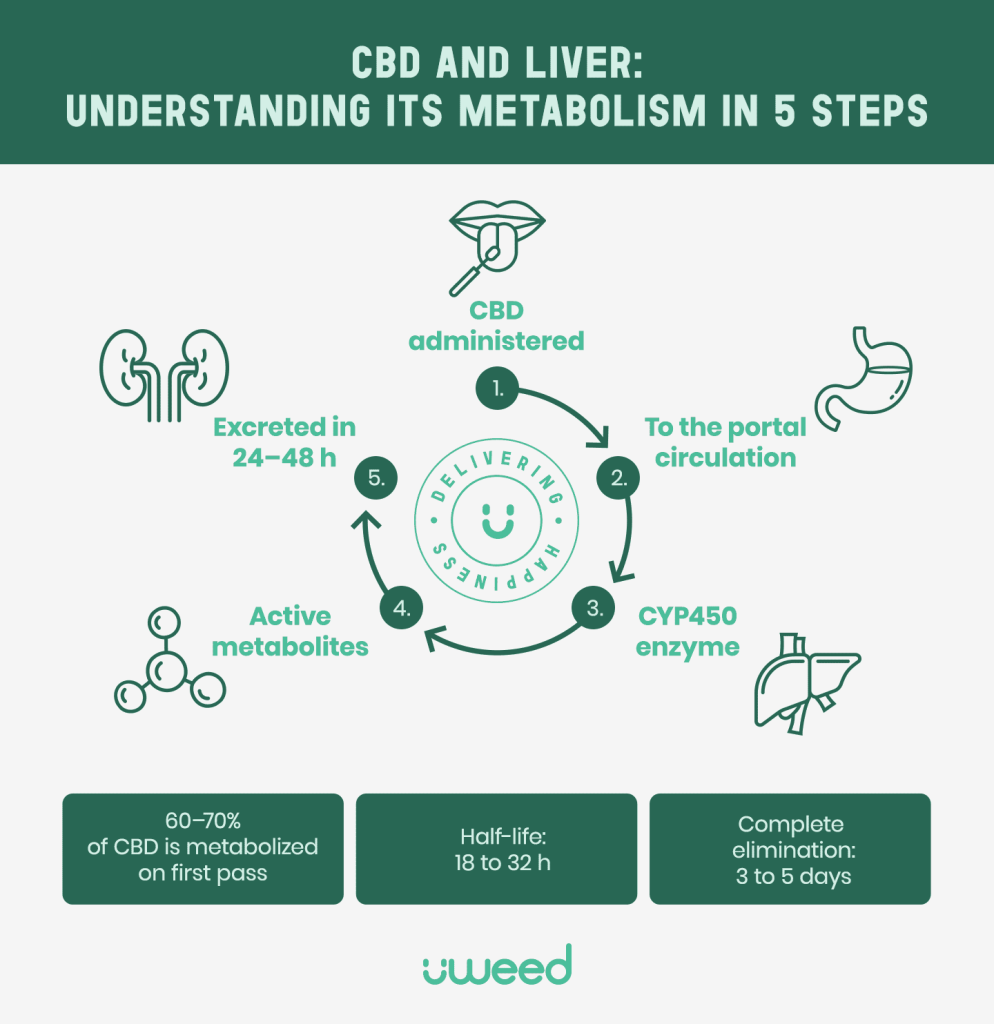
CBD’s liver metabolism follows two main phases. Phase I involves hydroxylation by cytochrome P450 enzymes, converting CBD to primary metabolites like 7-OH-CBD.
Phase II consists of conjugation with glucuronic acid, making metabolites water-soluble to facilitate elimination through biliary and renal pathways.
CBD vs THC Liver Metabolism Differences
Cannabidiol and tetrahydrocannabinol liver metabolism use distinct enzymatic pathways with different implications for liver health.
Key differences:
- CBD: Metabolized by CYP2C19 and CYP3A4, produces non-psychoactive metabolites
- THC: Transformed by CYP2C9, generates psychoactive 11-OH-THC
- Liver clearance: CBD 80-90% vs THC 60-70%
- Drug interactions: More pronounced with CBD
This metabolic distinction explains the significant differences in liver effects between CBD and THC and the need for cannabinoid-specific precautions.
Who should not take CBD oil?
Specific populations present increased liver risks with CBD. Contraindications include severe liver insufficiency, advanced steatosis, polymedication, and various pathologies altering cannabidiol metabolism.
Liver insufficiency reduces metabolic capacity, favoring CBD accumulation. Complex drug interactions create dangerous enzymatic competitions. A comprehensive CBD contraindications overview reveals that other cardiovascular, psychiatric, or metabolic conditions also require special precautions.
Can you take CBD with liver disease?
Liver insufficiency dramatically alters CBD metabolism, creating accumulation and toxicity risks. The severity of liver damage, measured by the Child-Pugh score, determines usage recommendations.
Child-Pugh classification and CBD recommendations:
- Child-Pugh A (mild insufficiency): CBD possible only under strict medical supervision, with 50% dose reduction and regular biological monitoring of liver enzymes.
- Child-Pugh B (moderate insufficiency): Usage generally not recommended. Specialized medical evaluation is required on a case-by-case basis, with individual benefit-risk assessment and hospital monitoring if exceptional use.
- Child-Pugh C (severe insufficiency): Absolute contraindication to CBD. The liver can no longer effectively metabolize cannabidiol, creating a major risk of intoxication and liver condition aggravation.
Consultation with a hepatologist remains essential before any CBD use in cases of diagnosed liver insufficiency.
What medications should not be taken with CBD?
CBD association with certain medications creates potentially serious interaction risks, particularly with narrow therapeutic margin substances. These interactions result from competition for the same liver metabolization enzymes.
Understanding drug interactions with cannabidiol is crucial for safe usage, especially when combining CBD with prescription medications.
🚫 Critical interactions to avoid:
- Anticoagulants: Warfarin, rivaroxaban – Hemorrhage risk through anticoagulant effect potentiation
- Antiepileptics: Clobazam, valproic acid – Increased plasma concentrations and neurological toxicity
- Immunosuppressants: Tacrolimus, cyclosporine – Possible overdose with renal and infectious complications
- Sedatives: Benzodiazepines, opioids – Dangerous respiratory depressive synergy
These complex drug interactions require specialized pharmacological evaluation.
What medical conditions require CBD precautions?
Several chronic pathologies require particular vigilance during CBD use due to potential interactions or metabolic modifications.
- Cardiovascular pathologies: Hypertension and heart failure may be influenced by CBD’s vasodilatory effects, requiring antihypertensive treatment adjustments under cardiologic monitoring.
- Psychiatric disorders: Severe depression and bipolar disorders present interaction risks with psychotropics, particularly antidepressants and mood stabilizers metabolized by the same enzymatic pathways.
- Diabetes: Potential interactions with oral antidiabetics may modify glycemia, requiring reinforced monitoring of metabolic parameters and therapeutic adjustments.
Renal insufficiency: Slowed elimination of CBD metabolites in nephropathic patients requires dose reductions and kidney function monitoring.
How to choose liver-safe CBD products
Selecting hepatically safe CBD relies on objective quality criteria and choosing an appropriate administration form. The consumption method directly influences the liver metabolism impact and determines the workload imposed on the liver.
Different CBD spectrums present distinct metabolic profiles with varying implications for liver safety.
CBD forms comparison: Liver metabolism impact
| Administration form | Bioavailability | First liver pass | Metabolization | Liver safety |
|---|---|---|---|---|
| Sublingual (oils) | 13-19% | Partial (40-60%) | Moderate | Optimal |
| Oral capsules | 6-15% | Complete (100%) | Intensive | Monitoring |
| Vaporization | 31% | Avoided | Minimal | Very safe |
| Topical application | Local | None | Negligible | Maximum |
| Hemp teas | 4-20% | Complete (100%) | Moderate | Acceptable |
⚠️ Swiss regulatory warning: In Switzerland, CBD oils are classified as cosmetic or chemical products and are not intended for ingestion or sublingual administration. The sublingual use mentioned in this table reflects international scientific data for educational purposes only. Always respect local regulations and usage instructions on Swiss CBD product packaging.
Which CBD form is safest for your liver?
The choice of administration form determines CBD’s liver impact. Topical applications represent the gentlest option as they completely avoid systemic liver metabolism, followed by vaporization, which bypasses first-pass liver metabolism.
For uses requiring systemic effects, the sublingual route remains theoretically optimal through direct mucosal absorption that reduces liver metabolic load by 40-60% compared to oral forms. Swiss-quality sublingual CBD oils offer this advantage while maintaining product quality standards.
Classification by increasing liver safety:
- Topical applications: No systemic liver passage
- Vaporization: Complete first-pass avoidance
- Sublingual administration: Partial liver metabolism bypass
- Hemp teas: Moderate but diluted liver metabolism
- Oral capsules: Complete liver metabolism
Which CBD is metabolized fastest?
Inhalation offers the fastest metabolization, with an elimination half-life of 1-2 hours compared to 6-8 hours for oral forms. This rapid kinetics reduces cumulative liver exposure.
Are CBD isolates safer than full-spectrum?
CBD isolates present theoretical advantages for liver safety by eliminating minor cannabinoids and terpenes that complicate metabolism. This simplification reduces enzymatic interactions and offers superior metabolic predictability.
Isolate advantages for the liver:
- Simplified metabolism via a single enzymatic pathway
- Reduced drug interactions
- More precise and reproducible dosing
- Minimal liver load
People with liver sensitivities may benefit from this purified approach. 99% pure CBD isolate crystals provide this simplified profile for those seeking maximum purity.
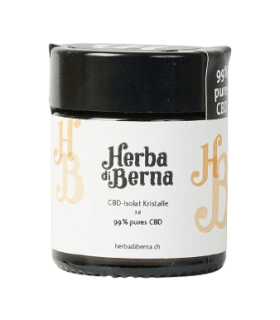
Herba di Berna CBD Crystals 99% Isolate of Cannabidiol — 10 g
CBD 99%
The CBD Crystals by Herba di Berna are crystalline CBD isolate, made in Switzerland. They reach 99% CBD, THC-free. The isolate is drawn with supercritical CO₂ and then purified. Purity sits above 95%. That makes these CBD crystals lab tested, free from pesticides and solvent residues, additive-free, nicotine-free, terpene-free, GMO-free and compliant on heavy metals.
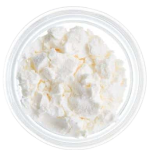
Dolocan CBD Crystals CBD Isolate — 3 to 10 g
CBD 99%
The CBD Crystals by Dolocan are crystalline CBD isolate produced in Switzerland. Content sits at 99% CBD, THC-free. The isolate is drawn with ethanol and then purified. Purity sits above 95%. That makes this CBD powder lab tested, free from pesticides and solvent residues, additive-free, nicotine-free, terpene-free, GMO-free and compliant on heavy metals.
Why are third-party CBD tests essential?
Third-party laboratory testing plays a key role in identifying specific contaminants invisible to the naked eye but potentially harmful to the liver.
Among substances dangerous to liver health, we find:
- Residual solvents (butane, propane) are known for their direct liver toxicity
- Heavy metals (lead, cadmium, mercury), which can accumulate in liver tissues
- Organochloride pesticides are capable of disrupting the CYP450 system enzymes
- Mycotoxins, like aflatoxins, are produced by molds and classified as carcinogenic agents
An ISO 17025 accredited laboratory certificate guarantees not only rigorous methodology but also complete sample traceability, from sampling to final report. Thanks to equipment like HPLC or GC-MS, the obtained results are both precise and reliable.
Knowing how to read and understand lab analysis certificates allows you to evaluate product quality yourself before any consumption. This is an essential step to verify it contains no compounds that could harm your liver.
How to safely dose CBD for liver health?
CBD liver optimization relies on progressive, adapted dosing, appropriate food timing, and personal monitoring of body signals. These safety protocols maximize benefits while minimizing liver metabolic load.
How to calculate initial CBD dosage safely?
Initial dose calculation uses a body weight-based formula to avoid liver overload from the start. A personalized CBD dosage calculator can help determine these recommendations based on individual characteristics.
Safety formula
Initial dose = (Weight in kg × 0.25 mg) rounded to lower 5mg
For example, for a person weighing 80 kg, the calculation is: 80 kg × 0.25 mg = 20 mg. Since 20 mg is a multiple of 5, no rounding is necessary. This calculated 20 mg dose corresponds to the upper limit of the recommended 15-20 mg/day range, offering clinicians an adjustment margin based on the patient’s complete profile.
This progressive approach allows the liver to adapt to CBD metabolism.
How to gradually increase CBD dosage?
Finding the correct CBD dose doesn’t happen randomly. It’s a progressive process requiring patience and good body awareness – particularly to preserve sensitive organs like the liver.
Here’s a recommended approach, often used to adjust dosage over several weeks:
- Week 1: Start with the initial dose calculated according to your profile. The objective is to observe felt effects while ensuring the absence of adverse reactions.
- Week 2: If no notable effect is perceived but tolerance is good, you can consider a slight increase, generally between 2.5 mg and 5 mg.
- Following weeks: Continue adjustments in small increments, once per week. The key principle: listen to your body—no need to rush things.
- Stabilization phase: The goal is to reach the minimum effective dose, meaning the lowest possible quantity that brings you the sought benefits. This approach maximizes long-term safety, particularly at the liver level.
What is the maximum safe CBD dose for the liver?
No universal maximum dose exists for CBD, but certain precautionary limits are now recognized to protect liver health, particularly with regular intake. Understanding CBD overdose possibilities helps establish these safety thresholds.
- Typical usage: For a healthy adult, the recommended dose generally doesn’t exceed 100 mg per day. Beyond this, the risk of side effects, though rare, increases.
- Sensitive profiles: If you take medications or present liver fragility, caution is required. We then advise staying below 50 mg per day, and only under medical supervision.
- Critical threshold: Consumption exceeding 200 mg of CBD per day is considered an alert level. At this stage, regular biological monitoring, particularly via liver enzymes, is strongly recommended.
Exceeding these thresholds exposes to CBD overdose risk, which can translate to liver enzyme elevation. Even if these abnormalities are generally reversible, they indicate a form of liver stress that shouldn’t be neglected.
Should you take CBD with or without food?
The timing of CBD intake, before or after a meal, influences not only its efficacy but also the impact it can have on your liver. It’s a real balance to find between absorption and liver tolerance.
- With a meal (especially a fat-rich one), CBD bioavailability is notably higher. In other words, a greater quantity is absorbed into the blood. However, this solicits the liver more, which must metabolize both meal nutrients and cannabidiol.
- On an empty stomach: Absorption is lower, but metabolic load on the liver is reduced. This can be a more prudent choice for people sensitive to liver levels.
Your choice should reflect your priority: for reinforced efficacy, CBD taken with a meal (ideally fatty) is better absorbed. If you want to spare your liver, intake on an empty stomach remains gentler, even if slightly less effective.
How does food affect CBD metabolism?
Certain foods can directly modulate CYP450 liver enzyme activity, essential for CBD breakdown. Adapted nutrition can therefore support this process, while certain products can dangerously hinder it.
Foods to favor:
- Cruciferous vegetables (broccoli, cabbage): They contain compounds that help stimulate the liver’s natural detoxification processes.
- Antioxidant sources (berries, green tea): They contribute to protecting liver cells against oxidative stress generated by metabolism.
Products to limit or avoid:
- Grapefruit juice: It’s a potent CYP3A4 enzyme inhibitor, a key player in CBD metabolism. Its consumption can slow CBD elimination and increase side effect risks.
- Alcohol: It enters direct metabolic competition with CBD, overloading the liver and increasing liver toxicity risk.
How long for liver recovery after stopping CBD?
CBD effects on the liver are generally temporary and reversible. After stopping consumption, liver recovery follows a predictable chronology, confirming its dose-dependent impact.
- 24 to 48 hours: Most circulating CBD is eliminated from the body.
- 3 to 7 days: Liver enzyme activity, potentially inhibited by CBD, begins normalizing.
- 2 to 4 weeks: Complete return to baseline values from before treatment is generally observed.
This rapid recovery capacity underlines that, when used responsibly, CBD liver effects are not permanent.
Is CBD safer than alcohol for the liver?
Comparative liver risk evaluation places CBD in a superior safety category to alcohol and many hepatotoxic medications. This toxicological analysis contextualizes necessary precautions with cannabidiol against commonly consumed substances with more concerning liver profiles.
Comparative table: CBD vs common substances – Liver impact
| Substance | Liver metabolization | Tissue accumulation | Reversibility | Toxic threshold | Overall profile |
|---|---|---|---|---|---|
| CBD | Moderate (CYP2C19/3A4) | Low (24-48h elimination) | Reversible | High (>100mg/day) | Favorable |
| Alcohol | Intensive (ADH/ALDH) | Moderate | Permanent lesions | Low (chronic use) | Concerning |
| Acetaminophen | Moderate (CYP2E1) | Low | Partially | Low (4g/day) | Monitoring |
| Ibuprofen | Light (CYP2C9) | Low | Reversible | Moderate | Acceptable |
CBD vs alcohol liver damage comparison
Alcohol and CBD follow distinct liver metabolic pathways with radically different consequences for liver health. When examining CBD and alcohol consumption patterns, several key differences emerge in their liver impact.
CBD vs alcohol liver damage comparison
| Criterion | Alcohol | CBD |
|---|---|---|
| Metabolic pathway & mechanism | Produces acetaldehyde, a hepatotoxic metabolite responsible for chronic inflammation and fibrosis | Generates generally non-toxic metabolites, with documented anti-inflammatory potential |
| Toxicity profile | Cumulative toxicity, irreversible lesions with excessive and prolonged consumption | Dose-dependent effects, generally reversible upon discontinuation, with high toxic threshold |
| Interaction between the two | Joint intake causes enzymatic competition, increasing toxicity of both substances | Precautions necessary in regular alcohol consumers, due to this negative synergy |
Can CBD replace hepatotoxic medications?
The idea of replacing a potentially liver-toxic treatment with CBD may seem appealing, but it’s far from trivial. Such a decision can only be considered under strict medical supervision, as it requires precise evaluation of your situation, current treatments, and liver health status.
Even if specific CBD properties recall those of common medications, no official therapeutic equivalence currently exists.
- Anti-inflammatories (NSAIDs): CBD does present anti-inflammatory effects, but it acts differently from classic NSAIDs. The two are neither interchangeable nor comparable in terms of potency or mechanism.
- Anxiolytics and analgesics: CBD shows certain potential for soothing anxiety or particular pains. But its action depends heavily on each person’s profile, and it doesn’t automatically replace established medication treatment.
If a transition is considered, it should follow a supervised protocol, with:
- Very progressive reduction of initial treatment
- Gentle and adjusted CBD introduction
- Regular biological monitoring, particularly liver enzymes, to detect any imbalance
CBD and liver supplements interactions
The association of CBD with supplements known to protect the liver can be synergistic, but requires a prudent approach to avoid undesirable interactions.
Potentially Beneficial Associations:
Certain supplements can complement CBD action while supporting the liver:
- Milk Thistle (Silymarin): Known for its hepatoprotective effects, it can offer complementary support without primary known interaction with CBD.
- N-Acetylcysteine (NAC): As a precursor to a powerful antioxidant, NAC can help the liver in its detoxification processes.
- Curcumin: Its anti-inflammatory properties may benefit the liver, but dose monitoring is advised to avoid any metabolic overload.
Essential Precautions:
For safe association, it’s crucial to:
- Avoid complex “cocktails”: Multiplying substances increases unpredictable interaction risk.
- Practice intake spacing: Taking CBD and supplements at different times of day reduces simultaneous metabolic load on the liver.
- Reinforce monitoring: Any addition of a new supplement to a CBD routine justifies attentive monitoring, even biological assessment.
CBD liver FAQs
Can you take CBD with hepatitis or cirrhosis?
Usage imperatively requires specialized hepatological evaluation. For stable chronic hepatitis, supervised use can sometimes be considered at reduced doses of 50-75%. Acute hepatitis and decompensated cirrhosis constitute absolute contraindications.
Can CBD improve liver function?
Preliminary research suggests potential hepatoprotective properties, but this data remains largely preclinical and doesn’t allow therapeutic claims. No medical indication is currently approved for liver function improvement.
How long does CBD stay in the liver?
CBD disappears from liver tissue in 24-48 hours, but enzyme influence can persist 3-7 days. This liver effect duration differs from the general elimination timeline. Understanding how long CBD effects last provides broader context about cannabidiol’s presence in the body.
Is CBD safe for children's livers?
Children present particular liver vulnerability due to enzymatic system immaturity. Pediatric use remains exceptionally reserved for severe medical cases under hospital supervision. CBD risks in children and teens are particularly concerning given their developmental stage.
Does CBD affect elderly liver function differently?
Liver aging slows CBD metabolism by 30-50%. Dosage adjustments become systematic, with initial doses reduced by 25-50% and very progressive titration under medical monitoring.
Should you stop CBD before liver blood tests?
A 48-72 hour stop before sampling allows obtaining reliable baseline values. For chronic use at high doses, plan 1 week stop and inform the laboratory of recent CBD use.
Is vaping CBD better for liver than oil?
Vaporization bypasses first-pass liver metabolism, reducing liver load compared to oral oils. When CBD consumption methods compared are analyzed for liver safety, vaporization consistently shows advantages. However, sublingual administration offers a compromise between systemic effects and liver protection.
Medical precautions for safe CBD use
Safe CBD use requires open medical dialogue, warning symptom monitoring, and adapted precaution protocol application. These preventive measures allow early detection of liver complications and optimize the safety of their use.
How to discuss CBD with your hepatologist
Transparent communication with your hepatologist optimizes liver safety and allows for adapted medical monitoring.
Consultation preparation:
- List all CBD products used with exact concentrations
- Document frequencies, doses, and felt effects
- Bring product analysis certificates
Essential questions:
- “Do my liver analyses allow CBD use?”
- “What biological monitoring do you recommend?”
- “What warning signals should worry me?”
What symptoms require stopping CBD immediately?
Specific symptoms indicate liver suffering requiring immediate CBD discontinuation and urgent medical consultation.
🚨 Liver emergency symptoms:
- Jaundice: Yellow coloration of skin/eyes
- Intense abdominal pain: Right side
- Persistent vomiting + extreme fatigue
Immediate action: Stop CBD + urgent medical consultation.
CBD liver safety protocol
Monitoring during CBD use:
- Monthly symptom assessment during the first 3 months
- Liver enzyme monitoring at 1 month, then every 3-6 months
- Immediate consultation if warning signs appear
- Annual hepatological assessment for long-term users
This comprehensive approach ensures CBD liver safety through proactive medical monitoring and early intervention protocols when necessary.
Pre-CBD liver health checklist
Before starting CBD, ensure you have:
✅ Complete liver function panel results (ALT, AST, bilirubin, alkaline phosphatase)
✅ Complete medication list reviewed for interactions
✅ Medical history assessment for liver conditions
✅ Healthcare provider approval for CBD use
✅ Quality CBD product with third-party testing
✅ Dosing plan starting at the minimum effective dose
✅ Monitoring schedule established with the healthcare provider
✅ Emergency contact information is readily available
This systematic approach maximizes CBD safety while protecting your liver health through comprehensive medical oversight and quality product selection.