Whether you’re thinking of adding a few drops of CBD to your wellness routine or already using it to ease pain or anxiety, it’s essential to understand how this molecule can transform the action of your treatments. This guide summarises the essentials: the basics of drug interactions, personal factors that increase your risk, how to assess severity, and above all, the right habits to space out doses, start low and slow, and choose Swiss products that are fully lab-tested.
According to Swissmedic, the main therapeutic products authority in Switzerland, the cytochrome P450 liver enzyme system metabolises over 60% of prescription drugs. When cannabidiol inhibits or stimulates these enzymes, the blood concentration of an anticoagulant, antidepressant, or beta-blocker can vary unpredictably. Understanding these mechanisms, talking to your healthcare team, and maintaining appropriate monitoring remain key to enjoying CBD’s benefits safely.
⚠️ Disclaimer: CBD products are not medicines and should never replace medical treatment. The information in this article does not constitute medical advice and is not intended to diagnose, treat, or cure any disease. Always consult your doctor or a healthcare professional before using CBD, especially if you are taking other medications. Additionally, CBD products (including oils) sold at uWeed in Switzerland are not intended for ingestion: read the packaging instructions carefully and follow all warnings.
Does CBD interact with any medications?
CBD does interact with many medications, which is why understanding these interactions is crucial before adding it to your daily routine. A CBD drug interaction refers to any modification of a drug’s effectiveness, metabolism, or side effects when taken together with cannabidiol. Most of these interactions occur in the cytochrome P450 enzyme system, often called CYP450, in your liver.
Think of your liver as your body’s detox factory: it metabolises most active pharmaceutical ingredients using the CYP450 system, a true “sorting centre” that transforms molecules before eliminating them. When CBD uses these same pathways, it can slow down — or, less commonly, speed up — this process, changing the blood concentration of your medications as well as CBD itself.
These pharmacokinetic interactions can either increase the effects (which may lead to side effects or toxicity) or reduce the therapeutic action of the medication. This is why medical monitoring and dosage adjustments are essential to maintain optimal treatment balance.
Doctors consider several factors when evaluating your individual risk: your age, weight, liver function, and the list of medications you are taking. In Switzerland, healthcare professionals have clinical monitoring tools to supervise this process and ensure the safest use of CBD with your treatments.
How does CBD affect your medications?
CBD mainly affects medications by competitively inhibiting the cytochrome P450 system. Think of this enzyme system as a busy toll highway: when CBD “uses” the same routes as your medications, it creates metabolic traffic jams. This is where factors affecting CBD absorption come into play, as they can amplify or reduce these effects.
When CBD competes for these enzymes, it can slow down the breakdown of certain drugs, increasing their blood concentration. As a result, both their therapeutic effects and potential side effects become stronger, which can be dangerous without proper monitoring.
The interaction intensity varies based on your CBD dose, how often you use it, and your genetic liver metabolism profile. Some people are slow metabolisers, while others are fast, greatly influencing how strong the interaction becomes.
Other factors also play a critical role, such as how you take your CBD (oral, sublingual, or topical), whether you use it with or without food, and most importantly, the quality of your product. Timing your CBD intake correctly with medications is essential to manage these interactions safely and effectively.
How serious are CBD drug interactions?
The individual risk assessment for a CBD-drug interaction follows a three-level clinical classification:
- 🟢 Mild: Routine monitoring is sufficient.
- 🟡 Moderate: Requires enhanced clinical monitoring.
- 🔴 Severe: Relative or absolute contraindication.
The evaluation criteria include the therapeutic margin of the medication involved and your personal susceptibility. For example, a drug with a narrow therapeutic window, like warfarin, poses major risks even with slight changes in concentration.
Who is at higher risk for CBD interactions?
Certain people have a higher risk of CBD drug interactions, making medical guidance essential before starting CBD. Your genetic, physiological, and health factors play a major role in how CBD affects your treatments.
The main factor is enzyme polymorphism: around 7% of the European population carry CYP2D6 genetic variants that classify them as slow metabolisers. For these individuals, CBD can cause a greater buildup of medications in the body.
Age is another key factor. Older adults often have reduced liver function and slower clearance, increasing the risk of medication accumulation. People taking multiple medications (known as polypharmacy – five or more drugs) face compounded risks due to multiple possible interactions.
Underlying health conditions also influence your risk. Liver, kidney, or heart diseases modify how substances are metabolised and eliminated. Understanding CBD contraindications and at-risk populations helps identify these profiles requiring extra caution when combining CBD with medications.
What medications should not be taken with CBD?
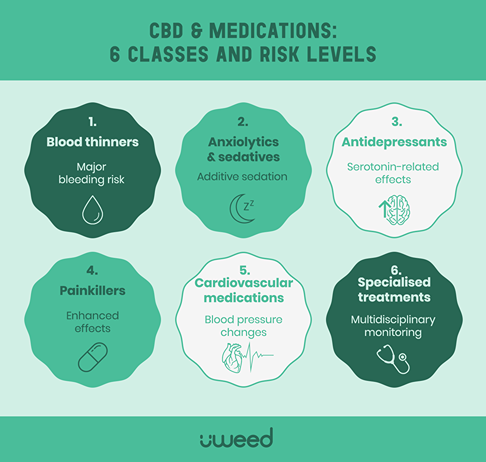
Certain medications carry significant interaction risks requiring strict medical supervision. While low risks are generally associated with CBD use, understanding these classifications allows a systematic individual risk assessment based on potential clinical severity. CBD can affect how your body metabolises these drugs, potentially leading to dangerous concentration changes in your bloodstream.
Classification of medications and levels of interaction with CBD
| Medication Class | Common Examples | Risk Level | Recommended Action |
|---|---|---|---|
| Blood thinners | Warfarin, Eliquis, Xarelto | ⛔ Avoid without supervision | Cardiologist consultation mandatory |
| Anti-anxiety & sedatives | Xanax, Valium, Temesta | ⚠️ Increased caution | Neurological monitoring required |
| Antidepressants | Prozac, Zoloft, Effexor | ⚠️ Monitoring needed | Psychiatric follow-up recommended |
| Opioids | Tramadol, Morphine, Codeine | ⛔ Critical risk | Intensive medical supervision |
| Cardiovascular drugs | Metoprolol, Bisoprolol, Lasix | ⚠️ Blood pressure monitoring | Cardiologist supervision recommended |
| Specialised treatments | Levothyroxine, immunosuppressants | ⚠️ Specialist consultation | Multidisciplinary medical review |
1. CBD and blood thinners interaction
Blood thinners and anticoagulants represent one of the most critical CBD interaction risks. This is because CBD inhibits the CYP3A4 and CYP2C9 enzymes, which are responsible for metabolising drugs like warfarin, rivaroxaban (Xarelto), and apixaban (Eliquis). As a result, CBD can prolong the elimination of these medications, increasing their blood concentration to potentially dangerous levels.
This pharmacokinetic interaction enhances their therapeutic effect but significantly increases the risk of severe bleeding complications. Intensive medical supervision is essential whenever CBD is combined with blood thinners. Clinical studies indicate that dosage adjustments of 10% to 30% may be necessary to maintain safe INR levels and avoid adverse outcomes.
Watch out for warning signs such as unexplained bruising, spontaneous bleeding, or persistent gum bleeding. Always consult your cardiologist or haematologist before starting CBD with these medications to assess your personal risk and establish a strict monitoring plan.

Can you take CBD with Eliquis or warfarin?
Combining CBD with Eliquis (apixaban), Xarelto (rivaroxaban), or Coumadin (warfarin) carries a major bleeding risk and should never be done without medical supervision. These anticoagulants each have distinct metabolic pathways, which determine their interaction potential with cannabidiol.
Warfarin is metabolised mainly by CYP2C9, making its interactions with CBD more predictable and easier to monitor through regular INR testing. In contrast, direct oral anticoagulants like Eliquis and Xarelto are processed through CYP3A4, which CBD also inhibits, potentially increasing drug levels in the blood. However, no standardised blood concentration monitoring exists for these DOACs, making the interaction risk harder to manage.
Any signs of bleeding – such as unusual bruising, blood in urine or stool, or persistent bleeding from minor cuts – require immediate discontinuation of CBD and urgent medical evaluation. Never adjust doses yourself: consult your cardiologist or haematologist to assess your risk before starting CBD alongside these medications and to establish a safe treatment plan.
Does CBD interact with aspirin?
Aspirin and Kardegic (low-dose cardio aspirin) work differently from anticoagulants, acting as antiplatelet agents to prevent clot formation. The risk of interaction with CBD is considered moderate, but caution is still necessary due to the potential for cumulative bleeding risk, especially in vulnerable populations such as elderly patients.
It is important to distinguish between high-dose aspirin (500mg) used as a painkiller and low-dose cardio-protective aspirin (75-100mg). While low-dose aspirin has a safer profile, vigilance for digestive or skin bleeding remains crucial when using CBD concurrently.
Clinical recommendations include monitoring for gastric pain, black stools (melena), or unexplained bruising, particularly if you take multiple medications that affect clotting. Discuss your case with your doctor to determine whether spacing doses or choosing alternative therapies may minimise your risks.
2. CBD and anti-anxiety medications

Anti-anxiety drugs like Xanax, Lexomil, or Seresta can have their sedative effects increased by CBD, leading to stronger drowsiness and higher fall risks. While CBD’s therapeutic potential for anxiety offers a natural option, any treatment change must be done under medical supervision to avoid dangerous interactions.
Can you take CBD with Xanax or Valium?
Combining CBD with Xanax (alprazolam), Lexomil (bromazepam), Seresta (oxazepam), or Valium (diazepam) requires a specialist psychiatric evaluation due to the risk of increased sedation. These benzodiazepines have different pharmacokinetics affecting their interaction with CBD.
Xanax, a fast-acting benzodiazepine, carries the highest risk of acute sedation. Lexomil, with an intermediate half-life, creates a moderate cumulative effect. Seresta and Valium, which are eliminated more slowly, maintain stable plasma concentrations with fewer fluctuations.
The main concerns are impaired coordination and fall risk, especially for drivers or people working at heights. Neurological monitoring is essential when adjusting doses or adding CBD under specialist medical supervision.
Is CBD safe with sleep aids and muscle relaxers?
Sleeping pills like zolpidem (Stilnox) and zopiclone (Imovane), as well as muscle relaxants, have a cumulative sedative effect with CBD that can compromise daily safety. The risk of nighttime falls increases significantly, especially for older adults. Morning drowsiness can last several hours, affecting driving and activities requiring alertness.
Precautions include avoiding driving within 12 hours after use, ensuring a safe home environment at night (nightlights, removing obstacles), and considering natural alternatives under medical supervision to gradually reduce reliance on sleeping pills when planning CBD use.
3. CBD interactions with antidepressants
Combining CBD with antidepressants like SSRIs (Prozac, Zoloft) or psychiatric medications such as lithium and antipsychotics can create complex interactions. CBD can slow their metabolism, increasing blood concentration and side effect risks.
These CBD and antidepressants interactions may cause stronger side effects, such as agitation, tremors, excessive sweating, digestive issues, or in rare cases serotonin syndrome. Psychiatric monitoring is crucial to adjust dosage progressively and ensure safety when combining these treatments.

Does CBD interact with Prozac or Zoloft?
CBD can slow down the elimination of SSRIs like Prozac (fluoxetine), Zoloft (sertraline), and Deroxat (paroxetine) by blocking the CYP2D6 enzyme. This raises antidepressant levels in the blood, which can intensify their effects.
Patients might experience stronger side effects, such as agitation, tremors, excessive sweating, digestive issues, or in rare cases serotonin syndrome. Close psychiatric monitoring is needed to check mood, sleep, and appetite, with dosage adjustments made gradually, starting with weekly monitoring before moving to monthly follow-ups.
Can you take CBD with lithium or antipsychotics?
Combining CBD with lithium or antipsychotics absolutely requires consultation with a specialist psychiatrist due to the complex risks for bipolar disorder or schizophrenia.
Lithium has a very narrow safety margin, meaning even small blood level changes can be dangerous. Any metabolic changes may shift its effect from ineffective to toxic. Antipsychotics may also have their effectiveness altered by CBD. Only a psychiatrist can assess whether this combination is safe for your specific situation.
4. CBD and pain medication interactions

CBD interacts differently with painkillers. It can slightly increase liver risks with paracetamol and affect kidney function with some NSAIDs. Although CBD for pain relief shows promising results, combining it with opioids like morphine or tramadol remains particularly dangerous due to enhanced sedation and potential respiratory depression requiring strict medical supervision.
Can you mix CBD and Tylenol?
CBD has a moderate interaction with paracetamol (Tylenol) due to shared liver metabolism pathways. This can prolong paracetamol elimination, theoretically increasing hepatotoxicity risk in chronic use or overdose.
At normal therapeutic doses (max 4g/day), the risk is low in people with healthy liver function. However, liver monitoring is advisable for long-term treatments, especially if you have pre-existing risk factors. Practical recommendations include respecting maximum dosages, spacing CBD and paracetamol by 2-3 hours, and monitoring for liver damage signs if used long term.
CBD and Tramadol interaction risks
Combining CBD with tramadol, morphine, or other opioids carries a critical risk of respiratory depression due to enhanced sedative effects. This can compromise breathing and is considered a medical emergency.
Tramadol’s pain-relieving effect may also be altered, while morphine and strong opioids create cumulative sedation risks, especially in older adults or those with respiratory issues. Pain specialists recommend continuous respiratory monitoring, tracking frequency, depth, and oxygen saturation, and keeping naloxone (opioid antidote) available at all times as an emergency safety measure. Any excessive drowsiness or slowed breathing requires immediate CBD discontinuation and emergency medical consultation.
5. Does CBD interact with blood pressure medications?
CBD can interact with blood pressure medications by enhancing their hypotensive effects and altering metabolism. It may amplify the action of antihypertensive treatments, beta-blockers, and diuretics, increasing risks of dizziness, fatigue, or heart rhythm issues. Cardiological monitoring is essential before combining CBD with these medications to adjust doses safely.

Is CBD safe with blood pressure meds?
CBD has a mild hypotensive effect, clinically documented, that can potentiate antihypertensive medication action. Its vasodilation effect can amplify ACE inhibitors and sartans, creating a risk of symptomatic hypotension like dizziness, fatigue, or fainting during activity.
Monitoring should include home blood pressure checks (morning/evening) and checking for orthostatic hypotension. Dose adjustments are gradual under cardiology supervision, often requiring a 10-20% reduction in antihypertensives if hypotension is confirmed.
CBD and heart medication interactions
Beta-blockers (metoprolol, atenolol, bisoprolol) may see their heart rate lowering effects enhanced by CBD, increasing risks of symptomatic bradycardia, especially in older adults. Heart rate monitoring and exercise tolerance checks are needed.
Diuretics (furosemide, hydrochlorothiazide) carry risks of electrolyte imbalances, requiring monitoring of sodium and potassium levels, plus kidney function. Clinical monitoring includes ECG checks, resting and exercise heart rate tracking, and quarterly electrolyte panels. Warning signs like excessive fatigue, unusual shortness of breath, swelling, or rhythm changes require regular medical check-ups.
6. CBD interactions with other medications

CBD can interact with many specialised treatments, including thyroid hormones like levothyroxine, chemotherapy drugs, immunosuppressants, and birth control pills. These interactions may alter drug efficacy or cause side effects, requiring multidisciplinary medical monitoring and personalised guidance for each treatment.
Side effects of CBD and Levothyroxine
CBD can potentially affect Levothyroxine absorption, altering thyroid balance, which is highly sensitive to dose variations. The main interaction concerns administration timing and hormone bioavailability.
Levothyroxine should be taken on an empty stomach for optimal absorption, which CBD can disrupt. Spacing doses by at least 4 hours maximises absorption and minimises interactions. Thyroid monitoring should include TSH, free T3, and free T4 levels, with checks 6-8 weeks after introducing CBD, plus clinical monitoring for hypothyroidism or hyperthyroidism signs like fatigue, palpitations, weight changes, or digestive issues.
Is CBD safe during chemotherapy?
Combining CBD with chemotherapy or immunosuppressants requires mandatory oncology or transplant medicine consultation. These critical treatments follow strict protocols, and any modification can compromise their therapeutic efficacy.
Cytotoxic agents (methotrexate, cyclophosphamide) may have altered metabolism, increasing cumulative toxicity risks. Immunosuppressants (ciclosporin, tacrolimus) require strict plasma level monitoring. CBD’s potential immunomodulatory effect must be evaluated in conditions requiring controlled immunosuppression (transplants, autoimmune diseases). Specialised monitoring is intensive, with weekly consultations initially, prioritising patient safety.
Does CBD affect birth control pills?
CBD may reduce the efficacy of oral contraceptives by altering hormone metabolism via the CYP3A4 enzyme. This requires added precautions, such as using complementary contraception methods (e.g., condoms) during the first cycles when combining CBD with birth control.
For a full understanding of CBD’s intimate health effects, refer to our guide on CBD use for sexual wellness. Gynaecological monitoring should check cycle regularity and contraceptive effectiveness, with medical consultation to discuss alternative options suited to your personal profile.
When should you take CBD with medications?
Optimising CBD administration timing involves spacing doses to account for each substance’s peak concentration. The ideal timing varies by medication half-life: 2-4 hours apart for moderate interactions, and up to 4-6 hours for critical treatments like blood thinners.
Absolute contraindications include unstable conditions, medical emergencies, or lack of appropriate monitoring. Starting CBD follows the “start low, go slow” principle with titration over 4-6 weeks, beginning at 2.5-5mg and gradually increasing under clinical monitoring.
Medical or pharmacist consultation can help create a personalised schedule optimising CBD bioavailability while preserving treatment efficacy, with dose adjustments based on your individual response and daily needs.
How long after CBD can I take other medications?
Optimal spacing depends on drug class and interaction mechanisms. This planning minimises risks while maintaining therapeutic efficacy.
Recommended spacing table by drug class
| Medication Class | Minimum spacing | Risk level | Spacing rationale |
|---|---|---|---|
| Blood thinners (Warfarin, Eliquis, Xarelto) | 4-6 hours | 🔴 Critical | Prevents bleeding risk |
| Benzodiazepines (Xanax, Lexomil, Temesta) | 2-3 hours | 🟠 High | Limits additive sedation |
| Thyroid hormones (Levothyrox) | 4 hours | 4 hours | Optimises absorption |
| SSRI antidepressants (Prozac, Zoloft) | 2-4 hours | 🟡 Moderate | Prevents accumulation |
| Opiates (Tramadol, Morphine) | 4-6 hours | 🔴 Critical | Prevents respiratory depression |
| Cardiovascular meds | 3-4 hours | 🟡 Moderate | Ensures blood pressure monitoring |
| Other medications | 2 hours | 🟢 Low | General precaution |
Optimal intervals depend on peak concentration (Tmax) and elimination half-life. Short half-life drugs generally need less spacing than extended-release treatments. This timing strategy maximises CBD bioavailability while ensuring medication safety.
When to avoid CBD and medication combinations?
Absolute contraindications include unstabilised epilepsy treatments, ongoing chemotherapy, acute heart attack or stroke phases, and lack of medical monitoring. Using uncontrolled quality CBD is also a criterion for avoidance.
Recognising CBD overdose signs is critical: stop use immediately if needed and seek a full medical reassessment to ensure safety.
How to safely start CBD with existing medications?
Start CBD following “start low, go slow”, titrating over 4-6 weeks. Begin with 2.5-5mg daily, monitor tolerance daily, and increase by 2.5mg every 3-7 days if no side effects arise.
Clinical monitoring occurs in key stages: Week 1 assesses initial tolerance, Week 2 allows adjustments, Week 4 confirms stabilisation, and Month 2 optimises final dosage. This gradual approach minimises CBD addiction risks, unlike traditional addictive substances, and ensures safe integration with medications.
How to use CBD safely with your medications
Using CBD safely alongside your medications relies on three core pillars: active medical monitoring, clinical observation of effects, and selecting high-quality Swiss CBD products with full laboratory testing.
This approach combines rigorous documentation of your use, rapid recognition of potential CBD drug interactions, and access to specialised medical support to optimise therapeutic benefits while maintaining safety. The goal is clear: maximise benefits while minimising risks through a structured precautionary strategy.
How to monitor your medications when taking CBD
Clinical monitoring involves carefully observing how your body reacts after starting CBD. This enables early detection of interactions and ensures safe treatment adjustments.
Keep a simple journal noting: dose timings, dosages, how you feel, and vital parameters (blood pressure, weight). This habit helps differentiate normal reactions from warning signs. To better understand what’s normal, read our guide on CBD side effects.
Contact your doctor immediately if you notice: changes in medication effectiveness, new side effects, unexplained mood changes, or abnormal blood test results. Sharing observations regularly supports optimal therapeutic adjustments and ensures maximum safety.
What to do if you suspect a CBD drug interaction
If you suspect a CBD medication interaction, pause CBD use temporarily and evaluate your symptoms. Then contact a healthcare professional based on urgency:
- Call 144 immediately for breathing difficulties, cardiac symptoms, abnormal bleeding, severe confusion, or other worrying signs.
- See your doctor within 24-48 hours for changes in medication efficacy, troublesome non-severe side effects, or questions about continuing CBD.
Precise documentation helps your doctor assess the situation effectively. Note timings, dosages, observed symptoms, and their evolution to guide safe future treatment adjustments.
Where to find medical help for CBD interactions
Switzerland offers an expanding network of professionals trained in CBD-medication interactions. Its legal framework for medical CBD ensures access to specialised consultations and personalised medical support.
The Swiss legal framework for medical CBD facilitates structured therapeutic use under supervision, ensuring patient safety when combining cannabidiol with prescription treatments.
Specialised medical resources in Switzerland
| Specialist Type | Expertise | Use context | Access |
|---|---|---|---|
| Primary care doctor | General coordination | First consult, global follow-up | Direct contact |
| Hospital pharmacist | Drug interactions | Complex treatment management | Cantonal hospital |
| Neurologist | Epilepsy, neurological disorders | Specialised therapeutic CBD | Medical referral |
| Oncologist | Cancer supportive care | Chemotherapy side effects | Oncology centre |
| Addiction specialist | Controlled therapeutic use | Withdrawal, substitution | Addiction centres |
| Pain specialist | Chronic pain | Natural alternatives | Pain clinics |
| Medical emergencies | Critical interactions | Critical interactions Life-threatening situations | 144 |
How to choose safe CBD products with medications
Choosing high-quality CBD is the foundation of safe use alongside your medications. Transparency and strict quality controls ensure predictable interactions and reproducible effects.
Key selection criteria:
- Traceable Swiss hemp origin
- CO₂ supercritical extraction (solvent-free)
- Third-party laboratory certificates (COA)
- Strict regulatory compliance (<1% THC in Switzerland)
- GMP certification and batch-to-batch controls
Comprehensive lab tests should document cannabinoid profiles, confirm absence of contaminants (pesticides, heavy metals), and ensure legal compliance. This quality control approach minimises potential treatment interferences and ensures optimal CBD absorption.
At uWeed, we apply pharmaceutical standards with full traceability from cultivation to final product, ensuring maximum therapeutic safety through systematic laboratory quality controls.