Broad-Spectrum CBD Oils
Broad-spectrum CBD oil and THC-free CBD oil actually name the same product: a hemp extract with the THC separated out after extraction, while the terpenes and flavonoids left in the product. At uWeed these CBD drops all come from Swiss producers and are available side by side in our shop, in concentrations ranging from 5% to 26% Cannabidiol. Every batch carries a lab report showing no detectable THC and the full assortment is available below for you to find the right product for your needs.
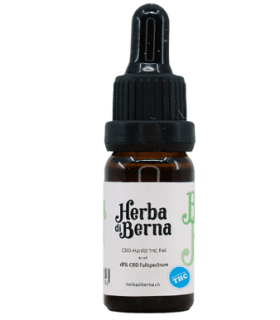
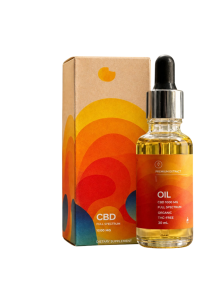
Herba di Berna CBD Oil 18% THC-Free Broad Spectrum Hemp Drops — 10 ml
CBD 1800 mg
With the CBD Oil 18%, Herba di Berna offers a broad-spectrum CBD extract produced in Switzerland. Content sits at 18% CBD (1800 mg), in a THC-free formulation. Supercritical CO₂ extraction without solvents retains CBG and CBC alongside CBD. The CBD drops are based on sunflower oil. This Swiss oil is lab tested, free from fungicides, herbicides, pesticides and solvent residues, additive-free, GMO-free and compliant on heavy metals.
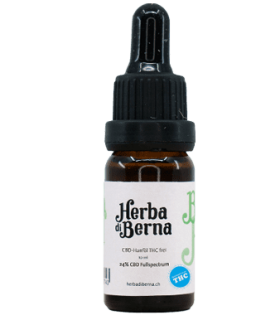
Herba di Berna CBD Oil 24% THC-Free Broad Spectrum Hemp Drops — 10 ml
CBD 2400 mg
The CBD Oil 24% by Herba di Berna is a broad-spectrum CBD extract produced in Switzerland. At 24% CBD (2400 mg), it is a concentrated formula, in a THC-free formulation. Extraction uses supercritical CO₂ without solvents, which preserves CBG and CBC alongside CBD. The extract is then blended into sunflower oil. The hemp extract is lab tested, free from fungicides, herbicides, pesticides and solvent residues, additive-free and GMO-free.
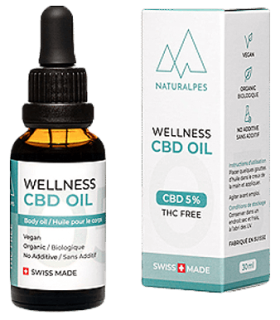
Naturalpes Wellness CBD Oil 5% THC-Free Broad Spectrum Hemp Drops — 10 ml
CBD 500 mg
With Wellness CBD Oil 5%, Naturalpes offers a broad-spectrum CBD extract produced in Switzerland. Content sits at 5% CBD (500 mg), in a THC-free formulation. Supercritical CO₂ extraction without solvents retains CBC alongside CBD. The CBD drops are based on hemp seed oil. This Swiss oil is made to ISO 9001, lab tested, free from fungicides, herbicides, pesticides and solvent residues, additive-free, GMO-free and compliant on heavy metals.
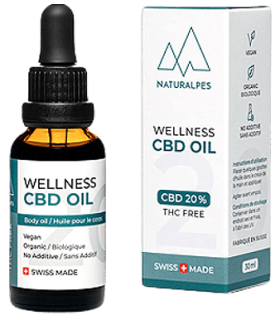
Naturalpes Wellness CBD Oil 20% Broad Spectrum Hemp Drops — 10 ml
CBD 2000 mg
Wellness CBD Oil 20% by Naturalpes is a broad-spectrum CBD extract made in Switzerland. As a concentrated formula, it delivers 20% CBD (2000 mg), with less than 1% THC. The extract is drawn with supercritical CO₂ without solvents, keeping CBN and CBC alongside CBD. The carrier oil is hemp seed oil. The CBD drops are lab tested, free from fungicides, herbicides, pesticides and solvent residues, additive-free and GMO-free.
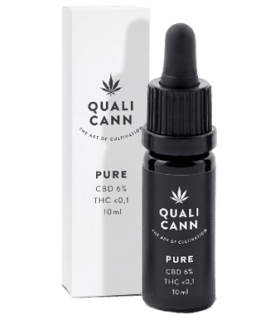
Qualicann Pure CBD Oil 6% THC-Free Broad Spectrum Hemp Drops — 10 ml
CBD 600 mg
The Pure CBD Oil 6% by Qualicann is a broad-spectrum CBD extract produced in Switzerland. At 6% CBD (600 mg), it is an entry-level formula, in a THC-free formulation. Extraction uses supercritical CO₂ without solvents. The extract is then blended into hemp seed oil. The hemp extract is lab tested, free from fungicides, herbicides, pesticides and solvent residues and compliant on heavy metals.
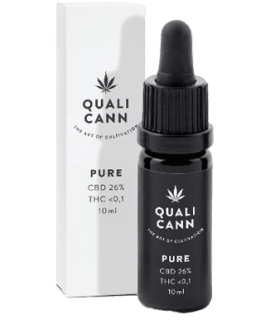
Qualicann Pure CBD Oil 26% THC-Free Broad Spectrum Hemp Drops — 10 ml
CBD 2600 mg
The Pure CBD Oil 26% by Qualicann is a broad-spectrum CBD extract made in Switzerland. As a high-concentration formula, it delivers 26% CBD (2600 mg), in a THC-free formulation. The extract is drawn with supercritical CO₂ without solvents. The carrier oil is hemp seed oil. The CBD drops are lab tested, free from fungicides, herbicides, pesticides and solvent residues and compliant on heavy metals.
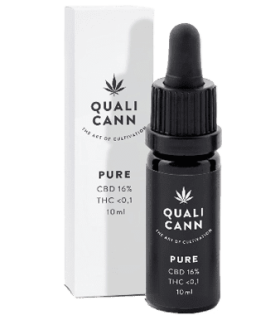
Qualicann Pure CBD Oil 16% THC-Free Broad Spectrum Hemp Drops — 10 ml
CBD 1600 mg
With the Pure CBD Oil 16%, Qualicann offers a broad-spectrum CBD extract produced in Switzerland. Content sits at 16% CBD (1600 mg), in a THC-free formulation. Supercritical CO₂ extraction without solvents starts the process. The CBD drops are based on hemp seed oil. This Swiss oil is lab tested, free from fungicides, herbicides, pesticides and solvent residues and compliant on heavy metals.
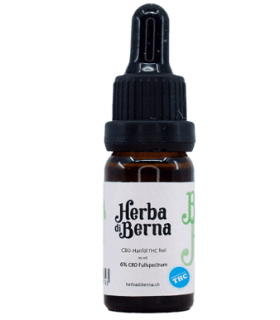
Herba di Berna CBD Oil 6% THC-Free Broad Spectrum Hemp Drops — 10 ml
CBD 600 mg
The CBD Oil 6% by Herba di Berna is a broad-spectrum CBD extract made in Switzerland. As an entry-level formula, it delivers 6% CBD (600 mg), in a THC-free formulation. The extract is drawn with supercritical CO₂ without solvents, keeping CBG and CBC alongside CBD. The carrier oil is sunflower oil. The CBD drops are lab tested, free from fungicides, herbicides, pesticides and solvent residues, additive-free and GMO-free.
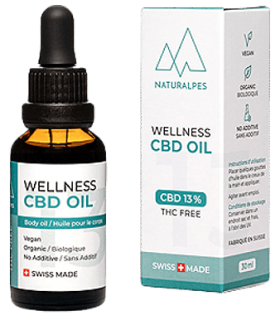
Naturalpes Wellness CBD Oil 13% Broad Spectrum Hemp Drops — 10 ml
CBD 1300 mg
With Wellness CBD Oil 13%, Naturalpes offers a broad-spectrum CBD extract produced in Switzerland. Content sits at 13% CBD (1300 mg), with less than 1% THC. Supercritical CO₂ extraction without solvents retains CBN and CBC alongside CBD. The CBD drops are based on hemp seed oil. This Swiss oil is made to ISO 9001, lab tested, free from fungicides, herbicides, pesticides and solvent residues, additive-free, GMO-free and compliant on heavy metals.
Products 1-9 of 9
What is broad-spectrum CBD oil?
Broad-spectrum CBD oil is a hemp extract in a carrier oil such as hemp seed or sunflower oil, from which the tetrahydrocannabinol (THC) has been separated after extraction. The cannabidiol (CBD), the accompanying cannabinoids, the terpenes and the flavonoids stay in the extract, so the lab report for each batch shows no detectable THC content.
CBD oils, full-spectrum ones as well as broad-spectrums, are placed on the market as cosmetic or chemical products in Switzerland, never as a food and never as a supplement.
What does "THC-free" mean on a CBD oil?
On a CBD oil, "THC-free" means the laboratory analysis found no THC: the value sits below the method's limit of detection, not necessarily at zero. That limit belongs to the laboratory and the method rather than to the oil — two labs measure to different depths, though generally below 0.05% and sometimes below 0.02%.
Listings write it several ways — THC-free CBD oil, CBD oil without THC, CBD oil THC free, zero THC CBD oil — and each resolves to the same line on a certificate of analysis. uWeed writes no detectable THC, because that is what the report says.
Two lines on the certificate belong together: delta-9-THC and total THC. An entry of "n.d." or "<LOD" means the method found nothing, and the threshold it would have found something above is printed in the same report. Both refer to THC and not to cannabidiol, which is worth knowing if you want to keep CBD and THC apart.
How is the THC removed from the extract?
The THC is separated out after extraction rather than avoided during it. The crude extract is produced as it would be for a full-spectrum oil; a chromatographic separation then draws off the THC fraction while the other cannabinoids and the terpenes carry on.
- CO2 extraction: the crude extract is produced from hemp biomass.
- Chromatographic separation: the extract passes through a column and the THC fraction is diverted.
- Dilution: the refined extract is brought to its target concentration in the carrier oil and bottled.
- Batch analysis: every batch goes to the contracted laboratory before sale.
Only the separation step belongs here; how the methods compare is covered by CO2 extraction of CBD.
Choosing a broad-spectrum CBD oil
A few checkable features separate one broad-spectrum CBD oil from another. Concentration determines how much cannabidiol is in the bottle, and across our range, it runs from 5% to 26%. The carrier oil decides consistency, scent, absorption and shelf life. Producer and origin decide which lab report stands behind the bottle, which for a product sold on a measurement is a checking criterion.
- Concentration: divide the bottle price by the milligrams of cannabidiol — only that figure makes a 5% oil and a 24% oil comparable.
- Carrier oil: hemp seed oil looks greenish, sunflower oil stays neutral and lighter.
- Producer: THC-free CBD oil from Switzerland comes here from Naturalpes, Qualicann and Herba di Berna.
- Certificate of analysis: check that the batch number on the report matches the one on the bottle.