This article is for information only and is not medical advice. CBG products are not medicines. The oils uWeed sells are cosmetic or aromatic products and are not intended for ingestion.
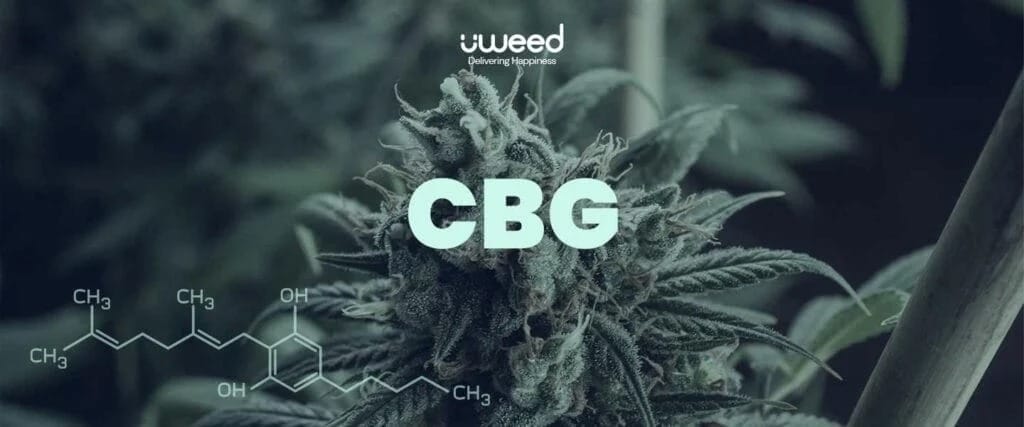
CBG, short for cannabigerol, is a non-intoxicating cannabinoid of the hemp plant and the chemical precursor from which CBD, THC and CBC are formed. So if you want to understand where the better-known cannabinoids come from, CBG is the place to start. What is CBG exactly, how does the plant make it, and what does the research show so far about CBG effects?
The honest answer to that last question is shorter than many product pages suggest. Research on cannabigerol consists mostly of laboratory and animal studies, and studies in people are still rare. In this article we separate what is established from what is only assumed, and for every finding we tell you its evidence level, from cell culture through animal models to the first placebo-controlled human trial.
CBG meaning: cannabigerol, the mother cannabinoid
CBG stands for cannabigerol, a non-intoxicating phytocannabinoid of the hemp plant. It is known as the mother cannabinoid because its acid form, cannabigerolic acid (CBGA), is the precursor of THC, CBD and CBC. Mature hemp flowers usually contain only small amounts of CBG, while strains bred for it carry considerably more.
Whichever way you ask it – what does CBG mean, what is cannabigerol, what is CBG in weed – that CBG definition holds. The CBG cannabinoid is not rare because it is unimportant, but because the plant converts nearly all of it: as the plant grows, enzymes in the trichomes, the resin glands of the flower, turn most of the CBGA into other cannabinoids. Young plants therefore hold a larger share of CBG than plants at harvest. That is the real meaning of CBG in weed and in hemp alike: the starting material, not the end product, and a molecule of its own that is only chemically related to CBD and THC. One more distinction: in medicine, CBG is also short for cortisol-binding globulin, a blood protein with no link to cannabis. This page is about the cannabinoid.
From CBGA to THC and CBD: how the plant makes cannabigerol
CBG is formed in the hemp plant from cannabigerolic acid (CBGA), the first cannabinoid precursor the plant builds in its trichomes.
The path to the better-known cannabinoids runs in three steps, and each one decides how much CBG is left at the end.
- The plant builds CBGA from two basic building blocks, olivetolic acid and geranyl pyrophosphate.
- Enzymes convert most of the CBGA into THCA, CBDA or CBCA; which acid dominates depends on the genetics of the strain.
- Heat strips a carboxyl group from these acids, a step called decarboxylation: THCA becomes THC, CBDA becomes CBD, CBCA becomes CBC, and the leftover CBGA becomes CBG.
Because the second step uses up almost all of the precursor, mature flowers usually contain little CBG. Breeders therefore work with strains whose enzymes barely convert CBGA, and with an earlier harvest time. THC, the intoxicating tetrahydrocannabinol, comes out of the same chain, only through a different enzyme in step two.
What does CBG do in the body?
On current knowledge, CBG interacts with the endocannabinoid system but binds only weakly to the cannabinoid receptors CB1 and CB2. Laboratory studies suggest that it acts on other receptor systems instead, such as alpha-2 adrenoceptors and 5-HT1A receptors. What that means in people is still an open question.
The main basis for this is a laboratory and tissue study. Cascio and colleagues, writing in the British Journal of Pharmacology in 2010, reported that in their tests CBG activated alpha-2 adrenoceptors very strongly and moderately blocked 5-HT1A receptors [1]. The endocannabinoid system itself is the body’s own signalling network of receptors and messengers: CB1 sits mainly in the nervous system, CB2 mainly in cells of the immune system. CBG’s receptor profile is therefore clearly different from that of THC, which activates CB1 directly.
These findings come from cell and tissue models, and no conclusion about the CBG effect in the human body follows from them. So if you are asking what CBG does to you, the honest answer today is a receptor profile, not an experience. Nor does the research say what a particular CBG oil does: the product form does not change the molecule, and there are no studies on individual products that we could rely on. Firm statements will need larger studies in people.
Does CBG get you high?
No, CBG does not get you high: on current knowledge, cannabigerol is non-intoxicating and does not produce the high that THC causes. The reason is its receptor profile, because unlike THC, CBG barely activates the CB1 receptor through which the high arises [1]. Whether a CBG product could intoxicate depends only on its THC content.
Is CBG psychoactive, then? Psychoactive is not the same as intoxicating – a substance can act on the brain without producing a high – so “non-intoxicating” is the more precise word for CBG. Products made from CBG hemp and sold legally in Switzerland contain under 1% total THC, as the legal section below explains. On this point CBG resembles CBD, which does not intoxicate either, and our article does CBD make you high? explains why.
CBG vs CBD and THC: the differences
CBG, CBD and THC are not alternatives on one scale but stages of the same biosynthesis: CBG is the precursor, CBD and THC are end products. Set side by side, as in THC vs CBG, the three differ in origin, amount in the plant, receptor profile, intoxication and research status – and only THC is intoxicating.
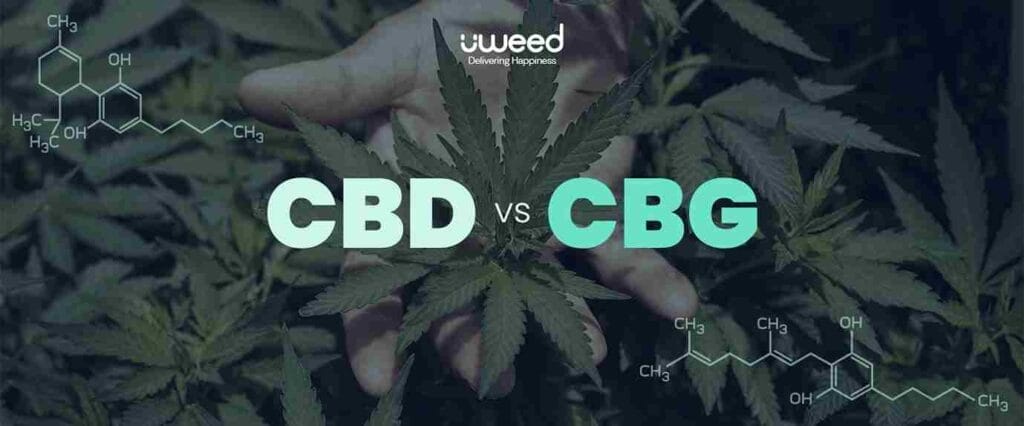
The table puts cannabigerol (CBG), cannabidiol (CBD) and tetrahydrocannabinol (THC) next to each other, criterion by criterion.
| Criterion | CBG | CBD | THC |
|---|---|---|---|
| Origin | from CBGA that was not converted | from CBDA, which an enzyme forms from CBGA | from THCA, which an enzyme forms from CBGA |
| Amount in the plant | usually small in mature flowers, more in strains bred for CBG | the dominant cannabinoid in CBD strains | the dominant cannabinoid in THC-rich cannabis |
| Receptor profile | weak at CB1 and CB2; in the lab strong at alpha-2 adrenoceptors, blocks 5-HT1A [1] | weak at CB1 and CB2; other targets under study | activates CB1 directly |
| Intoxicating | no | no | yes |
| Research status | mostly laboratory and animal studies, one small human trial | far more widely researched, with many human studies | widely researched, including human studies |
| Legal status in Switzerland | legal in products under 1% total THC | legal in products under 1% total THC | decides legality: hemp with 1% total THC or more is a narcotic |
Three differences from the table matter most when you compare them:
- Origin: CBG is the precursor, CBD and THC are end products of the same biosynthesis.
- Availability: the plant makes CBD or THC in large amounts and CBG only in traces.
- Research: CBD has been studied far more, including many studies in people.
How CBG and CBD differ in their effects cannot be put into figures today, because comparable human studies on CBG are missing. What the research on cannabidiol has shown so far is summarised in our article on CBD effects and the research behind them.
CBG effects: what the research shows
Research on CBG effects is young, and almost everything known comes from the laboratory and from animal models. To read a finding correctly, look at its evidence level: cell culture studies show what happens in isolated cells, animal studies what happens in a living organism, and only human studies say anything about people.
So when you ask what CBG is good for, or what the benefits of CBG are, the honest answer is a research status rather than a list: potential, not proven. The effects of CBG and its possible uses are still research questions, and user reports shared online are individual accounts, not study results. The two sections below sort the best-known studies by evidence level.
Laboratory and animal studies
The most-cited CBG studies are animal studies. They show where research is looking, not what CBG does in people, and the two below each cover one field: the gut and the nervous system.
Borrelli and colleagues, writing in Biochemical Pharmacology in 2013, studied CBG in mice in which bowel inflammation had been induced experimentally [2]. Among other things, they measured markers of inflammation in the animals’ gut tissue, and the authors see their results as a starting point for further research on CBG and inflammation. Whether anything follows for people was not part of the study.
Valdeolivas and colleagues, writing in Neurotherapeutics in 2015, studied CBG in two mouse models of Huntington’s disease [3]. The focus was on nerve cells in a brain region that is damaged in these models, and on the animals’ movement. Here too, the results come from an animal model and do not transfer to humans.
Both studies are preclinical: they give research in people its questions, not a statement about any treatment.
Human studies on cannabigerol: stress and mood
Human studies on cannabigerol are recent and small. Cuttler and colleagues, writing in Scientific Reports in 2024, published a double-blind, placebo-controlled trial in healthy adults that measured acute changes in anxiety ratings, stress and mood after a single dose of CBG [4]. Participants rated how they felt at several points, once after CBG and once after a placebo, in their everyday surroundings rather than in a laboratory.
The authors describe their results as preliminary and call for further research with larger and more diverse groups. Searches for CBG for anxiety often lead to this trial, but anxiety was what it measured, not a use: no recommendation follows from it, and no statement about anxiety or mental health in everyday life. If you are dealing with anxiety or other mental-health concerns, a doctor or psychologist is the right person to talk to.
Does CBG have side effects?
Whether CBG has side effects cannot yet be said with confidence: in a first placebo-controlled human study, CBG was well tolerated in the short term, but there are no data on higher amounts or long-term use. The answer therefore covers only the first hours after a single dose in healthy adults.
Everything currently known about CBG side effects rests on the same study by Cuttler and colleagues (2024) [4]: 34 healthy adults received CBG once and a placebo once, double-blind. The authors report that dry mouth, sleepiness and appetite after CBG did not differ from placebo in this study, and that CBG caused neither intoxication nor any cognitive or motor impairment. They name the limits themselves: one fairly low dose, only the first hours afterwards, and participants who already had experience with cannabis. Whether CBG is addictive has not been studied.
There are no human studies on interactions with medication or on the liver. If you take medication, are pregnant or are breastfeeding, clear any use with a healthcare professional first. What is known about CBD side effects we have summarised separately, though those findings do not automatically apply to CBG.
Flowers, oil and hash: the forms cannabigerol comes in
CBG comes in the same product forms as CBD; the difference lies in the cannabinoid profile, not in the form. Four forms are common, running from the plant to the extract:
- 🌱CBG seeds: seed of CBG-rich strains, sold for collecting or for growing within the law.
- 🌿CBG flowers: dried flowers of hemp strains bred for a high CBG content.
- 🍫CBG hash and CBG pollen: resin from the flower’s trichomes, pressed or sieved.
- 💧CBG oil: a hemp extract dissolved in a carrier oil such as hemp seed oil or MCT oil. The CBG oils uWeed sells are cosmetic or aromatic products and are not intended for ingestion.
So what is CBG oil, in one line? A hemp extract in a carrier oil, whose lab report states how much CBG it holds.
Whatever the form, the cannabinoid profile is in the lab report: where the brand supplies one, it shows the batch’s CBG content and total THC. We have brought together CBG products from Swiss producers in one place in our range.
Is CBG legal in Switzerland?
Yes, CBG is legal in Switzerland: cannabigerol is not on any Swiss narcotics list, and products made from CBG hemp may be sold as long as their total THC content is under 1%. What decides the legal status is therefore not the CBG but the product’s THC content [5, 6].
The key facts at a glance:
| Substance | Status | Limit | Law |
|---|---|---|---|
| Cannabigerol (CBG) | not a narcotic | no limit of its own | Swiss Narcotics Act, SR 812.121 |
| Hemp and hemp products | legal | under 1% total THC | Swiss Narcotics Act, SR 812.121 |
Under the Swiss Narcotics Act, hemp with under 1% total THC does not count as a narcotic [5], and the Federal Office of Public Health (FOPH) explains this limit in its overview of the law on hemp and cannabis products [6]. If you are new to Switzerland, note that the Swiss limit is higher than the 0.2–0.3% common in the EU and the US, so a product that is legal here is not automatically legal elsewhere. Further rules depend on the product class, since smoking products, cosmetics and aromatic oils each have their own regulations; how that works for CBD is covered in our article is CBD legal in Switzerland?
Cannabigerol and other cannabinoids
CBG sits at the start of the cannabinoid chain, and cannabinol (CBN) at its end. CBN forms when THC ages and breaks down under light, heat and oxygen, which is why it is found mainly in flowers that have been stored for a long time. Our separate article explains that breakdown and what CBN (cannabinol) is in more detail.
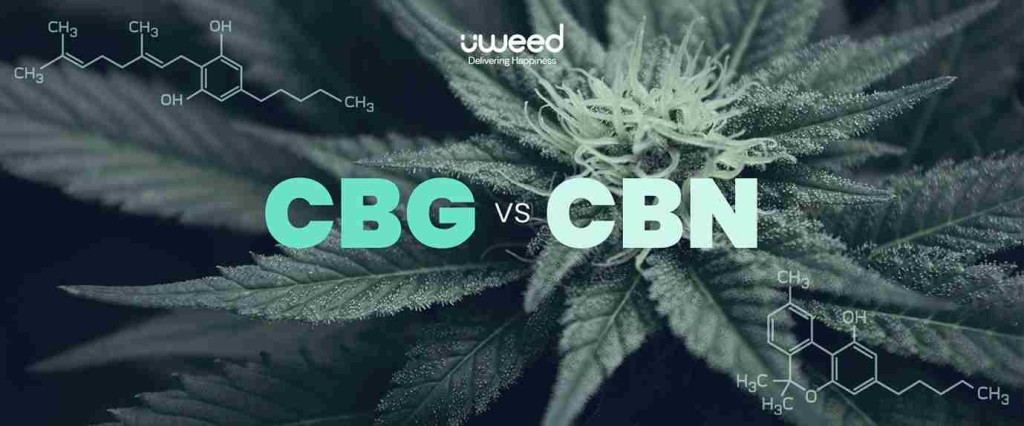
In a full-spectrum extract, CBG, CBD, CBN, traces of THC and terpenes occur together, and the cannabinoid profile varies with the strain and the processing. Whether these compounds influence one another is discussed as a hypothesis and is not established. What the research on the entourage effect has shown so far, and where it contradicts itself, we set out separately.
Frequently asked questions about CBG
Two questions about cannabigerol come up again and again once the basics are clear, so here are the short answers.
Why is there less CBG than CBD in hemp?
There is less CBG than CBD in hemp because the plant converts most of its precursor, CBGA, into THCA and CBDA while it grows. In mature flowers only a small remainder is left, which later becomes CBG. Strains bred for a weak conversion, and plants harvested earlier, keep more of it, which is why CBG takes more effort to produce than CBD.
Do CBG products contain THC?
Yes, CBG products can contain THC in traces, because CBG hemp also forms small amounts of it. So does CBG contain THC? The molecule does not, but the plant material can. Products sold legally in Switzerland stay under 1% total THC, and where a lab report is available it shows the batch’s CBG and THC content. Whether such traces show up in a test cannot be ruled out; how long THC stays in your system is covered in a separate article.
The bottom line: CBG at a glance
Cannabigerol is well understood as a molecule and still little understood as an active substance. Four points sum up what is established today:
- CBG is the precursor from which THC, CBD and CBC are formed.
- CBG is non-intoxicating.
- Research on CBG effects is mostly preclinical, and the first human trial is small.
- In Switzerland, CBG products with under 1% total THC are legal.
Most answers about CBG still sit in the laboratory; only larger studies in people will show which of them hold.
Sources on cannabigerol (CBG)
- Cascio MG, Gauson LA, Stevenson LA, Ross RA, Pertwee RG (2010): Evidence that the plant cannabinoid cannabigerol is a highly potent α2-adrenoceptor agonist and moderately potent 5HT1A receptor antagonist. British Journal of Pharmacology 159(1): 129–141.
- Borrelli F, Fasolino I, Romano B, Capasso R, Maiello F, Coppola D et al. (2013): Beneficial effect of the non-psychotropic plant cannabinoid cannabigerol on experimental inflammatory bowel disease. Biochemical Pharmacology 85(9): 1306–1316.
- Valdeolivas S, Navarrete C, Cantarero I, Bellido ML, Muñoz E, Sagredo O (2015): Neuroprotective Properties of Cannabigerol in Huntington’s Disease: Studies in R6/2 Mice and 3-Nitropropionate-lesioned Mice. Neurotherapeutics 12(1): 185–199.
- Cuttler C, Stueber A, Cooper ZD, Russo E (2024): Acute effects of cannabigerol on anxiety, stress, and mood: a double-blind, placebo-controlled, crossover, field trial. Scientific Reports 14: 16163.
- Federal Act on Narcotics and Psychotropic Substances (Narcotics Act, NarcA), SR 812.121, consulted on 29.10.2026.
- Legislation on hemp and cannabis products, Federal Office of Public Health (FOPH), information page (in German), consulted on 29.10.2026.