Disclaimer
This article is for information only. It is not legal or medical advice, and the products described are not medicines. For any specific legal question, please consult a Swiss legal expert.
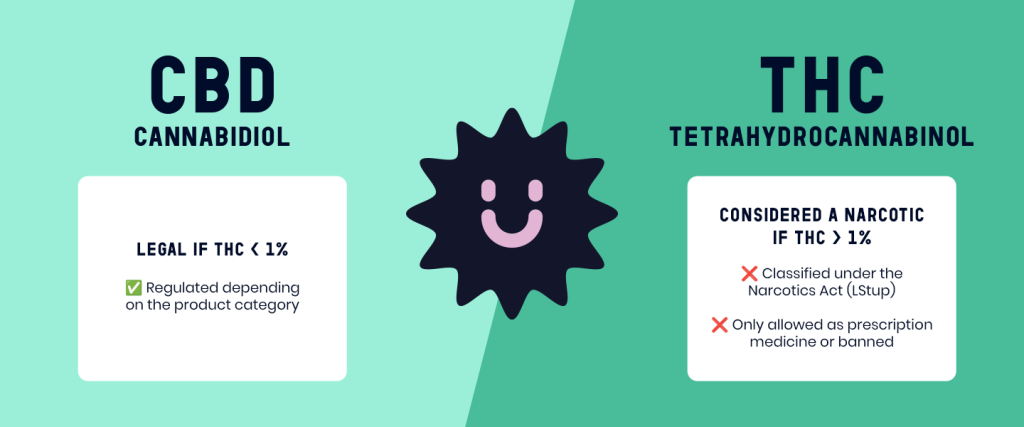
Cannabidiol (CBD) has firmly established its place in Switzerland—particularly in the form of CBD hemp flowers, oils, and cosmetics. Since 2017, the market has grown significantly following its official recognition as a substance not subject to the Narcotics Act (BetmG, SR 812.121). Unlike THC, CBD does not have psychoactive effects and is not listed as a narcotic. It is legal to use as long as the THC content remains below 1%.
However, not all CBD products are authorised in the same way. Their legality depends on their product category—flowers, oils, e-liquids, edibles, or strictly regulated medicinal preparations. Each of these segments is governed by specific regulations enforced by the authority competent for that category.
To help you shop with confidence, uWeed offers a curated selection of Swiss-made CBD products that are fully compliant with current laws.
In this article, we provide a detailed guide to the 2026 legal framework in Switzerland, including permitted THC limits, legal CBD product categories, food restrictions, vape product regulations, the status of medical CBD, and more.
Legal Framework and Current CBD Status in Switzerland
In Switzerland, CBD is regulated by several legal texts and government authorities. Unlike many European countries, Switzerland allows up to 1% THC, enabling a wider variety of cannabidiol products—including CBD oils, hemp flowers, and e-liquids.

🔹 Key regulations and institutions :
📜 Narcotics Act (BetmG, SR 812.121) CBD is not considered a narcotic under the BetmG, provided that the total THC level remains below 1%. If the THC content reaches or exceeds this threshold, the product is classified as a narcotic.
➡️ Official text: BetmG – Narcotics Act

📜 Swissmedic – Regulation of therapeutic products CBD-based medicines, such as Epidyolex, require Swissmedic approval and a medical prescription.
➡️ More info: Swissmedic – Classification of CBD Products
📜 FOPH – Notification of smoking products and e-cigarettes The Federal Office of Public Health (FOPH) receives notifications for plant-based smoking products and for electronic cigarettes and their refill material in retail packaging.
➡️ Regulation: FOPH – CBD Regulations in Switzerland
📜 FSVO – Foods, cosmetics and utility articles
The Federal Food Safety and Veterinary Office (FSVO) is competent for foods including supplements, for cosmetics, and for utility articles that come into contact with mucous membranes.
📜 FOAG – Hemp cultivation regulation
The Federal Office for Agriculture (FOAG) manages hemp cultivation and maintains the catalogue of approved plant varieties.
➡️ Hemp cultivation info: FOAG – Hemp in Switzerland
📜 FDHA Narcotics Schedules Ordinance (BetmVV-EDI, SR 812.121.11)
This ordinance gives effect to the 1% total-THC limit for products containing CBD.
➡️ Official text: BetmVV-EDI
What Is Legal CBD in Switzerland? Definition and Cannabis Comparison
In the context of CBD legality in Switzerland, cannabidiol (CBD) is a non-psychoactive cannabis compound extracted from hemp. It differs fundamentally from THC, particularly in its legal treatment and effects. The key point in CBD vs THC: key differences lies in their psychoactivity: CBD does not produce a “high,” while THC is considered a controlled substance. As long as the THC level stays below 1%, the legal status of CBD in Switzerland is clearly defined and products remain compliant with Swiss CBD law.
Competence depends on the product category: the FSVO for foods, cosmetics and utility articles with mucosal contact, the FOPH for notification of plant-based smoking products and e-cigarettes, and Swissmedic for therapeutic products. Market controls are carried out by the cantonal enforcement authorities.
Types of CBD in Switzerland: Isolate, Broad- & Full-Spectrum
The legal classification of CBD products in Switzerland depends in part on their cannabinoid spectrum—a key factor that determines how they are regulated. This is particularly relevant for CBD oils, which are categorised into three types of extract, each with distinct compositions and regulatory implications under Swiss CBD law:
✅CBD Isolate
Contains only pure cannabidiol with 0% THC and no other cannabinoids. As a CBD isolate, it does not produce the entourage effect, meaning the synergy between hemp compounds is absent.
✅ Broad-Spectrum CBD
Includes multiple cannabinoids except THC. It provides a partial entourage effect, allowing users to benefit from interactions between various natural components of the hemp plant without THC exposure.
✅ Full-Spectrum CBD
Contains the full range of cannabinoids, including trace amounts of THC (under 1%). This type offers the entourage effect in its most complete form, enhancing the overall impact of the CBD through natural synergy with terpenes and other active compounds. Swiss regulations strictly require that full-spectrum extract products remain within the legal THC threshold.
According to Swissmedic’s 2024 report on Classification of Cannabidiol Products in Switzerland, both CBD isolate and broad-spectrum extract are permitted without restriction, while full-spectrum products must meet the 1% THC limit to remain legal. This distinction ensures full compliance with the Swiss CBD law and helps prevent any product from being reclassified as a narcotic.
History and Evolution of Swiss Hemp and CBD Legislation
The legal landscape for CBD and hemp in Switzerland has evolved significantly over the past decade. Gradual regulatory updates have helped clarify the status of cannabidiol, aligning policies with public health needs and Swiss cannabis regulations.
📌 2017 – Conditional Legalisation of CBD In 2017, the Federal Office of Public Health (FOPH) confirmed that CBD was not subject to the Narcotics Act (BetmG) as long as its THC content remained below 1%. This decision allowed the commercialisation of CBD flowers, oils, and cosmetics while clearly separating them from THC-containing recreational cannabis. The announcement, published in the CBD Regulation in Switzerland report (FOPH, 2017), marked a major shift in cannabidiol regulation.
📌 2022 – Reintroduction of Legal CBD Resins CBD resins had been banned for several years due to their resemblance to illegal cannabis. But in August 2022, the FOPH authorised their sale again—provided they comply with the 1% THC threshold. This update, part of the Swiss Medical Cannabis Legislation (FOPH, 2022), expanded the legal CBD product range while maintaining traceability and consumer safety.
📌 2022 – Recall of Non-Compliant CBD Oils In September 2022, Swiss authorities launched a series of product recalls after testing CBD oils with excessive THC or misleading labels. The Swiss Cantonal Chemists Association (ACCS) revealed in its 2022 CBD Oil Controls in Switzerland report that many samples failed to meet legal standards. This highlighted the importance of lab-tested CBD and strict enforcement of quality standards.
📌 2022 – Denaturing Requirement for Non-Food CBD Oils From March 29, 2022, CBD oils classified as chemical products must be denatured to prevent oral consumption. As stated in the official directive from the Swiss Federal Administration on chemical product labelling, these oils must include bitter agents unless they’re approved as CBD food products under separate regulation.
📌 2023–2026 – Pilot Programmes for Recreational Cannabis In response to growing public debate, pilot programmes were launched in Zurich, Geneva, and Basel to test a regulated recreational cannabis market. Supervised by the Federal Department of Home Affairs (FDHA), these tests—outlined in the Swiss Cannabis Pilot Project Program (FDHA, 2023)—aim to measure the health and economic impacts of controlled cannabis access. The outcomes may influence future updates to cannabidiol regulation in Switzerland.
Legal Status of CBD in Switzerland: Core Legal Bases
In Switzerland, the legal status of CBD depends on its classification and use case. The key legal foundation is the 1% total-THC threshold, which follows from the Narcotics Act (BetmG, SR 812.121) read together with the FDHA Narcotics Schedules Ordinance (BetmVV-EDI, SR 812.121.11). Products reaching or exceeding this limit are classified as narcotics. Since 1 October 2024, smoking products, e-cigarettes and refill material are no longer governed by food law but by the Tobacco Products Act (TabPG, SR 818.32) and its ordinance (TabPV, SR 818.321).
Here’s how CBD products are categorised under various Swiss laws:
| Category | Description | Applicable Law |
| CBD Flowers & Resins | Treated as plant-based smoking products | Tobacco Products Act (TabPG, SR 818.32) and Tobacco Products Ordinance (TabPV, SR 818.321) — German text; no official English version exists |
| CBD Cosmetic Oils | Regulated under cosmetic standards | FDHA Ordinance on Cosmetic Products (VKos, SR 817.023.31) |
| CBD Chemical Oils | Subject to mandatory denaturing | Chemicals Ordinance (ChemV, SR 813.11) |
| CBD Food Products | Covered by food law and subject to authorisation as a novel food | Foodstuffs and Utility Articles Ordinance (LGV, SR 817.02) Novel Food Framework |
| CBD E-liquids & Vapes | Regulated as electronic cigarettes and refill material | TabPG, SR 818.32 and TabPV, SR 818.321 |
| CBD-Based Medicines | Must be authorised by Swissmedic | Therapeutic Products Act (HMG, SR 812.21) |
| CBD Products for Animals | Regulated under animal-feed law | Animal Feed Ordinance (FMBV, SR 916.307) |
Oversight is split across several authorities: the FSVO for foods, cosmetics and utility articles with mucosal contact; the FOPH for notification of plant-based smoking products and e-cigarettes; Swissmedic for therapeutic products; the FOAG for hemp cultivation; and the FOCBS for import and export. Market controls sit with the cantonal authorities. A total THC content of 1.0% or above results in classification as a narcotic.
Is CBD Classified as a Drug in Switzerland?
Cannabidiol (CBD) is not treated as a narcotic under Swiss law, provided it meets all compliance requirements—including the 1% THC threshold. Within the broader scope of Swiss cannabis regulations, this classification reflects the fact that CBD does not produce psychoactive effects and carries no risk of dependency. As a result, it is excluded from the list of substances controlled by the FDHA Narcotics Schedules Ordinance (BetmVV-EDI).
According to the Federal Office of Public Health (FOPH) and Swissmedic, CBD products remain legal as long as they stay under the THC limit. If that threshold is exceeded, however, the product is automatically reclassified as a narcotic and prohibited from sale. By comparison, many European countries enforce stricter limits—ranging from 0.2% to 0.6%—restricting the availability of broad- and full-spectrum CBD products.
Federal Law: FDHA Narcotics Schedules Ordinance (BetmVV-EDI)
The BetmVV-EDI (SR 812.121.11) states that CBD is not subject to the same restrictions as THC, as long as its THC content remains below 1%. This regulation, outlined in the Swissmedic report on the classification of cannabidiol-based products in Switzerland (2022), specifies that CBD products can be legally marketed in several forms:
- Plant-based smoking products, such as hemp flowers intended for smoking
- CBD oils, often classified as denatured chemical products or cosmetics
- Cosmetics, provided they comply with Swiss health regulations
- Food products, subject to the strict requirements of the Foodstuffs Act and the “Novel Foods” framework
Each product category must comply with the standards set by the FOPH and Swissmedic, ensuring traceability and consumer safety.
What Is the Maximum THC Limit Allowed in Switzerland?
Switzerland enforces a 1% THC threshold for all CBD products—a notably more flexible policy compared to most EU countries. This limit plays a crucial role in differentiating non-psychoactive cannabis from intoxicating substances and reflects a regulatory focus on THC and psychoactive effects.
Maintaining THC below this threshold ensures that CBD products do not fall under the controlled substances ordinance, keeping them legal for sale and use. The Federal Office of Public Health (FOPH) and Swissmedic emphasise this distinction as a foundation of the Swiss framework.
While this legal tolerance allows a broader range of cannabinoid-rich products to remain available, any batch exceeding 1% THC must be removed from the market or reclassified as a narcotic. This strict boundary preserves Switzerland’s clear regulatory separation between legal CBD products and controlled cannabis.
Regulatory Authorities and CBD Product Compliance Checks
To ensure transparency and safety, several regulatory bodies are involved in overseeing the legal status of CBD in Switzerland. The main responsibility lies with the Federal Office of Public Health (FOPH) and Swissmedic, who enforce limits on THC and ensure compliance with the controlled substances ordinance.
These authorities collaborate with certified labs to carry out lab testing on CBD products, verifying that they are:
- Free of prohibited psychotropic substances
- Compliant with pesticide, solvent, and heavy metal safety standards
- Legally under the 1% THC limit
For imports, evidence that total THC stays below 1.0% must be provided as a batch-specific certificate of analysis relating to the particular consignment, issued by an accredited (ISO/IEC 17025) or GMP laboratory. In retail, an up-to-date lab report is the standard serious sellers hold themselves to, but there is no blanket legal requirement to produce one for every product. At uWeed we collect and verify each product’s lab report and publish it on the product page. Where a brand supplies none, we say so.
Evidence on import. Anyone importing CBD products into Switzerland must be able to demonstrate that total THC stays below 1.0%. The evidence required is a batch-specific certificate of analysis relating to the particular consignment, issued by a laboratory accredited to ISO/IEC 17025 or by a GMP laboratory.
In parallel, the Swiss Cantonal Chemists Association (ACCS) regularly inspects food-grade CBD products. Their 2022 report revealed that 85% of CBD-infused edibles on the market failed to meet legal standards due to improper labelling or excessive THC—highlighting the importance of rigorous product control.
CBD Product Categories: Legal Status and Requirements
The legal status of CBD in Switzerland varies significantly depending on the product category. Each type— CBD flowers, oils, edibles, cosmetics, or animal products—is subject to specific laws and regulatory checks. This distinction is essential for understanding which items are permitted, how they’re classified, and what safety and labelling rules apply.
The Federal Office of Public Health (FOPH) and Swissmedic oversee compliance across all these segments, ensuring that THC levels remain within the 1% legal threshold and that consumer safety standards are fully met.
CBD Flowers and Resins: Legal Conditions and Restrictions
CBD flowers and CBD hash may be sold in Switzerland if they contain less than 1% total THC. They are treated as plant-based smoking products and, since 1 October 2024, fall under the Tobacco Products Act (TabPG, SR 818.32) and its ordinance (TabPV, SR 818.321) rather than food law. The requirements are modelled on those for tobacco but are not identical to them. This legal status is a key aspect of legal CBD flower types in Switzerland, allowing for wide availability across physical and online shops.
In practice this means:
- Warnings under Art. 14(1)(c) TabPG. Every pack carries a health warning together with a combined warning under Art. 13(1)(c). Hemp-containing products additionally carry a driving-impairment warning. The statutory texts exist in German, French and Italian only; the German wording is «Das Rauchen dieses Produkts schädigt Ihre Gesundheit» and, for hemp products, «Dieses Produkt kann ihre Fahrfähigkeit beeinträchtigen. Es wird davon abgeraten, nach dessen Konsum ein Fahrzeug zu lenken».
- Sale prohibited to under-18s.
- Notification duty. Anyone manufacturing or importing plant-based smoking products must notify the FOPH within one year of making them available on the market (Art. 26 TabPG). The duty sits with the manufacturer or importer — the brand — not with the reselling shop.
- Taxation aligned with tobacco products.
Because they fall under tobacco-products law, these products must not be marketed for therapeutic use. They are sold as aromatic products.
At uWeed you will find CBD flowers from Swiss growers — indoor, outdoor and greenhouse — with the cannabinoid profile stated and the lab report published.
The Special Case of CBD Oils: Legal Status and Product Classification
In Switzerland, CBD oils are subject to strict regulation based on how they are classified. These oils must comply with specific guidelines depending on their intended use, composition, and legal framework. Choosing a safe and compliant CBD oil requires an understanding of how products are categorised under Swiss law.
Many CBD oils are sold as chemical products or aromatic oils, meaning they are not designed for ingestion and must be denatured to prevent oral use. Since March 2022, the law has required these oils to include bittering agents to avoid confusion with CBD food supplements, which remain unauthorised under current Swiss guidelines. The bittering agent used in practice is usually rosemary extract, and the purpose of denaturing is to prevent accidental ingestion, particularly by children. The legal basis is the general ruling of 29 March 2022 issued by the Notification Authority for Chemicals.
Other oils are classified as cosmetics and are intended exclusively for external use. These must comply with the FDHA Ordinance on Cosmetic Products (VKos, SR 817.023.31), and the competent authority is the FSVO. The oils uWeed sells are cosmetic or aromatic products and are not intended for ingestion.
Are CBD Oils Banned in Switzerland?
No — CBD oils are not banned in Switzerland, but they cannot be sold as a food supplement. Only two classifications are legal: chemical product (denaturing required) and cosmetic (for external application).
In practice that means an oil placed on the market as a chemical or aromatic product is not intended for ingestion, while an oil classified as a cosmetic is intended for external application. The wording on the packaging follows the approval category — it says nothing about the quality of the oil or its cannabidiol content.
Searching for a CBD oil intended for ingestion returns no product legally declared that way in Switzerland: the Foodstuffs and Utility Articles Ordinance (LGV, SR 817.02) does not yet provide for that category.
CBD Food Products: Current Regulations in Switzerland
CBD food products face some of the most restrictive regulations in Switzerland. These items—including hemp infusions, candies, and drinks—are covered by Novel Food Regulation and cannot be sold without official authorization. This restriction is based on the fact that CBD lacks a significant history of consumption in the EU before 1997.
According to Swiss law, every CBD-infused food must undergo safety evaluation and approval before being legally placed on the market. At the time of writing, no applications have been approved. This makes Switzerland one of the strictest markets for CBD edibles in Europe.
Novel Food Regulation and Its Application to CBD
Under the Novel Food Regulation, any food containing cannabinoids must be proven safe through rigorous scientific review. The Federal Food Safety and Veterinary Office (FSVO) applies this rule to CBD, meaning that edible products require prior authorization—even for items like herbal teas or drinks.
In this context, what might seem like a basic CBD hemp tea becomes a legally complex product requiring careful compliance.
The food route is therefore closed for now: because no cannabinoid is currently authorised as an ingredient — that is, as a novel food — a “contains CBD” indication is not presently permissible on a food. Products to which cannabinoids have been added as a pure substance are not marketable where they fall under food law.
THC Limits in CBD-Infused Foods and Drinks
In Switzerland, CBD hemp teas and THC limits are tightly regulated under federal food laws. To remain compliant, all CBD-infused foods and beverages must contain less than 2 mg of THC per kilogram of product. This low threshold is significantly stricter than for other CBD formats and aims to eliminate any possibility of psychoactive effects.
Products such as CBD herbal teas, infusions, and candies are tested for THC content in accredited laboratories. Any item that exceeds the limit is banned from sale. Notably, CBD gummies are currently prohibited in Switzerland, as they are considered edibles containing cannabinoids and pose a risk of accidental ingestion, particularly by children.
CBD E-Liquids and Vapes: Regulatory Overview
The sale of CBD e-liquids and vapes is legal in Switzerland as long as they comply with the national THC limit of 1%. The Tobacco Products Act (TabPG, SR 818.32) and its ordinance (TabPV, SR 818.321), in force since 1 October 2024, cap disposable devices and prefilled cartridges at 2 ml, apply a tax of CHF 0.20 per ml on refill liquids and CHF 1.00 per ml on disposables, and prohibit sale to under-18s. The framework applies to all vaping formats, including the expanding segment of CBD disposable devices.
In response to growing demand, many users are turning to vaporisation as an efficient delivery method. Those looking to discover our CBD vape range will find legally compliant options that meet federal safety standards and avoid nicotine.
CBD Topicals and Cosmetics: Legal Classification
In Switzerland, topical CBD products are treated as cosmetics rather than therapeutic goods, and must comply with the Foodstuffs and Utility Articles Ordinance (LGV, SR 817.02) and the FDHA Ordinance on Cosmetic Products (VKos, SR 817.023.31). Which part of the hemp plant the extract comes from makes no difference. The joint enforcement guidance issued by the Swiss expert panel on classification questions (version 8.0, in force from 1 May 2025) states this explicitly: for the manufacture of CBD intended for use in cosmetics, the plant part used is irrelevant. What matters is that no intermediate product exceeds 1.0% THC at any stage of the manufacturing process. The competent authority for cosmetics is the Federal Food Safety and Veterinary Office (FSVO).
Manufacturers must also ensure that their formulations comply with labelling and safety requirements. In skincare, CBD is used as an ingredient in creams, balms and oils, usually alongside nourishing carrier oils. A cosmetic may be described by its cosmetic function; any indication of disease-curing, disease-alleviating or disease-preventing effects is prohibited on a cosmetic under Art. 47(3) LGV. You can browse our CBD cosmetics range here.
CBD-Based Medicines and Therapeutic Use
A product may only be placed on the Swiss market as a medicine if Swissmedic has authorised it under the Therapeutic Products Act (HMG, SR 812.21). Such preparations are prescription-only and are dispensed through a doctor and a pharmacy. They are legally distinct from CBD products sold over the counter: what is available in retail is not a medicine and must not be presented or used as one.
One CBD medicine is currently authorised — Epidyolex, for certain severe forms of epilepsy. Pharmacies may also prepare compounded formulations on prescription. Both fall entirely under therapeutic products law and are outside the scope of this article.
CBD Products for Animals: Rules and Limitations
The Swiss market allows CBD use in pet products, but under very strict legal conditions. CBD products for pets must contain less than 1% THC, must not be intended for livestock producing milk or meat for human consumption, and must avoid terpenes that can be toxic to cats. No veterinary, therapeutic or behavioural claims may be made. Consult a vet before use — see our guidance on CBD for pets.
Practical Considerations for Legal CBD in Switzerland
Switzerland’s legal framework for CBD is clearly defined, but how it applies to everyday life often raises questions. Can you grow your own CBD plants? Where are legal CBD products sold? What happens if you travel abroad with CBD in your luggage?
This section answers the most common questions about how the country’s laws impact the use, purchase, and possession of legal CBD in Switzerland.
Can You Legally Grow CBD in Switzerland?
Cultivating hemp that contains CBD is legal in Switzerland under specific conditions. The variety must be listed in the federal catalogue of approved varieties and the crop must stay below 1% THC. Cultivation falls under the Federal Office for Agriculture (FOAG). While private individuals can grow for personal use, those seeking to operate commercially must ensure that their varieties are listed on the official catalogue and meet federal regulations.
Although a cultivation licence is not required for personal cultivation, professional growers must document their crops and follow environmental and agricultural safety guidelines defined by the FOAG.
Where to Buy Legal CBD in Switzerland: Licensing and Retail Outlets
Legal CBD products are available across Switzerland through various retail channels: specialised CBD shops, pharmacies, vape stores, and certified online platforms. For convenience and broader selection, many consumers order Swiss CBD online, ensuring they access compliant products that meet national standards on THC content, labelling, and product categorisation.
Lab Tests and Legal Certificates for Swiss CBD Products
All CBD products sold in Switzerland must undergo laboratory analysis to verify their THC content and overall compliance. These tests are conducted by accredited labs and help detect any contaminants such as pesticides or heavy metals.
A current lab report is the industry standard and the basis for traceability, and is routinely requested by enforcement authorities during spot checks.
How to check a CBD oil on its label:
- Classification — cosmetic or chemical product, unambiguously stated
- RPC number for chemical products, PIF (Product Information File) for cosmetics
- INCI declaration of ingredients under cosmetic classification
- Use statement — for external application, or not intended for ingestion
- Current lab report — published on every uWeed product page
Travelling with Swiss CBD: Cross-Border and Customs Rules
Transporting CBD within Switzerland poses no issue if the product complies with local law. However, the situation becomes more complex when travelling abroad with CBD, as legal THC limits and product restrictions vary across countries.
For example, France and Germany apply a 0.3% threshold to hemp and its extracts, which may cause products legal in Switzerland to be seized at the border. It’s always best to check local import laws before carrying CBD across international borders.
The FOPH recommends that sellers voluntarily inform consumers of the risk of prosecution abroad arising from differing THC limits. A product that meets Swiss requirements may be treated as a narcotic in the destination country. Check local rules before crossing a border with CBD.
For cannabis and cannabis preparations with a total THC content below 1.0%, Swissmedic does not issue a No-Objection Certificate for import or export. That document is therefore not available for legal CBD products.
Comparison of legal THC limits in Switzerland and Europe
| Country | Limit | Applies to | Legal basis |
|---|---|---|---|
| Switzerland | 1% | Total THC in the finished product | BetmG (SR 812.121), BetmVV-EDI (SR 812.121.11) |
| Czech Republic | 1% | The definition of technical hemp; in practice also derived products | Zákon č. 167/1998 Sb., § 2(1)(g), since 2022 |
| France | 0.3% | The variety and extracts and the products containing them | Arrêté of 30 December 2021; Conseil d'État, 29.12.2022, no. 444887 — ban on flower sales annulled |
| Germany | 0.3% | The definition of industrial hemp, not a ceiling for finished products | KCanG § 1. Selling CBD flower to consumers nonetheless remains problematic. |
| Italy | 0.2% in cultivation, 0.6% analytical tolerance | Cultivation; flower sales are governed separately | Legge 242/2016. The flower sales ban under legge 80/2025 has been suspended since the Consiglio di Stato ruling of 12.11.2025; a referral to the CJEU is pending. |
| Spain | no statutory limit for finished products | Cultivation follows the EU threshold of 0.3% | No national instrument sets a product-level limit. The 0.2% often quoted is not a legal limit. |
| Netherlands | no statutory limit | Cultivation follows the EU threshold of 0.3% | The Opiumwet sets no THC percentage for CBD products. The widely repeated 0.05% figure is an enforcement tolerance, not law. |
| Luxembourg | no national limit | Cultivation follows the EU threshold of 0.3% | EU framework. Foods containing CBD remain prohibited without Novel Food authorisation. |
Limits and competences change. This table was last verified on 20.08.2026 against the sources cited. It is not a substitute for guidance from the authorities in your destination country.
Is It Legal to Smoke CBD in Public in Switzerland?
In public areas where smoking is permitted, the use of smokable hemp flowers is allowed under the same rules that govern tobacco use. However, smoking is prohibited in locations such as public transport, government buildings, and many workplaces.
Despite its legality, CBD flower can be mistaken for illegal cannabis due to its similar appearance and smell. To avoid misunderstandings, it’s advisable to carry product packaging or documentation showing THC content.
Is Driving Legal After Taking CBD in Switzerland?
Statutory warning. Hemp-containing smoking products must carry a driving-impairment warning under Art. 14(1)(c)(3) TabPG. The statutory German text reads: «Dieses Produkt kann ihre Fahrfähigkeit beeinträchtigen. Es wird davon abgeraten, nach dessen Konsum ein Fahrzeug zu lenken» — in substance: this product may impair your ability to drive, and driving after consuming it is not advised. There is no official English version of the Act.
Switzerland applies zero tolerance for THC in road traffic. Many CBD products, particularly full-spectrum extracts, contain trace THC, and any detectable level in a blood test can result in sanctions regardless of whether the product itself was legal.
Under Switzerland’s zero-tolerance drug-driving policy, any detectable level of THC in a blood test can result in sanctions. To reduce risk, those concerned about driving after using CBD should avoid operating vehicles shortly after consumption.
Drug Testing and CBD: Legal and Workplace Impact
Although CBD itself is not screened in standard drug tests, trace THC found in full-spectrum products can cause positive results. This can be problematic in sectors that enforce regular testing such as transport, security, and healthcare.
To avoid complications related to CBD and workplace drug tests, users should choose products labelled as THC-free, such as CBD isolate or broad-spectrum formulations verified by third-party lab reports.
Swiss vs Neighbouring Countries’ CBD Laws (France, Germany, Italy)
The Swiss legal framework for CBD is more permissive than in many EU countries. With a 1% total-THC limit, Switzerland allows a broader range of CBD products than France (0.3%, applied to finished products), Germany (0.3%, as the definition of industrial hemp rather than a product ceiling) or Italy (0.2% crop with a 0.6% analytical tolerance, and flower sales currently subject to a suspended ban). These differences create legal complications for travellers and importers.
The difference is not only the THC threshold but its enforcement: Switzerland actively enforces product classification, whereas several EU markets tolerate CBD oils being sold as food supplements in practice, absent any authorisation as a novel food.
Efforts to achieve EU equivalence are ongoing but far from complete. Until then, CBD users must remain aware of each country’s specific rules to avoid legal issues when crossing borders.
Can I Buy Swiss CBD from France Legally?
Buying CBD from Switzerland while residing in France is possible, but several conditions apply. The product must respect the French legal limit of 0.3% THC and be shipped by a company that complies with EU consumer laws.
For consumers asking can I buy CBD in Switzerland, the answer is yes—but only if the product meets the destination country’s legal standards. Customs authorities may seize items that exceed THC limits, even if they are legal in Switzerland.
Future of CBD Regulation in Switzerland
Switzerland’s CBD market continues to evolve, and regulatory authorities are actively assessing potential updates. New bills, pilot programmes, and legal harmonisation efforts with the EU are shaping the future landscape for cannabidiol in the country.
As the legal context changes, it’s important for producers, retailers, and consumers to stay informed about ongoing developments that could impact CBD’s legal status and product availability in Switzerland.
Ongoing Bills and Parliamentary Debates on CBD
The Swiss Federal Council and Parliament are reviewing various proposals aimed at clarifying and adapting the national CBD framework. Discussions include the possible re-evaluation of the 1% THC limit and expanding pilot cannabis sales beyond cities like Zurich, Basel, and Geneva.
Lawmakers are also exploring better definitions for CBD-infused foods, particularly in response to current Novel Food restrictions that limit product availability. These debates are driven by a desire to balance public health, market innovation, and regulatory control.
Ongoing Bills and Parliamentary Debates on CBD
The Swiss Federal Council and Parliament are reviewing various proposals aimed at clarifying and adapting the national CBD framework. Discussions include the possible re-evaluation of the 1% THC limit and expanding pilot cannabis sales beyond cities like Zurich, Basel, and Geneva.
Lawmakers are also exploring better definitions for CBD-infused foods, particularly in response to current Novel Food restrictions that limit product availability. These debates are driven by a desire to balance public health, market innovation, and regulatory control.
Harmonisation with EU Standards: Challenges and Outlook
While Switzerland maintains a more permissive stance on THC content than most EU countries, discussions around harmonisation with EU standards are ongoing. The European Court of Justice ruled in 2020 that CBD is not a narcotic, opening the door for regulatory alignment—though each member state still applies its own rules.
For Swiss producers, aligning with EU legislation could facilitate exports but may also require adjustments to product formulations and THC thresholds. Authorities are carefully evaluating these trade-offs before making formal changes.
Conclusion: Switzerland’s Clear but Changing Legal CBD Framework
Switzerland currently offers one of the most clearly defined and liberal legal frameworks for CBD in Europe, anchored by its 1% THC threshold and product-specific classification system. From smokable hemp flowers to cosmetics, vapes, and oils, each item must meet strict labelling and compliance criteria enforced by the authority competent for its category.
But while the current system is well structured, it remains in motion. Pilot cannabis projects, proposed legal revisions, and EU alignment discussions signal that future changes are likely. For now, Switzerland’s framework remains among the more permissive in Europe, but staying informed and compliant is essential as the legal landscape continues to evolve.
Official Sources and Legal References on CBD in Switzerland
To better understand Switzerland’s cannabis legislation, several official resources provide direct access to the relevant laws and regulatory guidelines. These documents, published by agencies such as Swissmedic, the Federal Office of Public Health (FOPH), and other Swiss authorities, govern the production, sale, and use of products containing cannabidiol.
🔹 General Regulatory Framework for CBD in Switzerland
Federal Office of Public Health (FOPH) – The FOPH is the main authority responsible for regulating CBD and THC levels below 1% in Switzerland. It defines the legal conditions for the sale, production, and use of cannabidiol-based products, and monitors their compliance with public health standards
➡️ CBD regulation in Switzerland – FOPH
➡️ Medical cannabis legislation – FOPH
Swissmedic – Switzerland’s medical regulatory authority, in charge of evaluating and monitoring therapeutic products containing CBD and overseeing their distribution on the Swiss market.
➡️ Classification of cannabidiol-based products – Swissmedic
Narcotics Act (BetmG, SR 812.121) – This legislation governs substances classified as narcotics, including tetrahydrocannabinol (THC). It also sets the legal framework for cannabis use, CBD product manufacturing, and medicinal cannabis regulations.
➡️ Full legal text – Narcotics Act (BetmG)
🔹 Regulations for Specific CBD Product Categories
FDHA Narcotics Schedules Ordinance (BetmVV-EDI, SR 812.121.11) – Gives effect to the 1% total-THC threshold.
➡️ BetmVV-EDI – CBD Provisions
Federal Office for Agriculture (FOAG) – Regulates hemp cultivation and the production of cannabidiol products derived from the hemp plant.
➡️ Hemp cultivation guidelines – FOAG
Foodstuffs and Utility Articles Ordinance (LGV, SR 817.02) and the authorisation requirement for novel foods – Regulate the use of cannabinoids in food products, including hemp teas.
Swiss Association of Cantonal Chemists (ACCS) – This body reported in 2022 that 85% of CBD food products tested in Switzerland failed to meet legal standards.
➡️ ACCS Report on CBD-labelled food products – A troubling overview
🔹 Specific Topics: Transport, Use and Testing
Federal Office for Customs and Border Security (FOCBS) – Responsible for controlling imported and exported CBD products, including when travelling abroad with CBD.
Federal Roads Office (FEDRO) – Regulates driving after CBD use, highlighting the risks linked to detectable THC in drug and roadside tests.
➡️ FEDRO – Cannabis use and driving
These resources provide a comprehensive overview of the legal and official landscape surrounding CBD in Switzerland and its potential future developments.